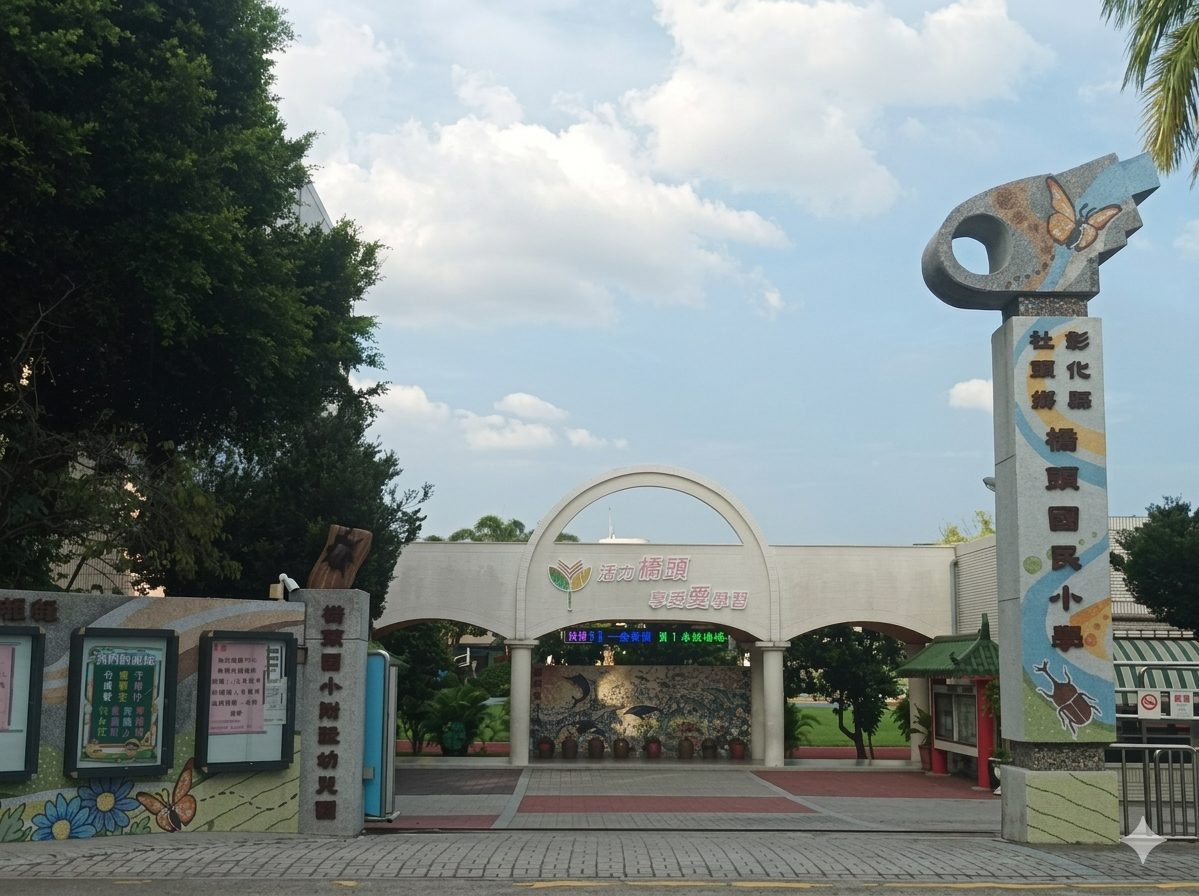
Those six words are painted on the arch of our front gate, so they are the first thing a child reads on the way in and the last thing they read on the way out. Qiaotou Elementary School stands in Qiaotou Village, Shetou Township — the place Taiwan calls the home of socks. Yuanlin City is just to the north and Yongjing Township to the west, which makes this a well-connected corner of Changhua and a lively one.
這六個字就漆在校門的拱圈上,所以那是孩子走進來時讀到的第一句話,也是走出去時讀到的最後一句話。橋頭國小位於襪子的故鄉——社頭鄉的橋頭村,北與員林市銜接,西面緊鄰永靖鄉,交通便利、四通八達,是人文薈萃的好地方。
Two markets stand almost on our doorstep: the guava wholesale market that Shetou is known for, and the Qiaotou village market. So do three busy temples — Tianmen Temple, dedicated to Mazu and built nearly three hundred years ago; Zhen’an Temple, the grand hall of the Three Mountain Kings; and Chuanfu Temple, home of the Earth God. Most families here farm — rice, guava, nursery plants — or run small businesses, and the neighborhood is a plain-spoken, warm-hearted one.
學校緊鄰社頭鄉芭樂市場集散地與橋頭菜市場;庄內廟宇香火鼎盛,包括建廟近三百年歷史的媽祖廟天門宮、建築雄偉的三山國王廟鎮安宮,以及供奉福德正神的川福宮等村民信仰中心。學區民眾敦厚樸實,家長務農多數種植稻米、芭樂與園藝栽種,或以經商、一般受薪族為主要生計來源。
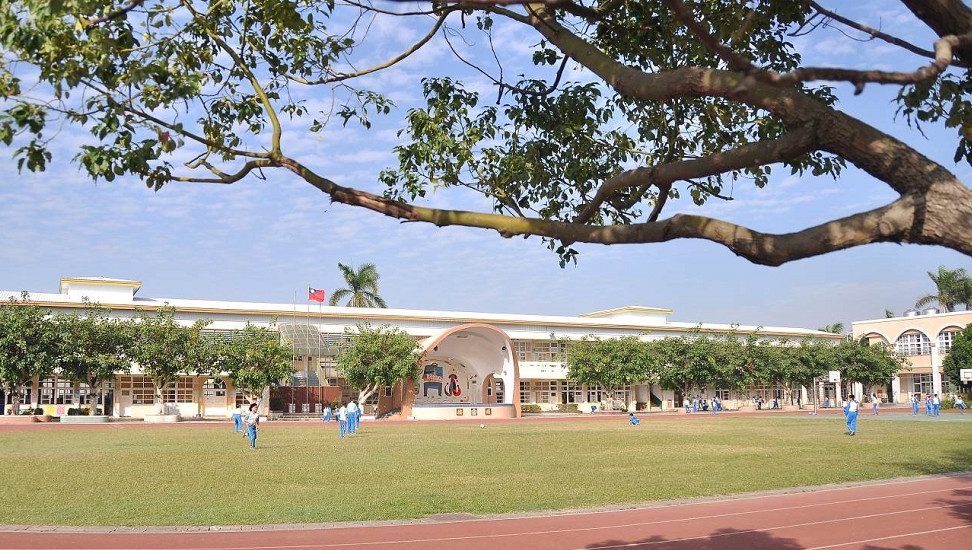
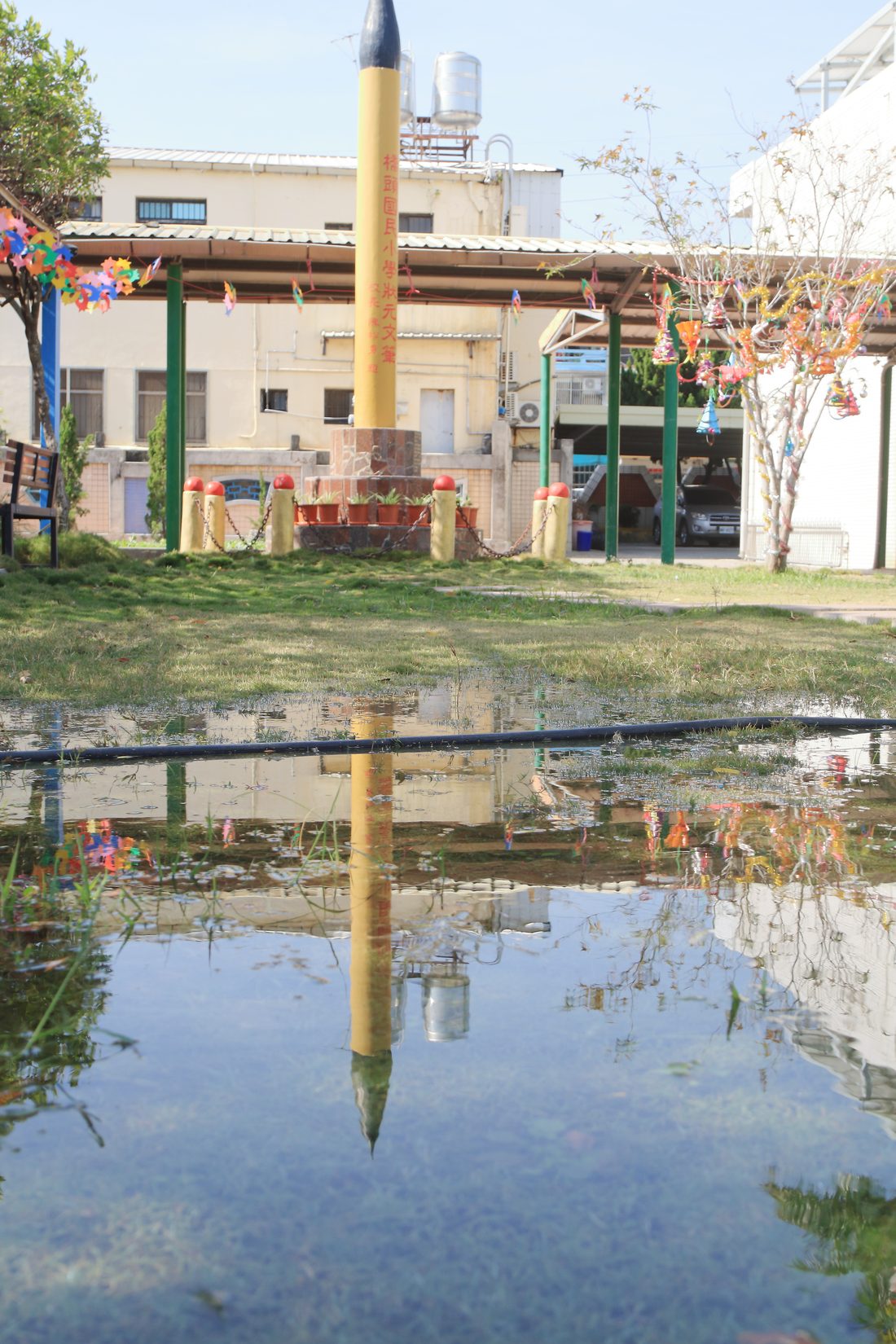
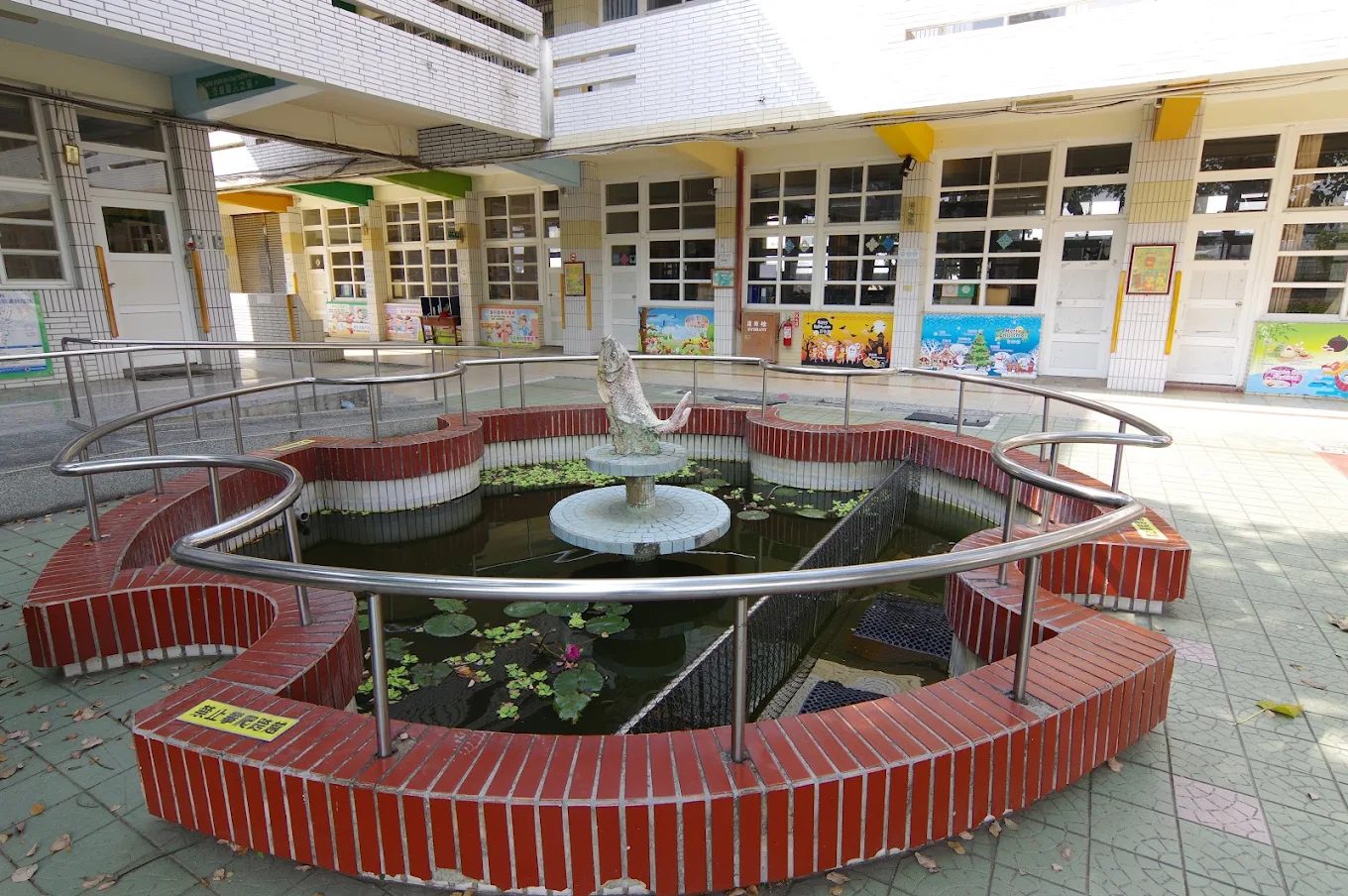
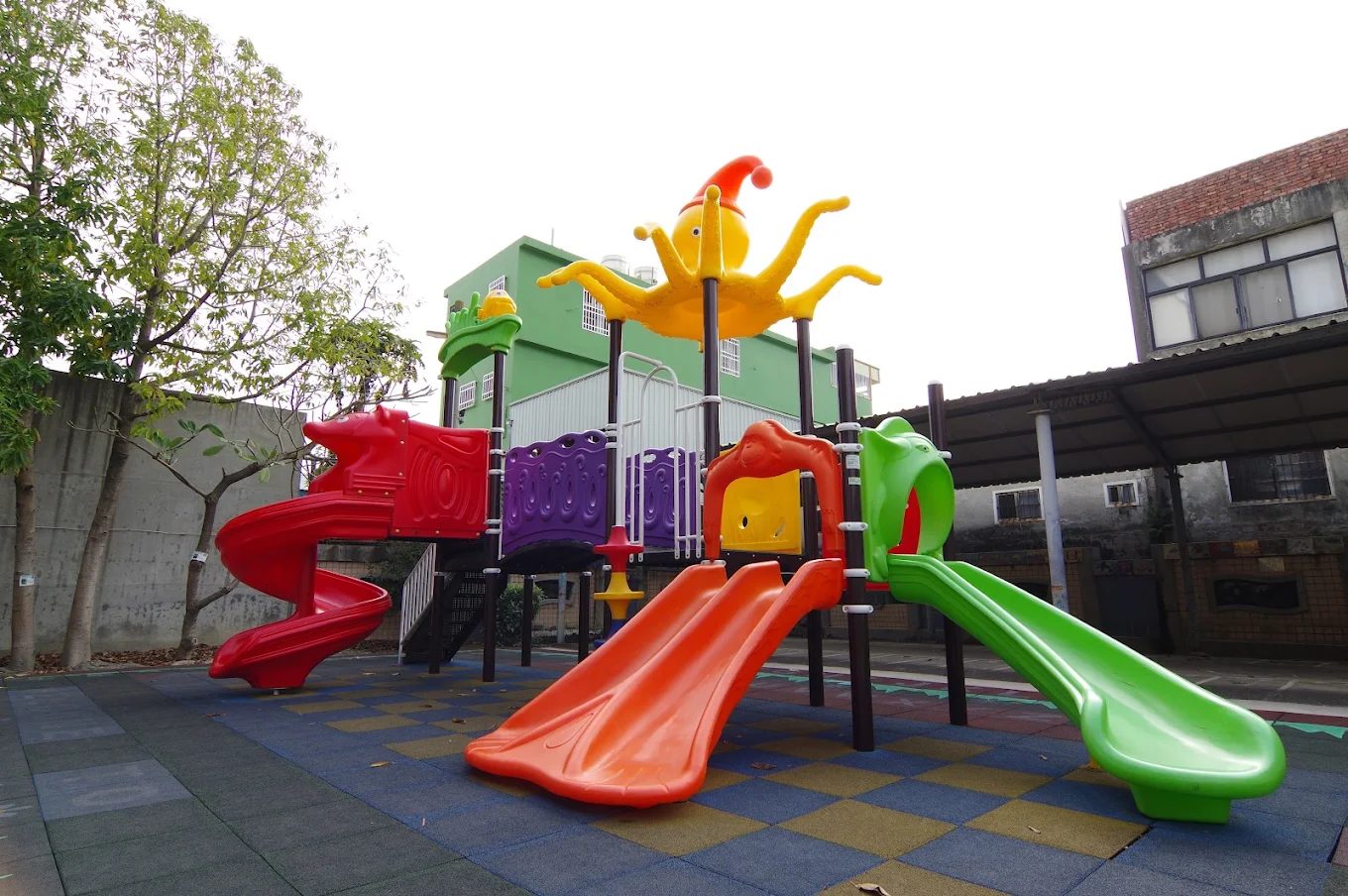
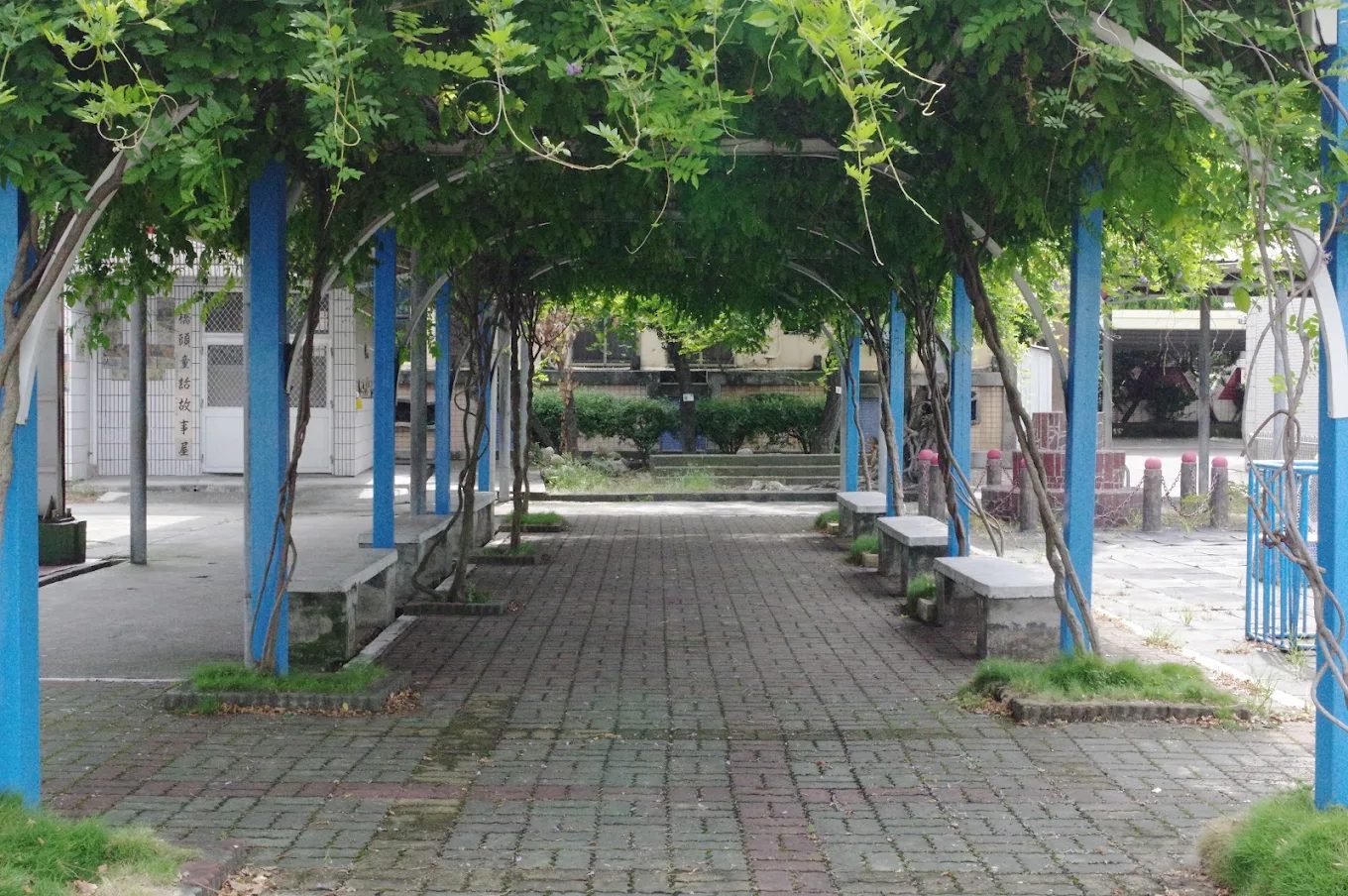
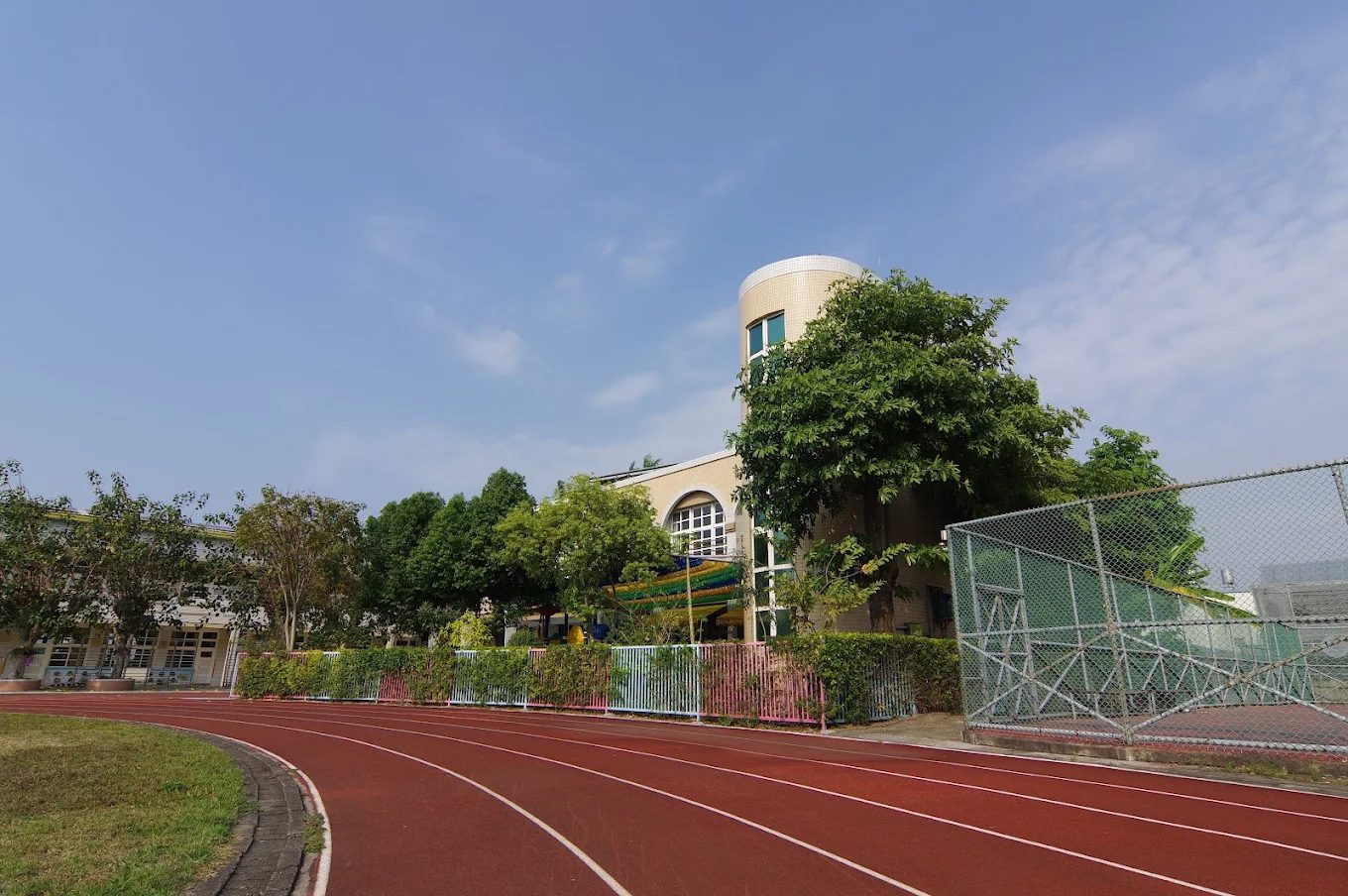
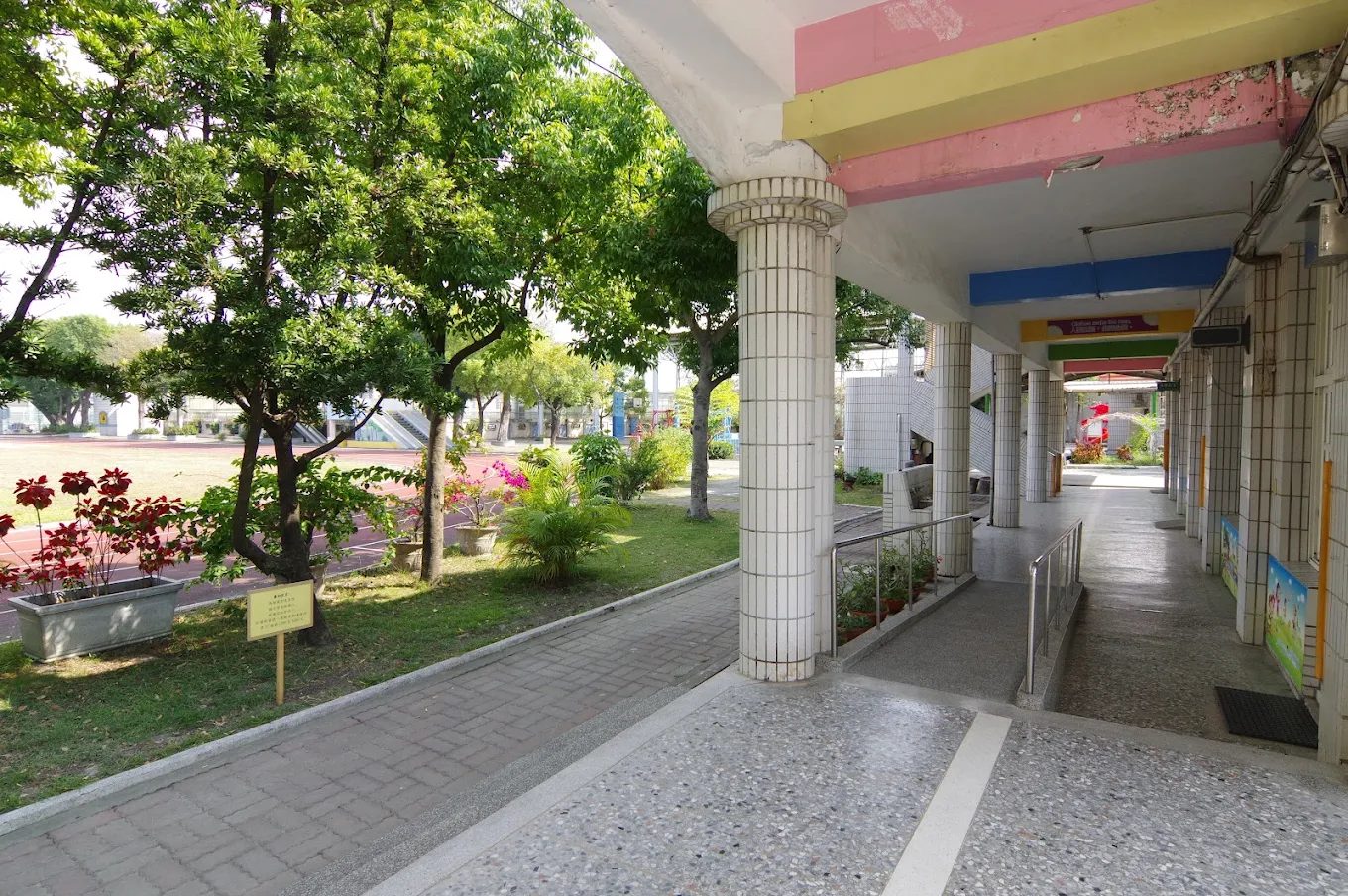
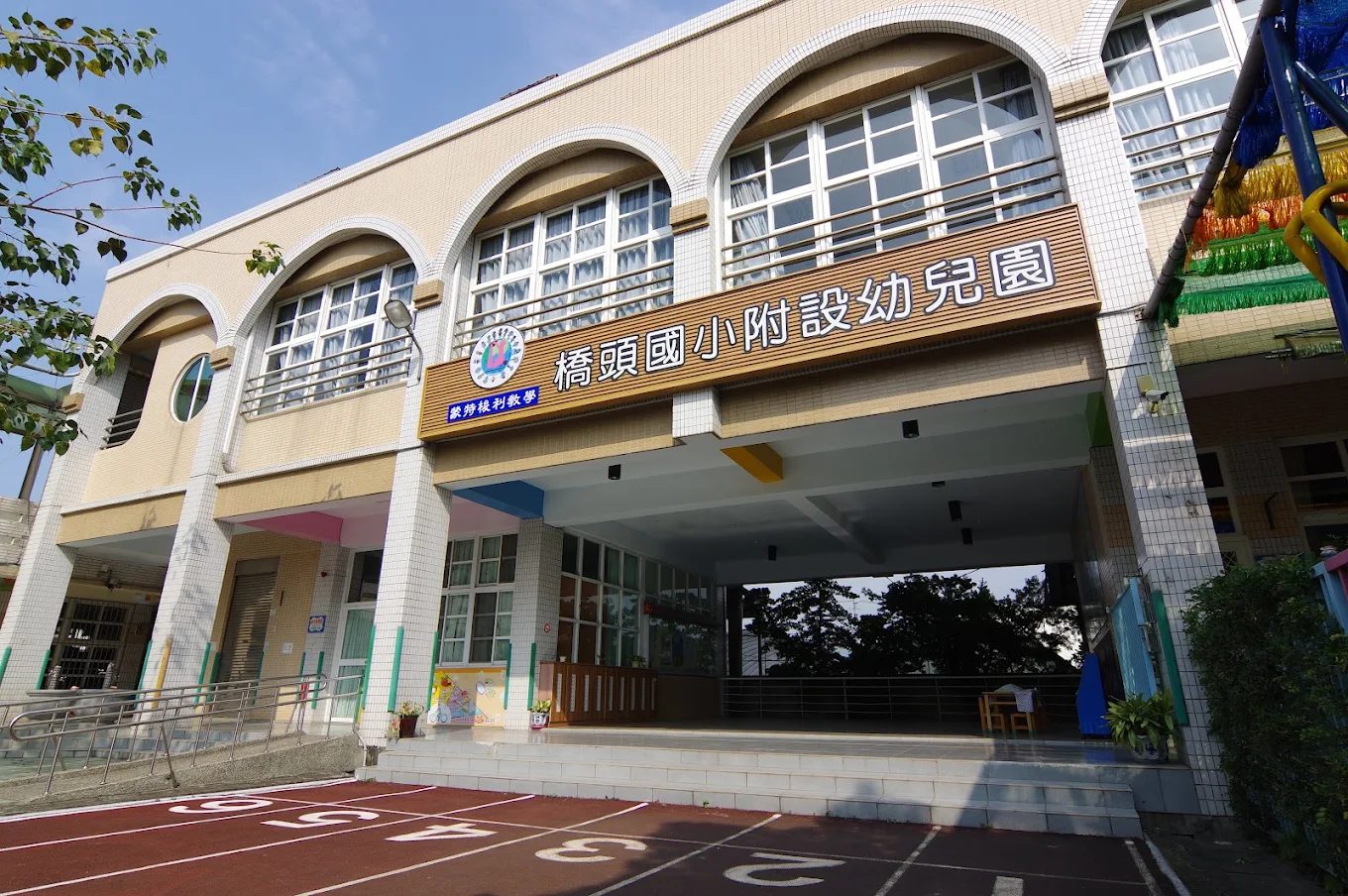
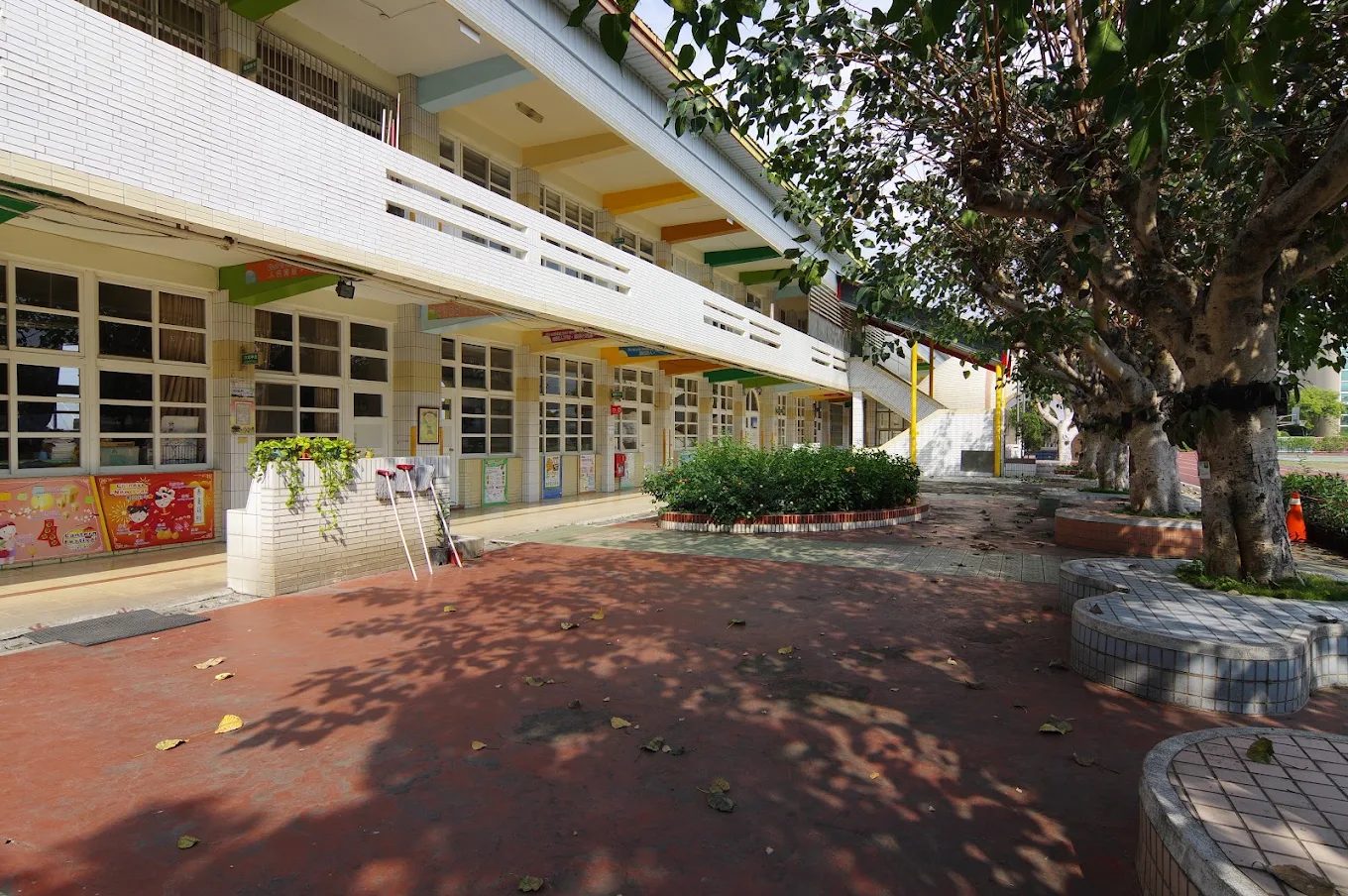
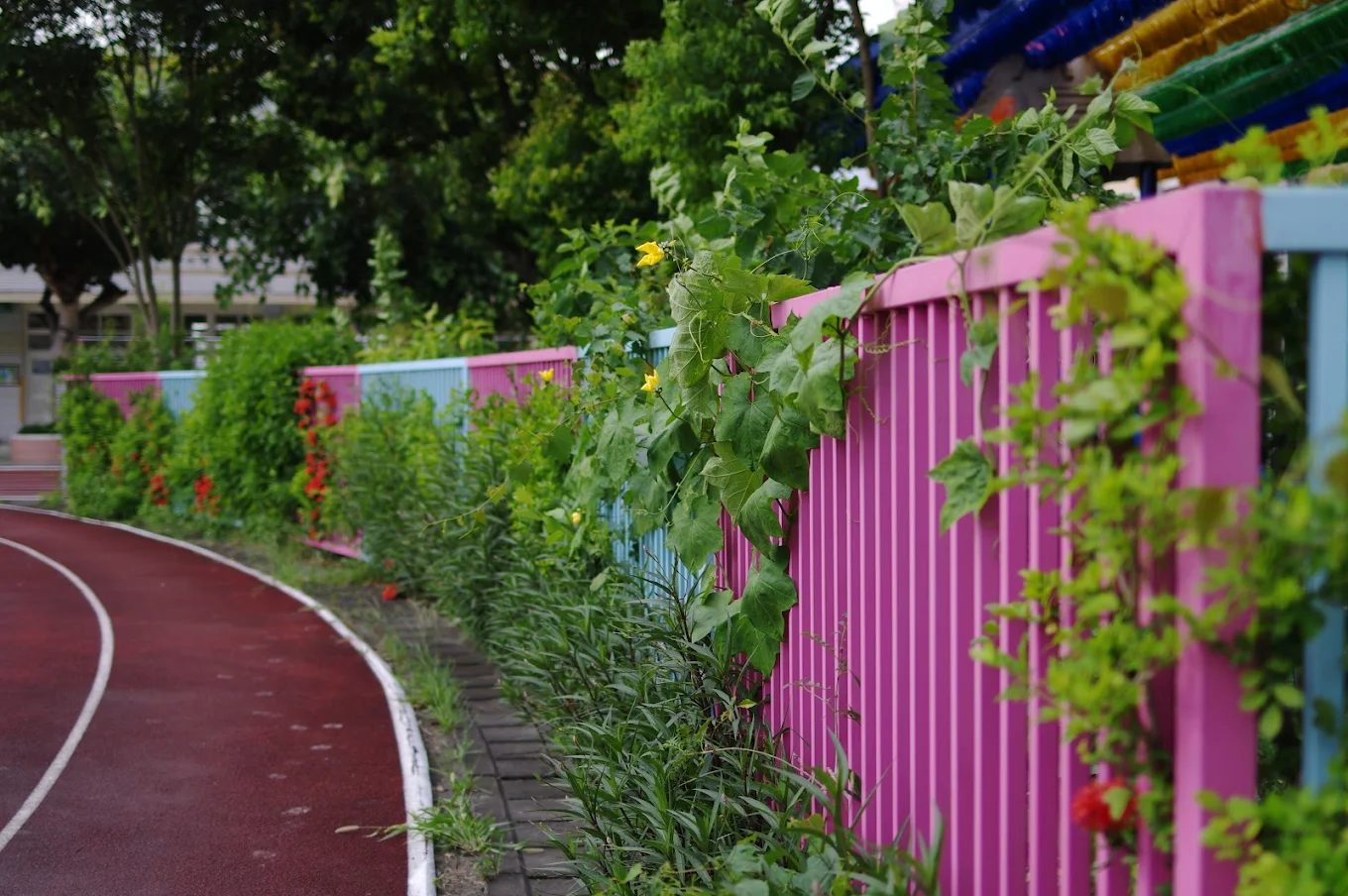
The campus itself covers about two hectares — room enough for a full running track, a covered court, a pond, a play structure, a wisteria walk and a great many trees. The teaching team here works at rooting health and energy and whole character in the children, and at building a campus of many kinds of learning, so that what grows out of it is a new generation with creative thinking and an international outlook.
校園占地約二公頃——放得下一整圈跑道、風雨球場、生態池、遊戲場、紫藤步道,以及非常多的樹。橋頭教學團隊致力扎根學童的「健康活力」與「全人品格」,積極擘劃「多元學習」的優質校園,進而培育具備「創意思考」以及「國際視野」的新世紀人才。
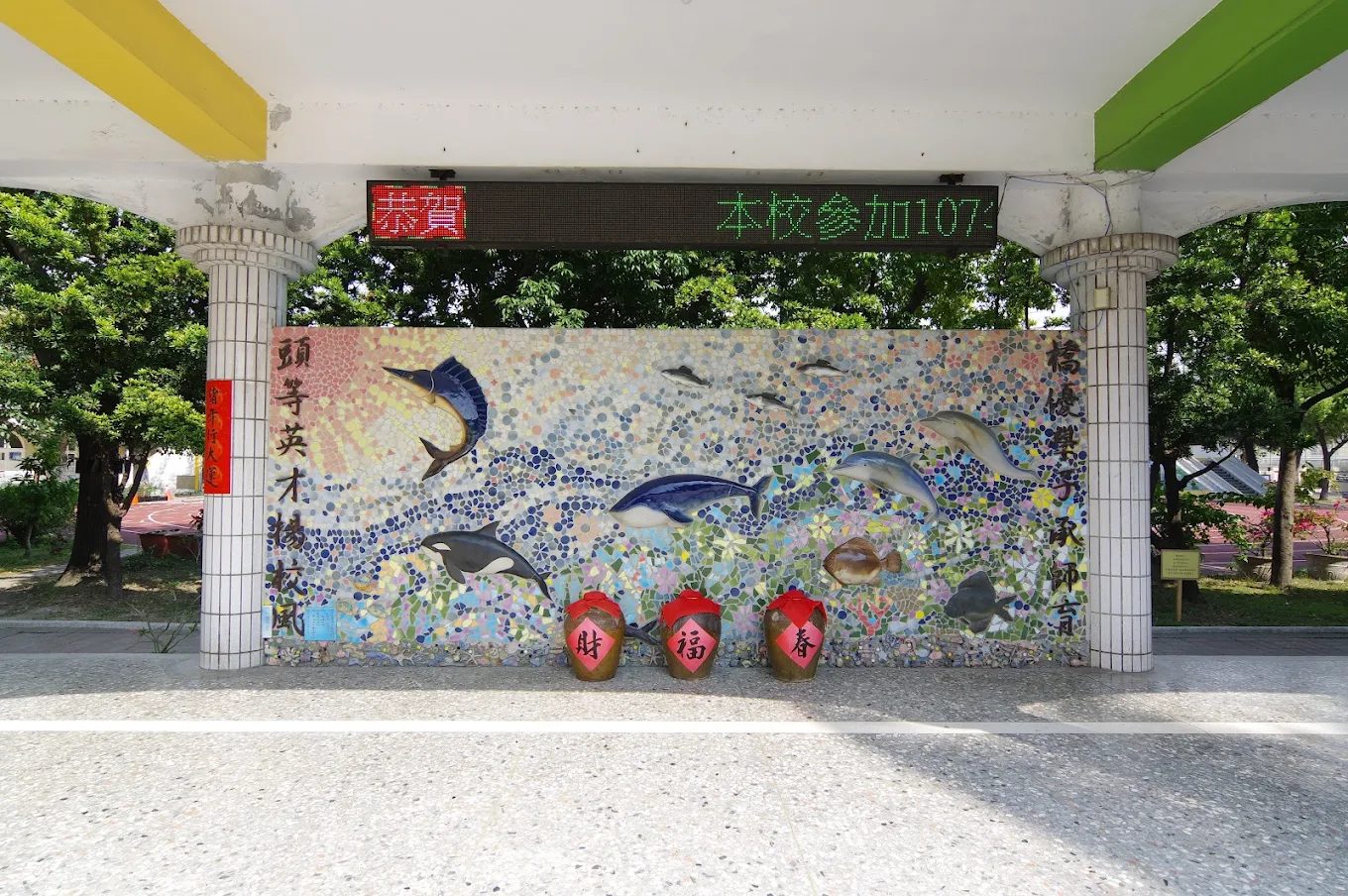
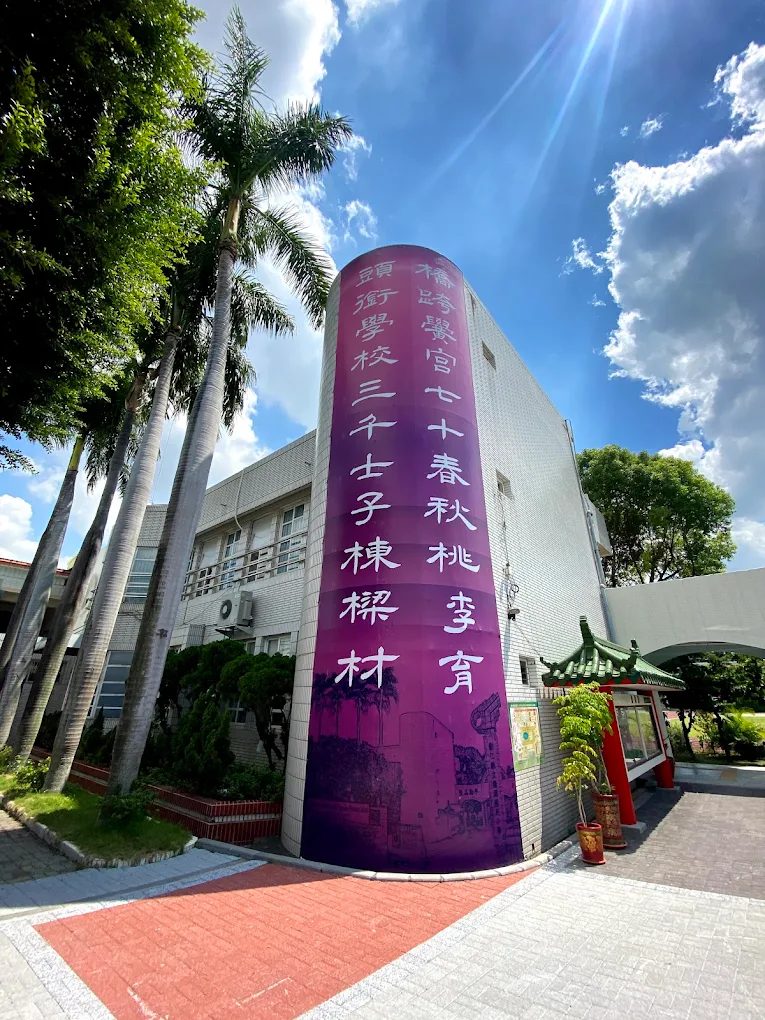
A pair of lines runs down the two columns of the mosaic wall in our entrance hall. Read the first character of each and you get the name of the school: 橋 · 頭. Qiaotou’s fine students carry forward what their teachers give them; its first-rate talents carry the school’s name out into the world.
穿堂馬賽克照壁的兩根柱子上,各寫著一句話。把兩句的第一個字取出來,就是校名——橋、頭:「橋優學子承師育,頭等英才揚校風」。這是一副藏頭聯,藏的正是孩子每天走過的這所學校。
Five things we hope a child leaves here carrying.
我們希望孩子帶著離開的五樣東西。
A school vision is easy to write and hard to check. Ours is written as a picture of a child rather than a description of a school, because a child is something you can actually look at: healthy and full of energy, whole in character, used to learning in more than one way, able to think of something new, and aware that the world is bigger than Shetou.
學校願景很容易寫,但很難檢驗。我們的願景寫的是一幅「兒童圖像」,而不是對學校的描述,因為孩子是可以真的看得見的:健康有活力、品格完整、習慣用不只一種方式學習、想得出新的東西,也知道世界比社頭大。
To get there we work on four things at once, and they are ordinary enough to be done every week rather than announced once a year: character, deeply rooted; balanced learning; health promotion; and reading, put down like a root. Qiaotou children grow up in a warm and carefully made place, and what they pick up there they mostly pick up without noticing — good examples in the people around them, reading in the air of the building, energy in the space to run, and a school that lets each child grow towards what they are actually good at.
為達成學校教育願景,我們務實推動四件事,而這四件事平常到可以每週做,而不是一年宣布一次:『品格深耕』『均衡學習』『健康促進』與『閱讀扎根』。橋頭學子在溫馨、精緻的學習環境中潛移默化,在有形的環境中享受無形的良師益友學習典範、自然豐富的閱讀空氣、活力奔放的健康能量與適性揚才的學習氛圍。
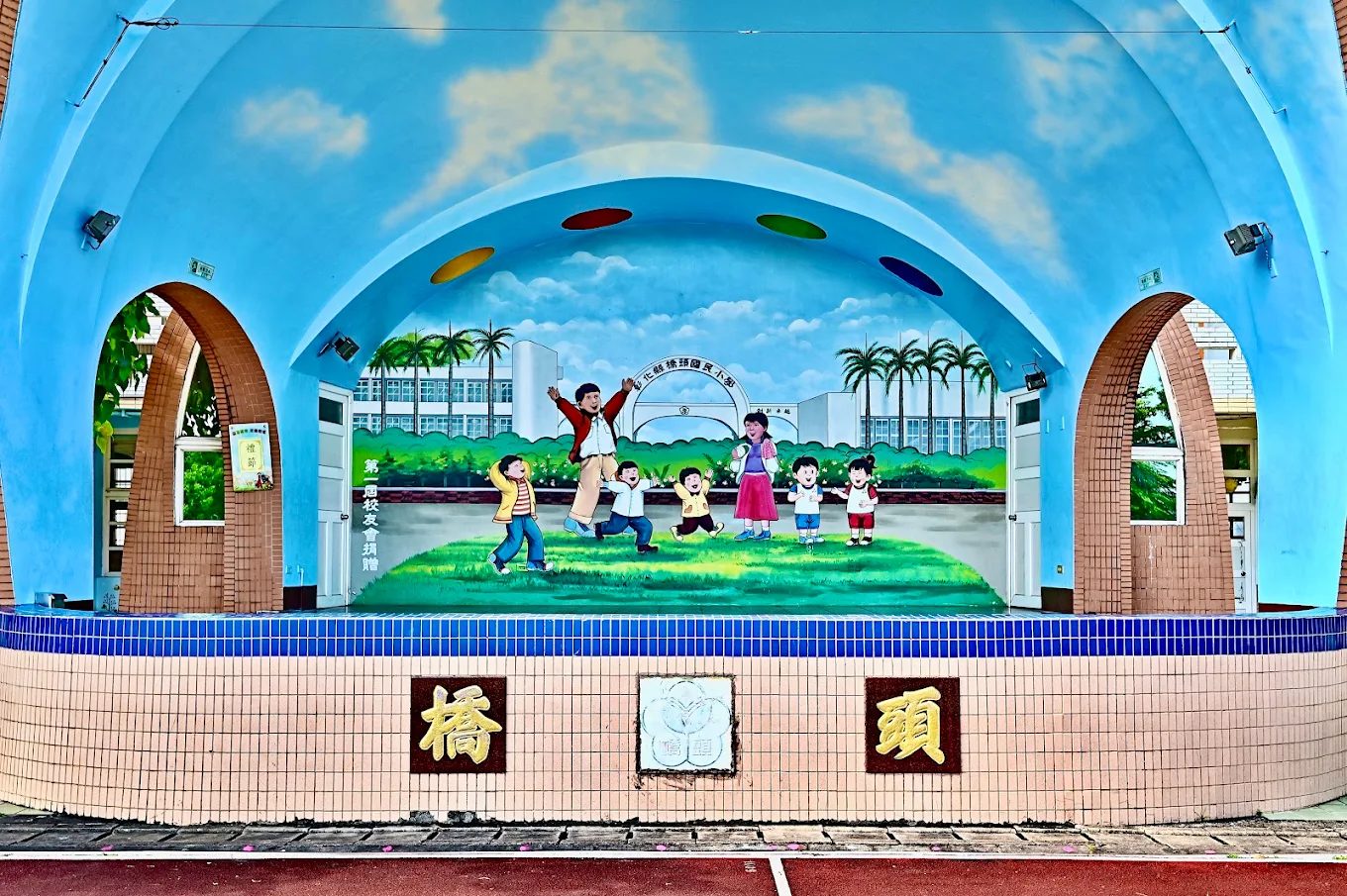
The mural on our stage is not a landscape and not a slogan. It is children running — on the grass, in front of this building, with a teacher standing in the middle of them with both arms open. The letters set into the tiling below spell out 橋 and 頭 with the school crest between them. It is a fair summary of the place: the name, the adults, and the running.
司令台上的畫不是風景,也不是標語,而是正在跑的孩子——在草地上、在這棟樓前面,中間站著一位張開雙手的老師。台座磁磚上嵌著「橋」「頭」兩個金字,中間是校徽。這其實就是這所學校的摘要:名字、大人,以及奔跑。
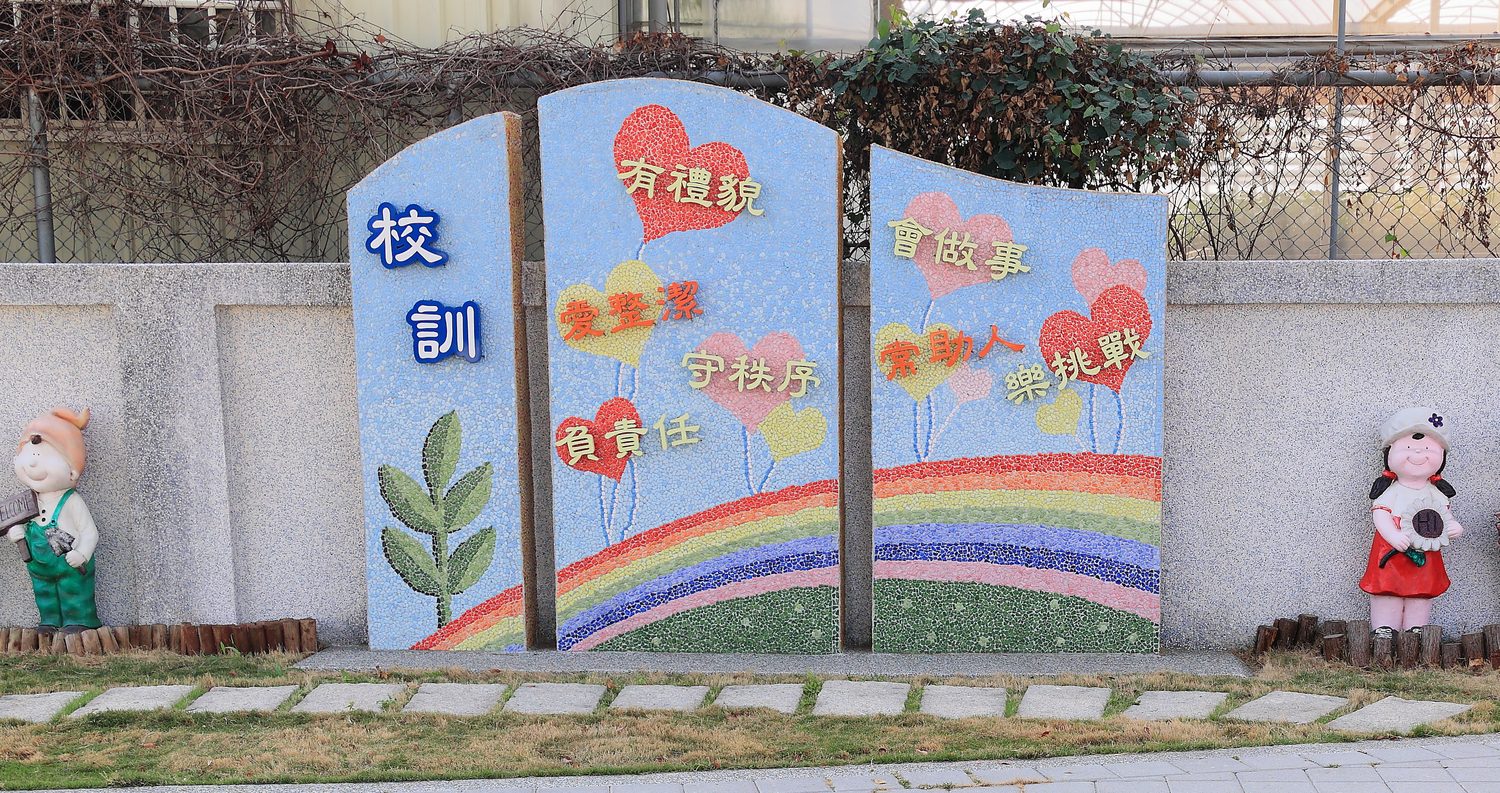
Our school rules are seven balloons rising over a rainbow.
橋頭的校訓,是七顆飛在彩虹上的氣球。
Most schools keep their rules on a noticeboard. Ours are set in broken tile, on three curved panels beside the field, where each one is written inside a heart-shaped balloon floating up off a rainbow. Two figurines of children stand at either end. It is a mosaic, so it will still be there when this year’s six-graders bring their own children back to look at it.
多數學校把校訓放在公佈欄。橋頭的校訓拼在碎磁磚上,做成操場邊三片弧形的牆板,每一句都寫在一顆愛心形狀的氣球裡,從一道彩虹上飄起來,牆的兩端各站著幾個孩子造型的公仔。因為是馬賽克,所以等今年的六年級帶著自己的孩子回來看的時候,它還會在那裡。
Read together, they describe a child rather than a rule: Qiaotou children are polite, keep things clean, keep order, take responsibility, get things done, help others often, and enjoy a challenge. The last one is the one worth noticing — it is unusual for a school to put liking difficulty on the same list as tidying up.
七句連起來讀,說的其實不是規定,而是一個孩子:橋頭學童有禮貌、愛整潔、守秩序、負責任、會做事、常助人、樂挑戰。最後一句值得注意——一所學校把「喜歡困難」和「把東西收好」寫在同一張清單上,是很少見的。
Four places on this campus where a book is the point.
校園裡有四個地方,是為了一本書而存在的。
閱讀扎根 — reading, put down like a root — is one of the four things this school works on continuously, and the way you can tell it is real is that it has been given space. Not one library and a poster, but a forest-themed reading room, a community reading station, an open-air pavilion with a bookcase in it, and a wall where the story is escaping from the book.
「閱讀扎根」是橋頭持續推動的四件事之一,而看得出它是真的的方式,是它被分到了空間——不是一間圖書室加一張海報,而是一間森林系的閱讀室、一個社區共讀站、一座裡面放了書櫃的涼亭,還有一整面故事正從書裡跑出來的牆。
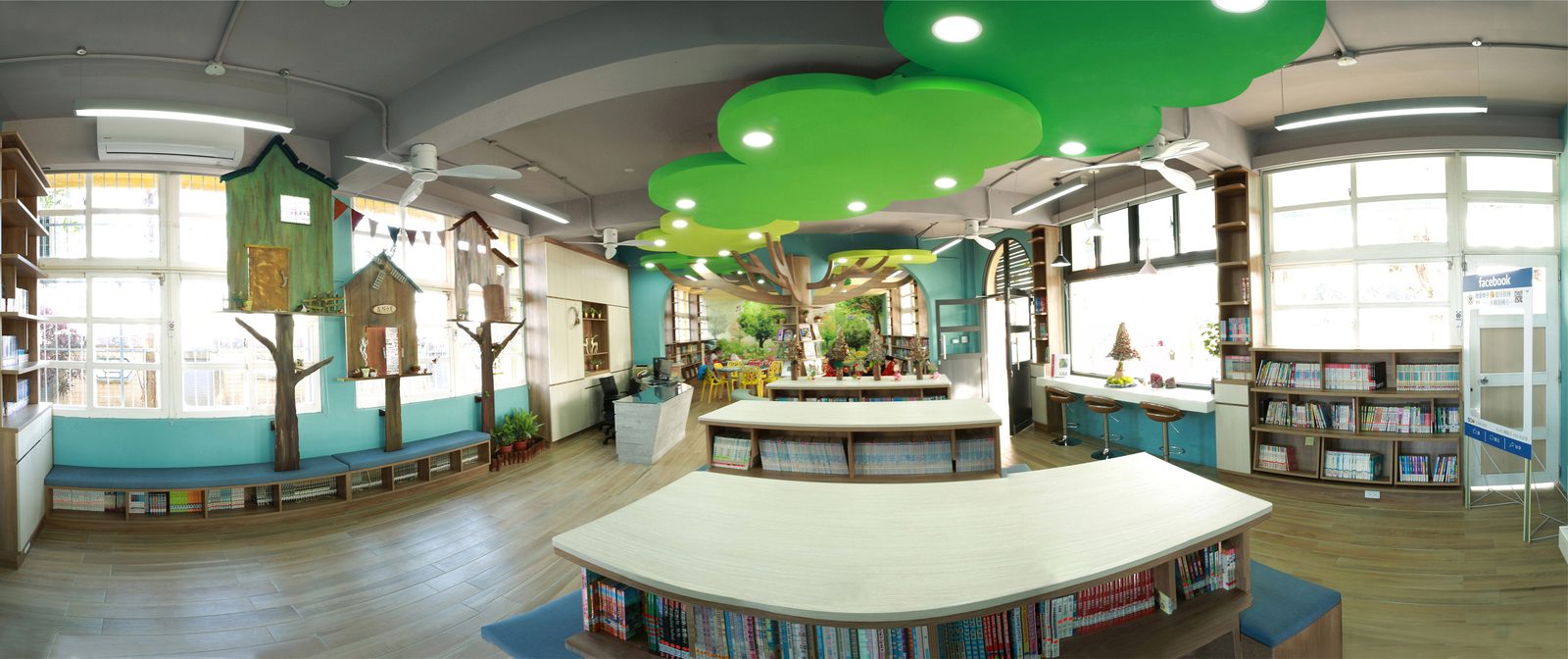
A room designed as a small wood: cloud lights on the ceiling, a tree in the middle, cabins along the wall and low benches under the windows. It is where the school put its money on the idea that where you read changes whether you read. 一間被設計成小樹林的房間——天花板是雲、中間是樹、牆邊是小木屋。學校把預算押在一個想法上:在哪裡讀,會影響到底讀不讀。
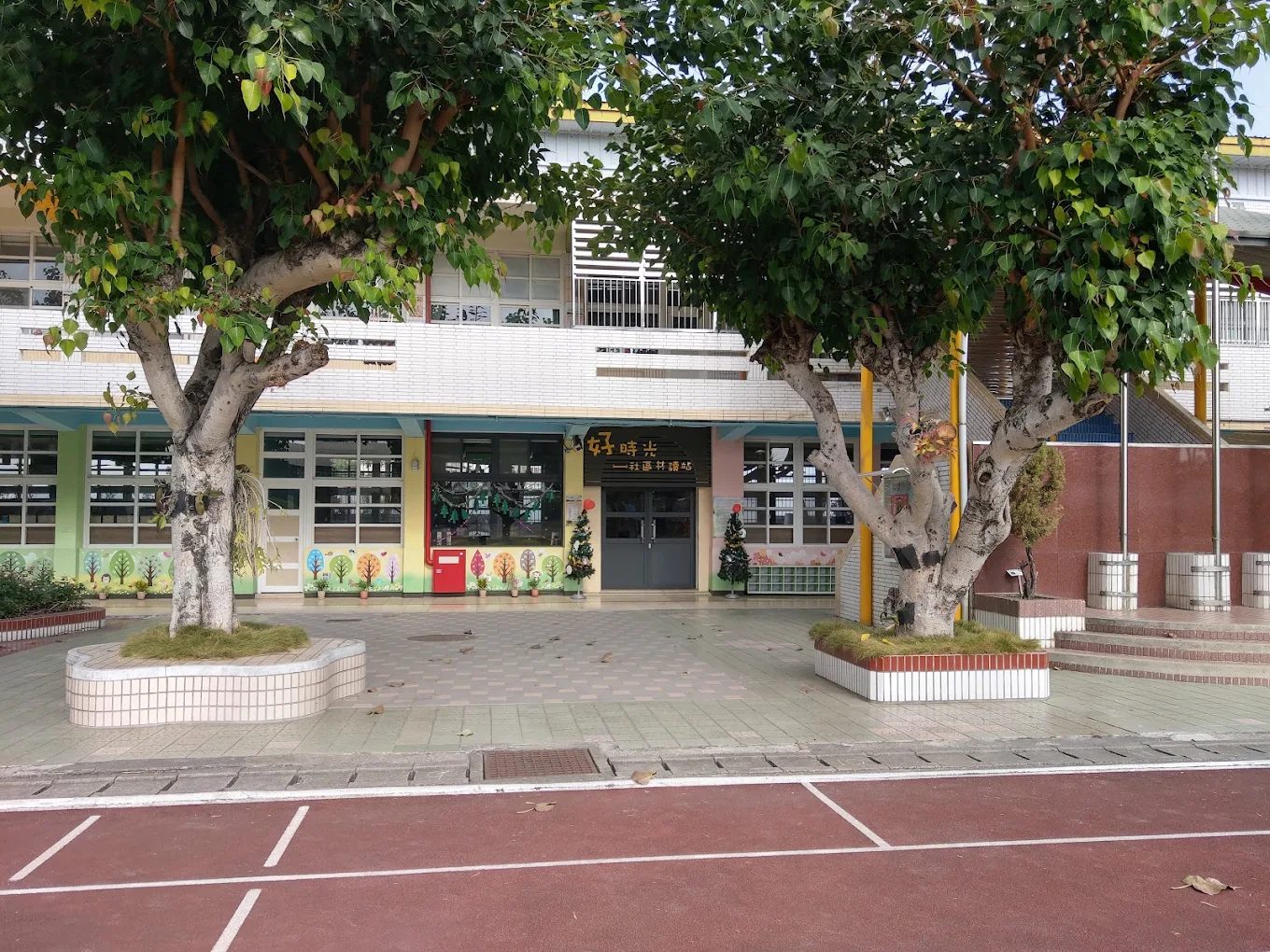
A reading room that is not only for the children enrolled here. The sign over the door says 好時光 — good times — and underneath, community reading station. Two old banyans stand guard at the entrance. 一間不只給在校學生用的閱讀空間。門上的招牌寫著「好時光」,下面是「社區共讀站」,門口由兩棵老榕守著。
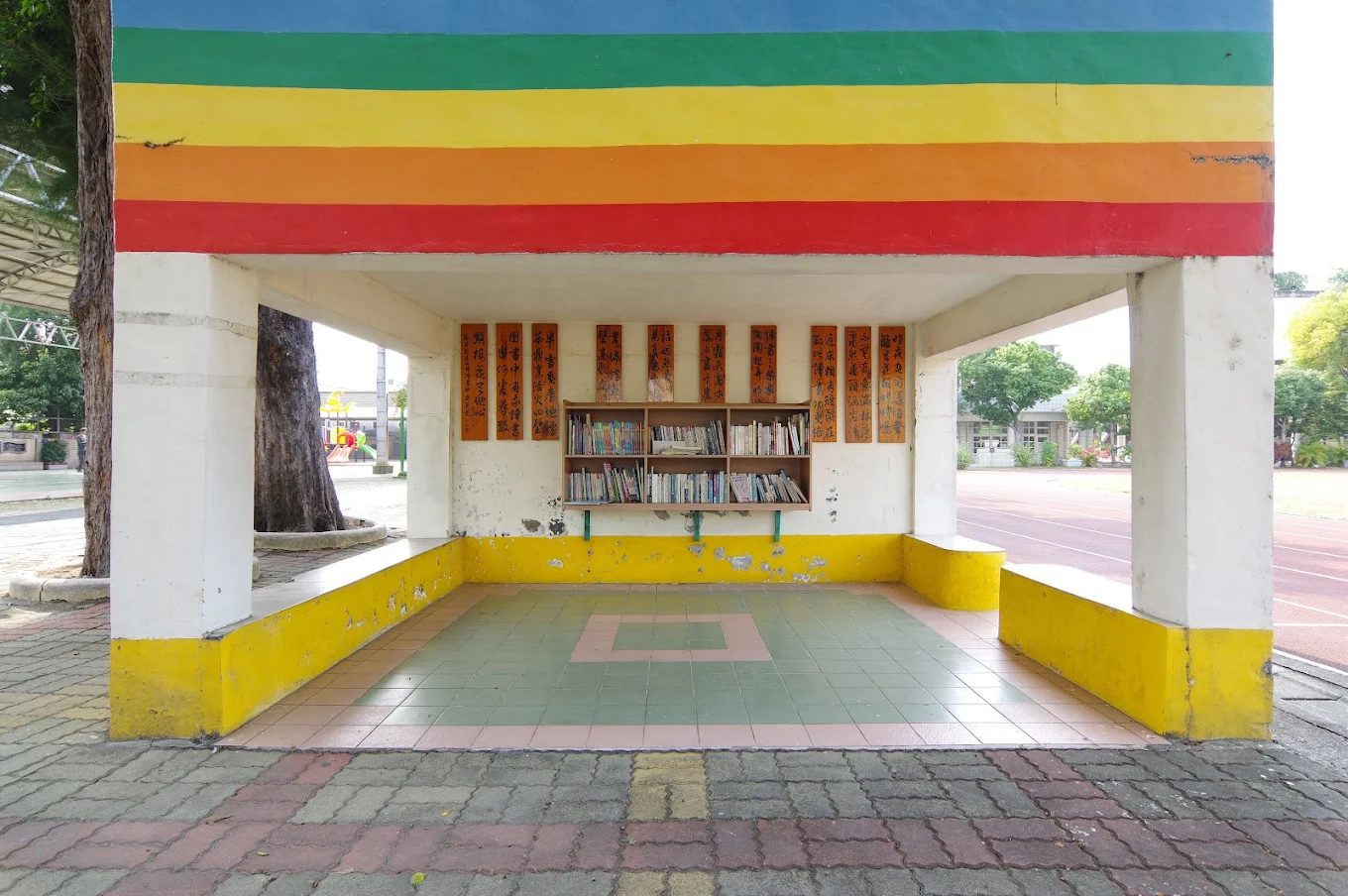
An open shelter at the edge of the track, painted in five bands of rainbow, with a bookcase bolted to the back wall. No door, no borrowing card, no librarian — you sit down in the shade and read until the bell. 操場邊的一座開放涼亭,屋簷漆成五道彩虹,後牆直接鎖上一組書架。沒有門、沒有借書證、沒有管理員——坐進陰影裡讀到打鐘為止。
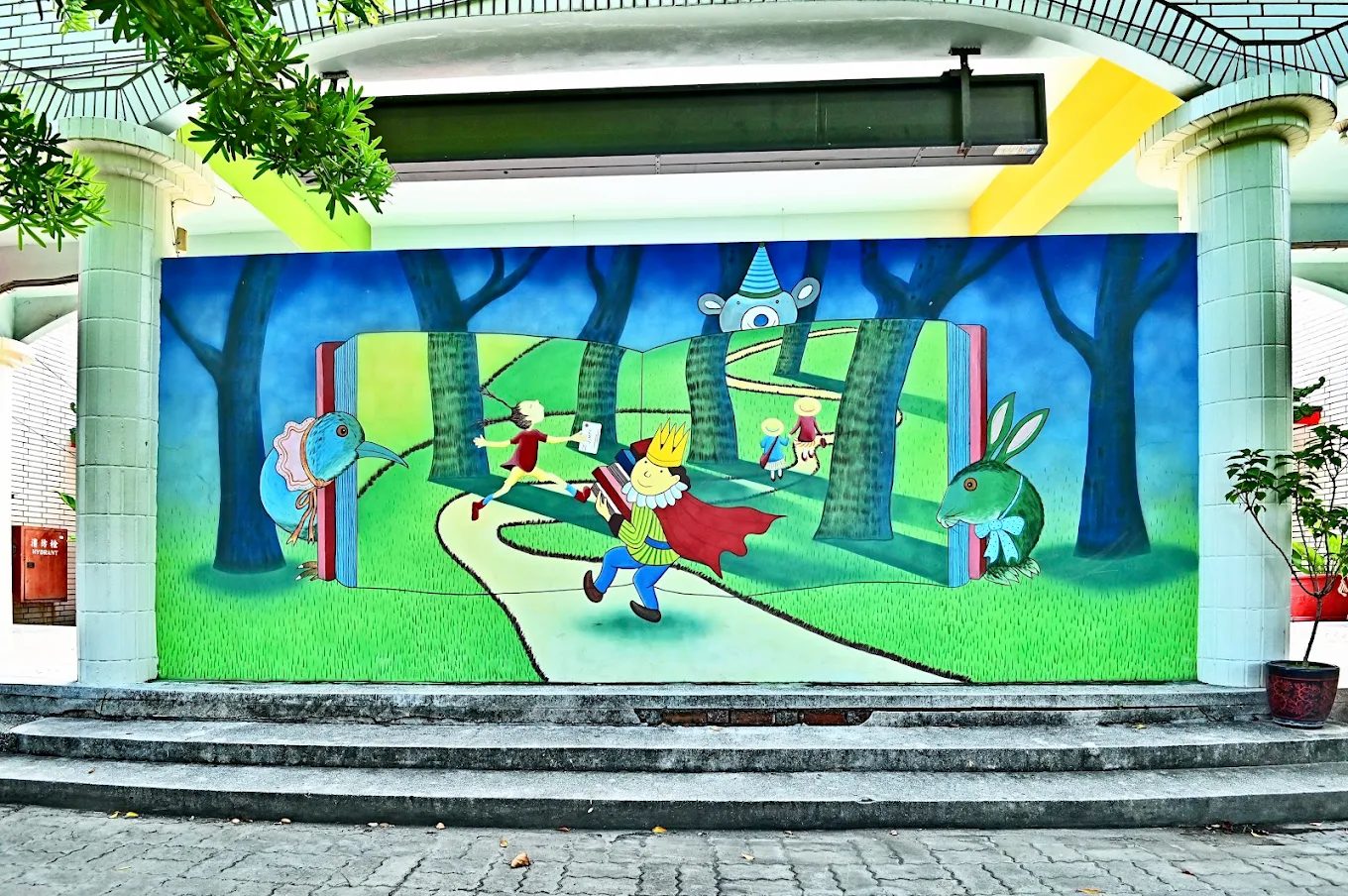
A mural of a book standing open in a wood, its pages turned into a path, with a child in a crown and a red cape running down it and a rhinoceros in a party hat watching from the trees. It makes an argument for reading without using the word. 一幅畫著書本立在森林裡的壁畫,書頁變成一條路,一個戴皇冠、披紅斗篷的孩子正沿著路跑,樹後還有一隻戴派對帽的犀牛在看。它替閱讀說了話,但一個「讀」字都沒用到。
Skate, balance, swing, dance, spin, sculpt.
滑行、平衡、揮拍、律動、旋轉、捏塑。
Six clubs run at Qiaotou, and between them they cover an unusual range: two that are about balance, one about timing, one about rhythm, one about hand-eye coordination, and one about sitting still. Every one of them has its own English words, its own set of instructions a teacher gives out loud, and its own sentences a child needs in order to join in — and all of that is written out for you on the Lessons page.
橋頭有六個社團,而這六個加起來涵蓋的範圍其實很不尋常:兩個練平衡、一個練時機、一個練節奏、一個練手眼協調,還有一個練坐得住。每一個社團都有自己的英文單字、老師會喊出口的口令,以及孩子加入時用得到的句子——全部寫在課程頁上。
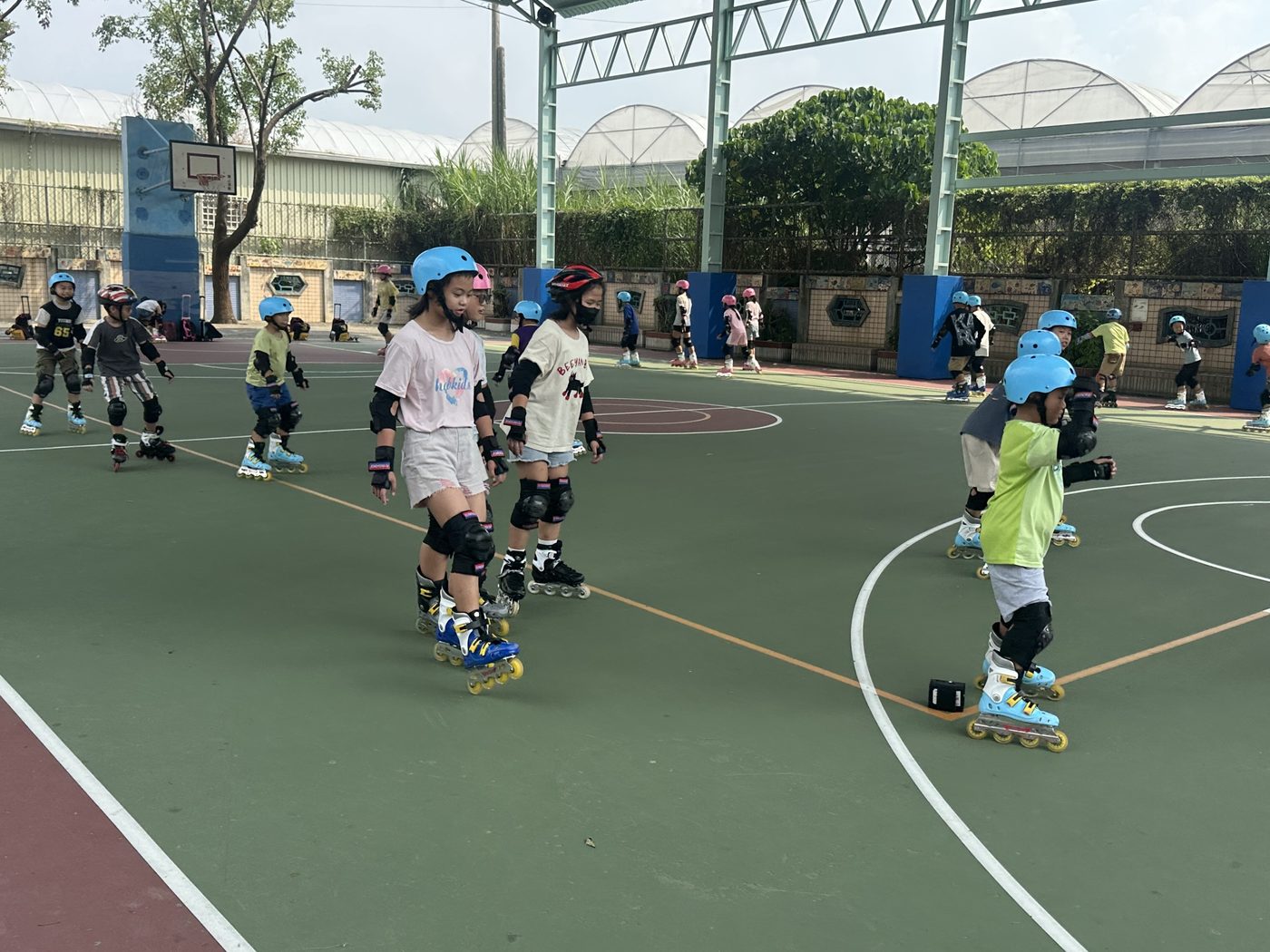
體驗陸上飆速與風同行的快感!訓練平衡感與敏捷度,帶你滑出自信與酷炫招式。
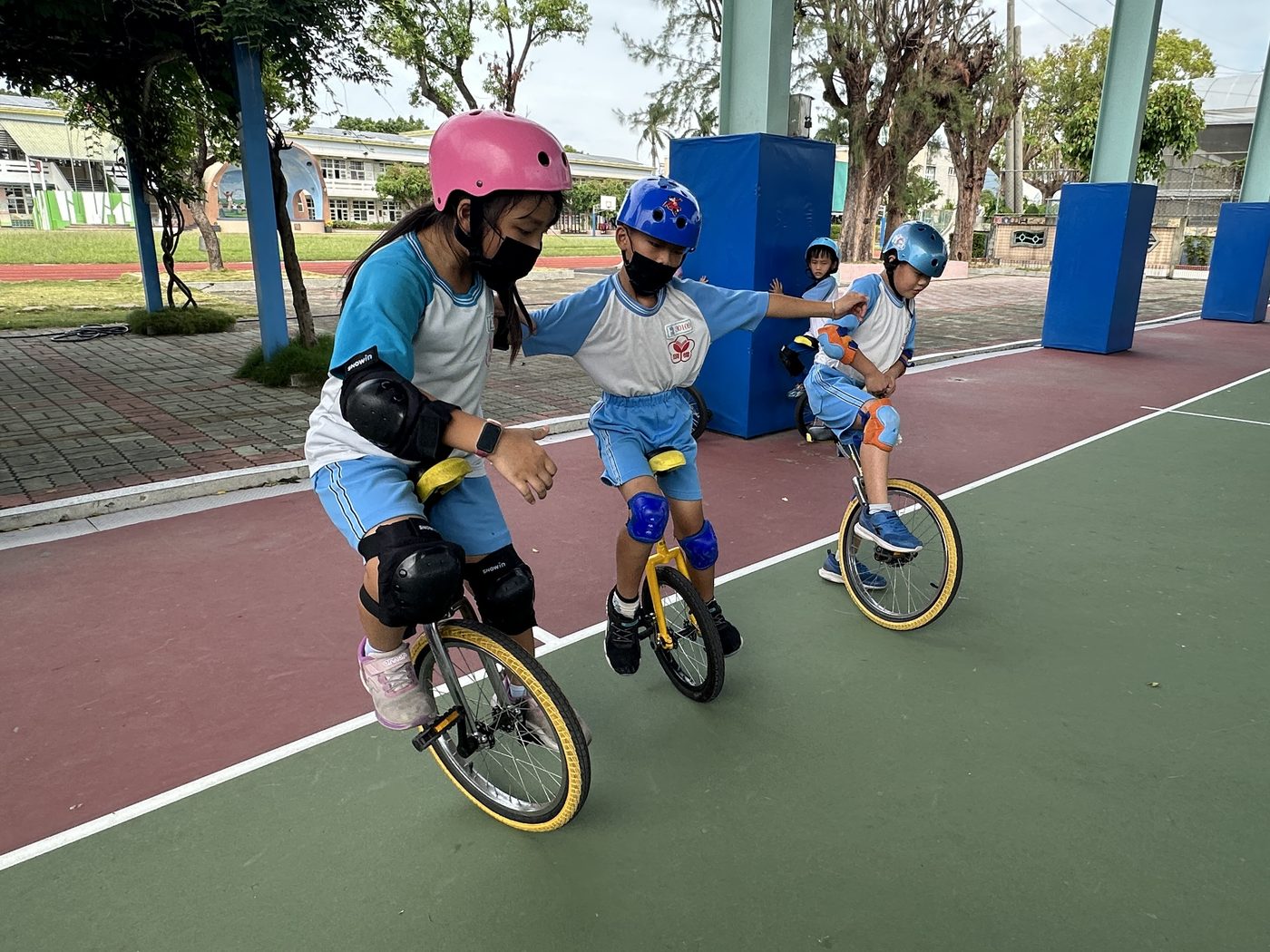
挑戰極致平衡!從搖搖晃晃到自由駕馭,培養專注力與堅毅意志,解鎖驚艷特技。
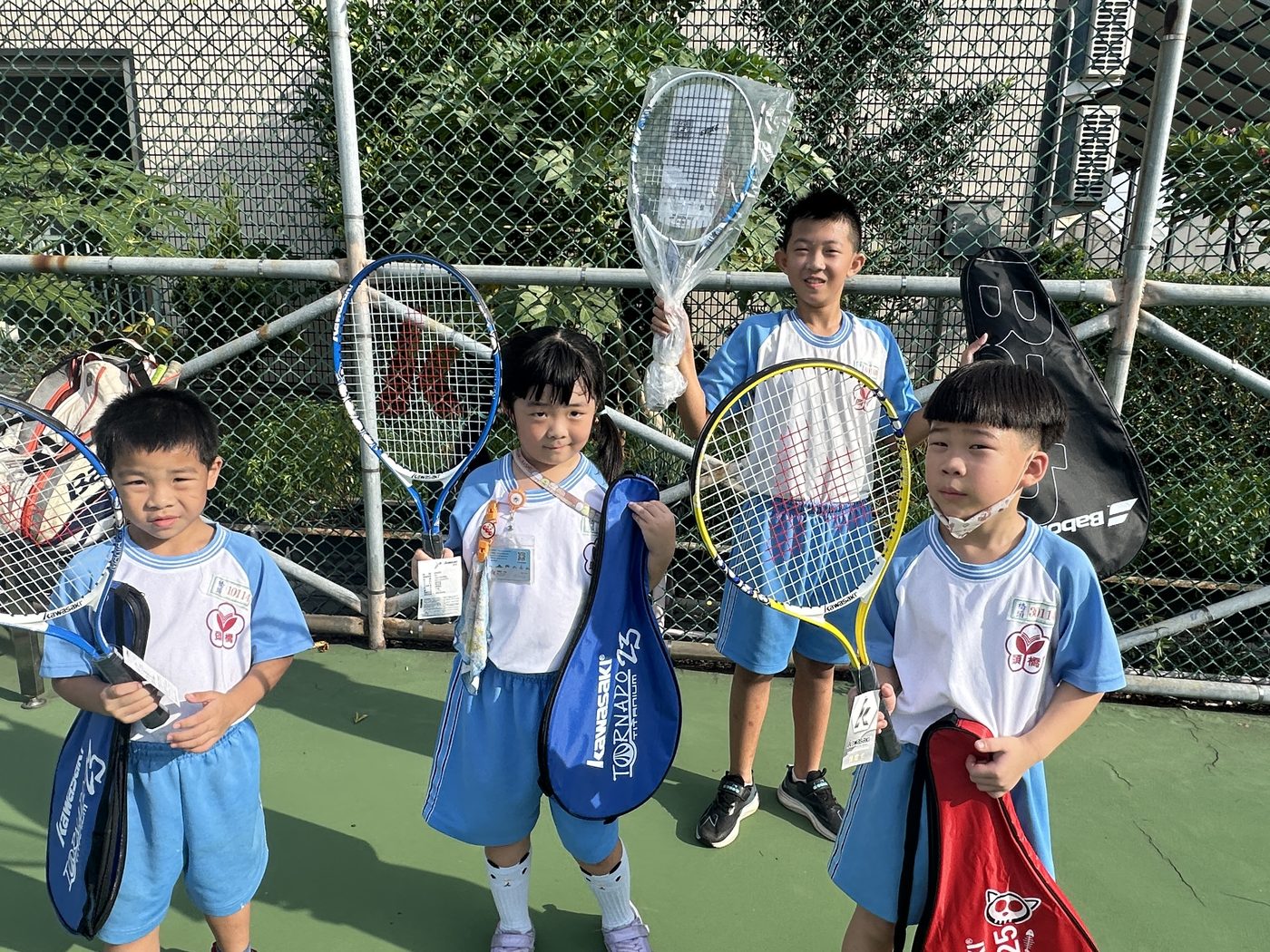
享受揮拍擊球的暢快打擊感!提升心肺耐力與爆發力,在對決中展現敏捷與策略。
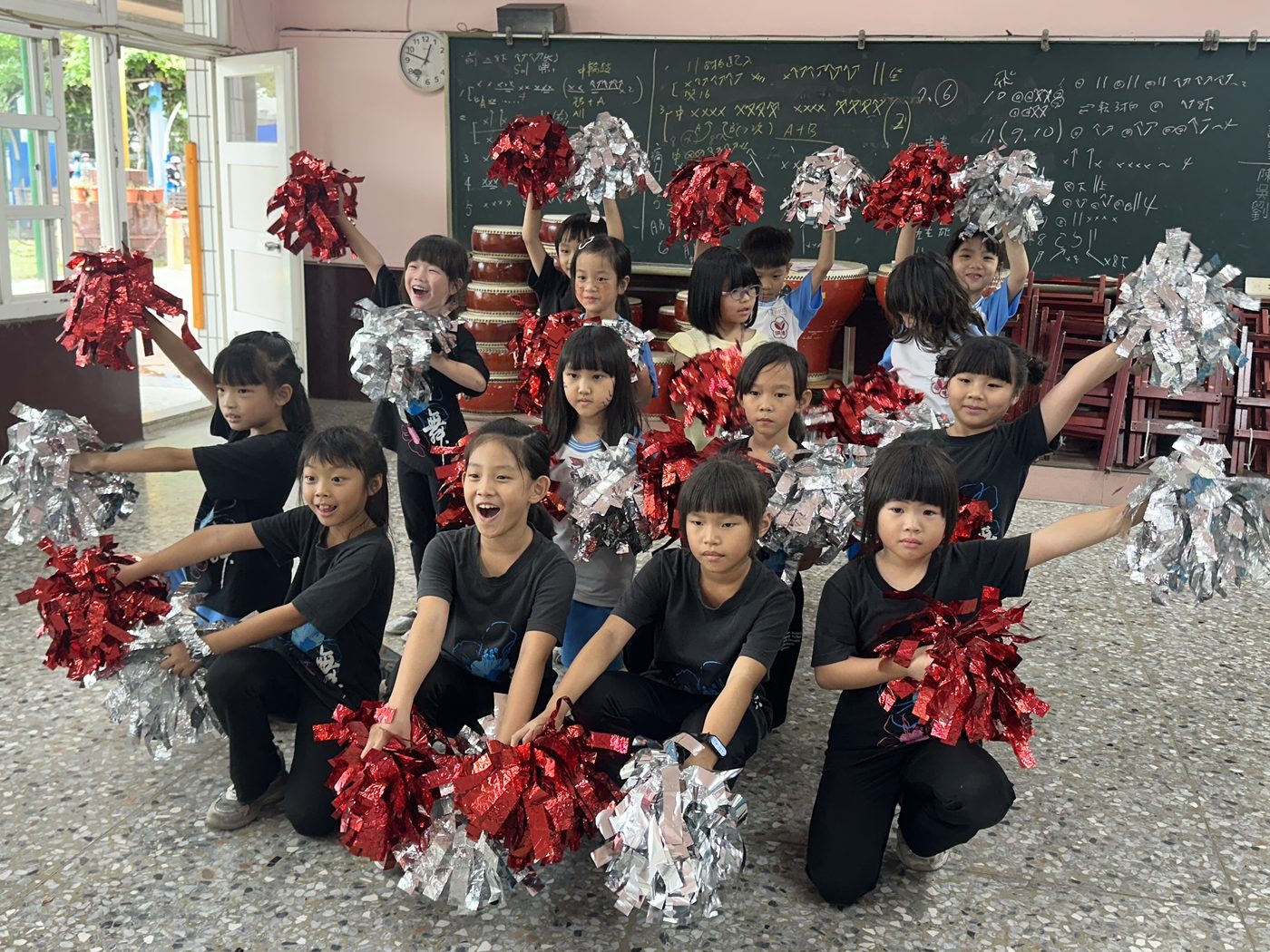
隨音樂節奏自由律動,展現個人魅力!鍛鍊肢體協調與展現力,跳出滿滿活力。
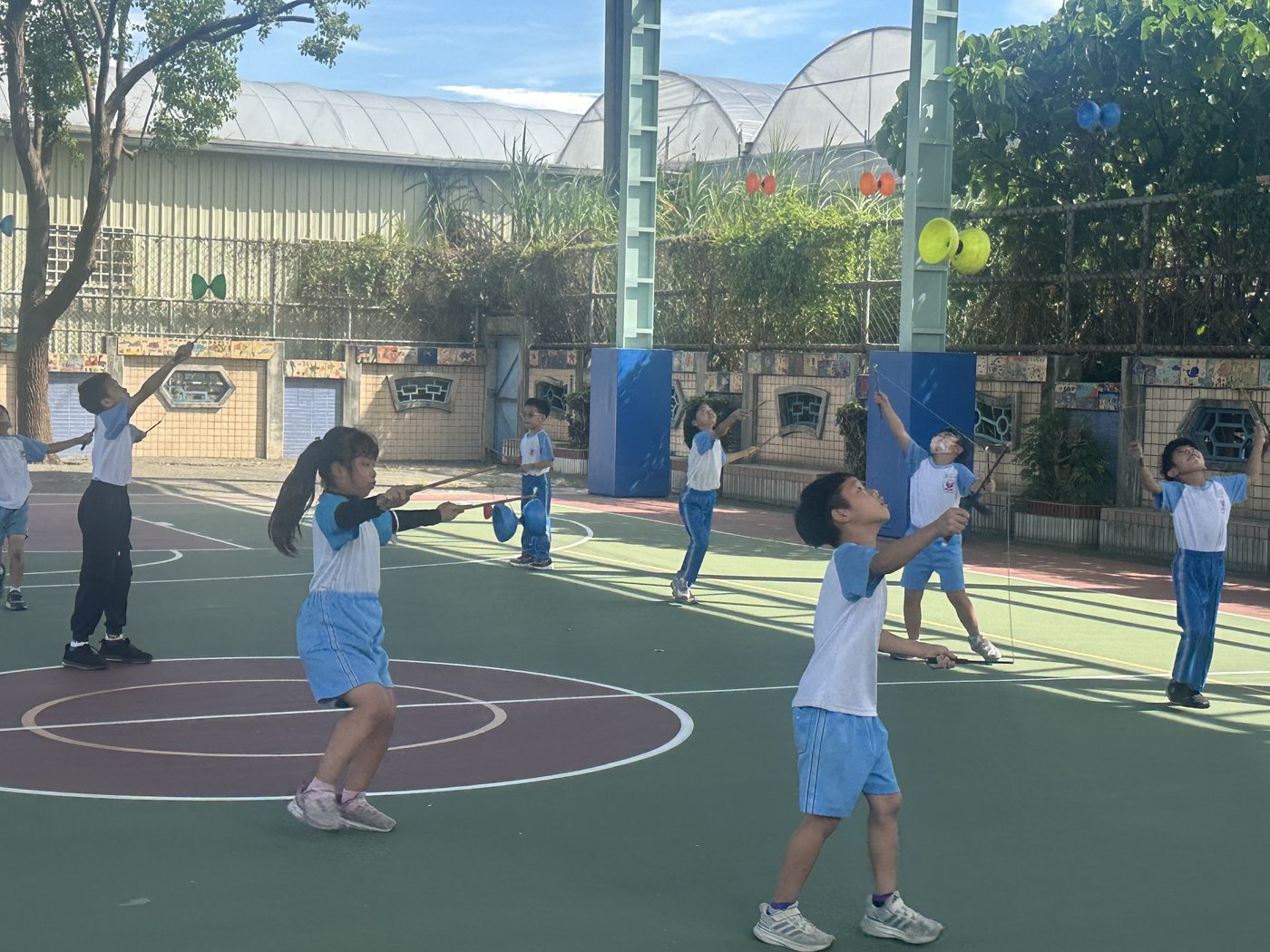
傳承經典民俗技藝,融入創意花式招式!訓練手眼協調與反應力,玩出酷炫新高度。
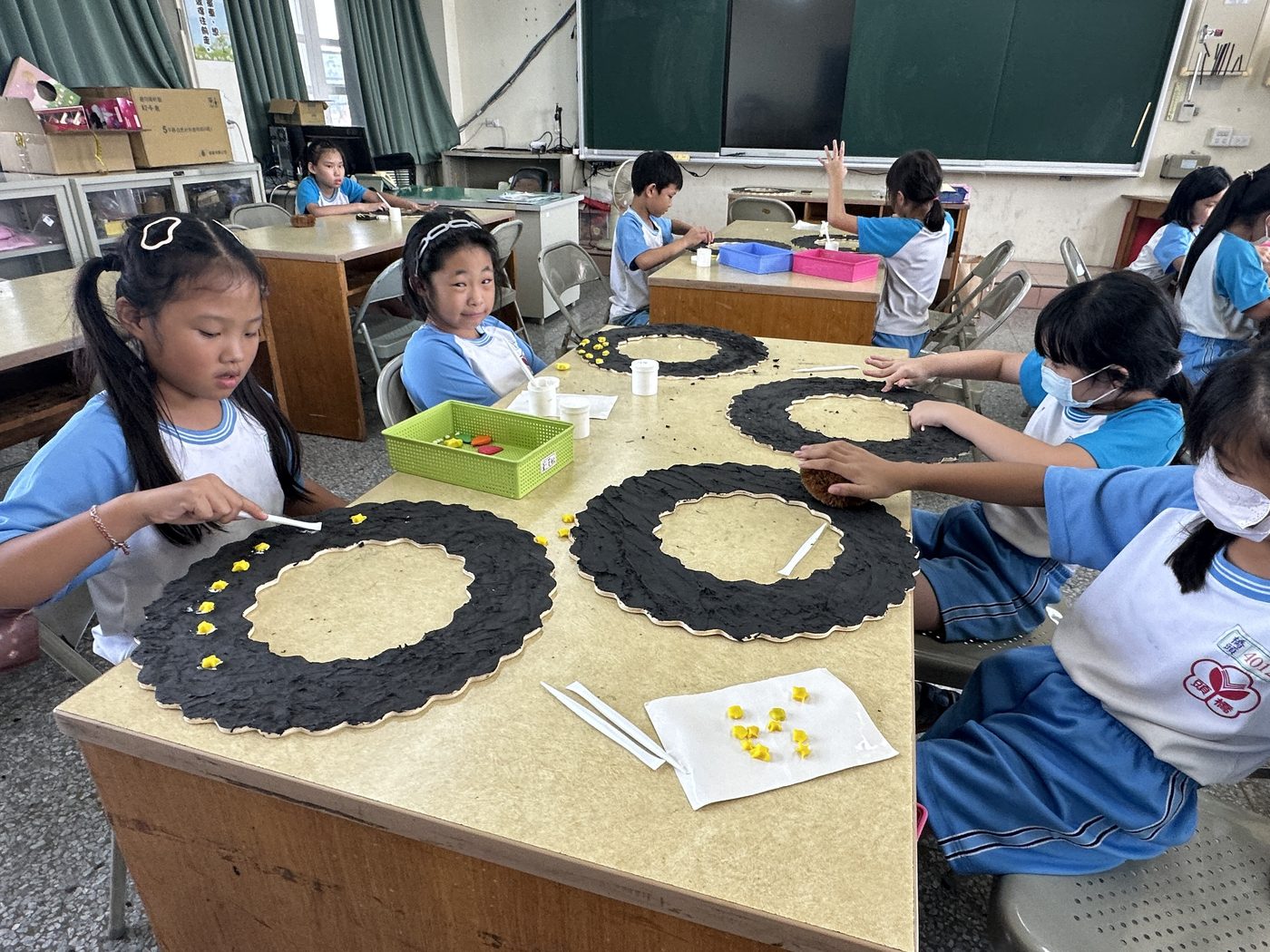
發揮無限想像力,用雙手將靈感化為實體!靜心沉浸手作時光,捏塑專屬藝術品。
Two hectares, and a lot of it is under trees.
兩公頃,而且有很大一部分在樹底下。
Steady work, plainly done — and Qiaotou shining again.
踏實穩健、光芒再現。