What Is the Mazu Pilgrimage? 什麼是媽祖遶境?
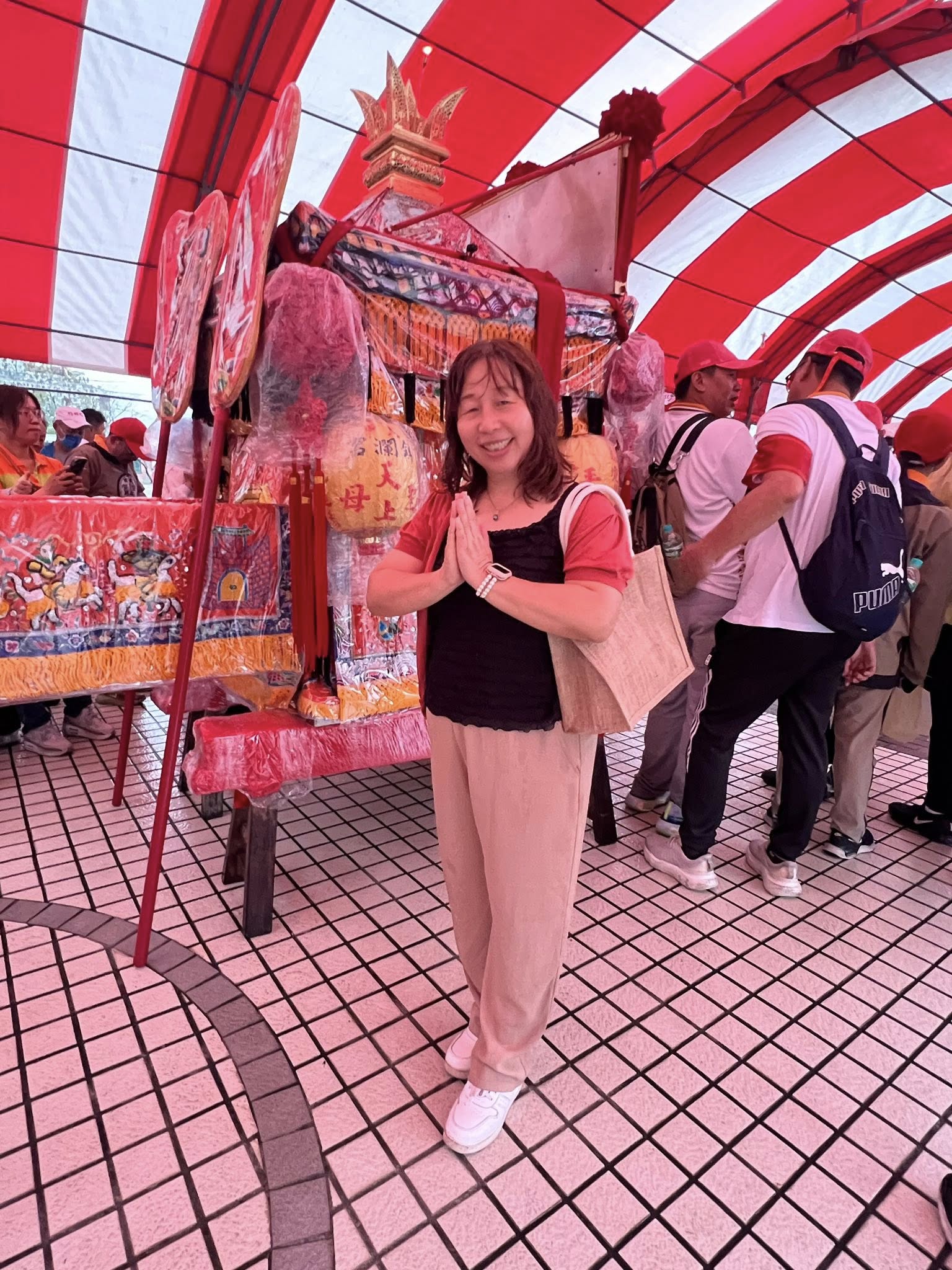
Mazu is Taiwan's goddess of the sea, and for the people of Huatan — an inland farming township — she is a goddess of safe travel, good harvests, and the small mercies that hold a community together. Each year in spring, her statue leaves the great Jenn Lann Temple in Dajia and travels south for nine days, then returns. Over a million pilgrims walk part of the route on foot.
UNESCO has called this one of "the world's three great religious events." For the children of Huatan, it is something simpler: it is the moment Mazu walks past their school. Their parents walked past the same school behind her statue. Their grandparents did too.
媽祖是台灣的海神,但對地處內陸的花壇來說,她是守護出入平安、五穀豐收,與凝聚社區情感的神明。每年春天,媽祖神像從大甲鎮瀾宮南下九天再返回,途中有上百萬信眾徒步隨行。
聯合國教科文組織將大甲媽祖遶境列為「世界三大宗教盛事」之一。但對花壇的孩子來說,這件事很單純:那是媽祖經過自己學校的那一刻。他們的爸爸媽媽,曾經跟著媽祖走過同一段路。他們的阿公阿嬤,也曾經這樣走過。
The Day It Rained 下大雨那一天
April 24 was supposed to be a bright day for greeting the goddess. Instead, the sky opened. Heavy rain swept across Huatan as the pilgrimage approached from neighboring Baishakeng. At many places along the route, smaller crowds thinned out and went home.
Not at Huatan Elementary. Teachers stayed under the eaves with their classes. The principal stayed at the front of the line. Parents brought umbrellas and steamed buns from Sheng-hui Temple. When the palanquin arrived, students bowed under the rain — and the temple committee gifted the school a tray of sacred buns to share.
4 月 24 日原本應是迎接媽祖的好天氣。沒想到,雨水從天傾下。媽祖鑾轎從鄰近的白沙坑那一頭走來時,整個花壇都泡在大雨中。沿路有些地方的人潮,慢慢散了、回家了。
但花壇國小沒有。老師帶著班級守在校門廊下。詹雪梅校長站在隊伍最前面。家長撐著傘,從聖惠宮帶來剛蒸好的饅頭結緣。當鑾轎到達校門那一刻,孩子們在雨中行禮——廟方贈送了一盤平安饅頭,全校一起分。
Thank you, Principal, for leading the children to welcome Mazu home in the heavy rain. Teachers and students were soaked. We are deeply grateful.感恩校長團隊帶領孩子迎大甲媽祖回鑾,下大雨師生都很辛苦的,感恩您們都是最讚喔!
—— 一位花壇家長,FB 留言
Why a School Greets a Goddess 為什麼學校要迎神?
Public schools in Taiwan are secular — we do not endorse any religion. But folk traditions like the Mazu pilgrimage are also Taiwan's living culture, walked through the streets where our students live every day. To pretend it is not happening would be to teach our students that their hometown is not part of school.
So we step out and we welcome her, the way the village always has. The children learn what their grandparents already know: that a community is what shows up — rain or shine — for the things it cares about together.
台灣的公立小學是世俗教育——我們不為任何特定宗教背書。但像大甲媽祖遶境這樣的民俗活動,是台灣活生生的文化,走在孩子們每天生活的街道上。如果我們假裝它不存在,就等於告訴孩子:你的家鄉不算學校的一部分。
所以我們走出校門,跟村裡的人一起迎接媽祖——就像花壇的長輩一直以來做的那樣。孩子在這個過程中明白阿公阿嬤早就知道的事:社區之所以是社區,是因為有些事情,大家不論晴雨都會一起到場。
From the Day 當天現場

- About this story · 故事來源
- Compiled from Huatan Elementary's official Facebook posts (April 24, 2026) and the live broadcast of the Baishakeng Wende Temple Mazu welcoming ceremony.
- Partner temples · 在地廟宇
- Sheng-hui Temple (聖惠宮) · Baishakeng Wende Temple (白沙坑文德宮)
- About the Dajia Mazu pilgrimage · 關於大甲媽祖遶境
- Recognized by UNESCO and Taiwan's Ministry of Culture as a major intangible cultural heritage event. 花壇國民小學家長社團