As children start using smartphones and social apps more and more, they are also the most likely to break the law simply by "not knowing the rules" or acting on a moment's curiosity. In a special talk at Hsinmin, attorney Chen Po-han walked students through the most common online legal risks — and the legal knowledge every young person needs.
- 1 詐騙Online fraud — there is no free lunch. Lending your bank or game account to someone else can make you an accomplice under fraud and anti-money-laundering laws, turning your account into a "dummy account" for a scam ring. Anyone asking for your verification code or personal data is almost certainly a scammer.網路詐騙:提供自己的銀行帳戶或遊戲帳號給他人使用,可能構成《刑法》幫助詐欺罪或違反洗錢防制法,成為詐騙集團的人頭帳戶。要你提供手機認證碼或個人資料的,99% 是詐騙。
- 2 性剝削Protect your body — never send photos. Asking for, sharing, or keeping private images of a minor violates the Child and Youth Sexual Exploitation Prevention Act — a serious offense. Remember the three nevers: never take, never send, never keep private photos.網路誘惑與性剝削:索取、散布或持有未成年人的私密照片,觸犯《兒童及少年性剝削防制條例》,屬於重罪。記住「三不原則」:不拍攝、不傳送、不持有私密照。
- 3 霸凌Cyberbullying is not "just a joke." The internet is not outside the law. Insulting someone or spreading malicious rumors in a public space — a social post, a group chat — can amount to public insult or defamation, and victims can also sue for damages.網路霸凌:網路並非法外之地!在公開場合(社群貼文、群組)罵人或惡意造謠,會構成《刑法》公然侮辱罪或誹謗罪,受害者還可提起民事訴訟求償。
- 4 性騷擾Offensive words count too. Sending sexually suggestive text, memes, or indecent images to a classmate can violate the Sexual Harassment Prevention Act, bringing administrative fines or even criminal liability.網路性騷擾:只要讓對方感到不舒服、被冒犯,就可能違反《性騷擾防制法》,會面臨行政罰鍰甚至刑事責任。
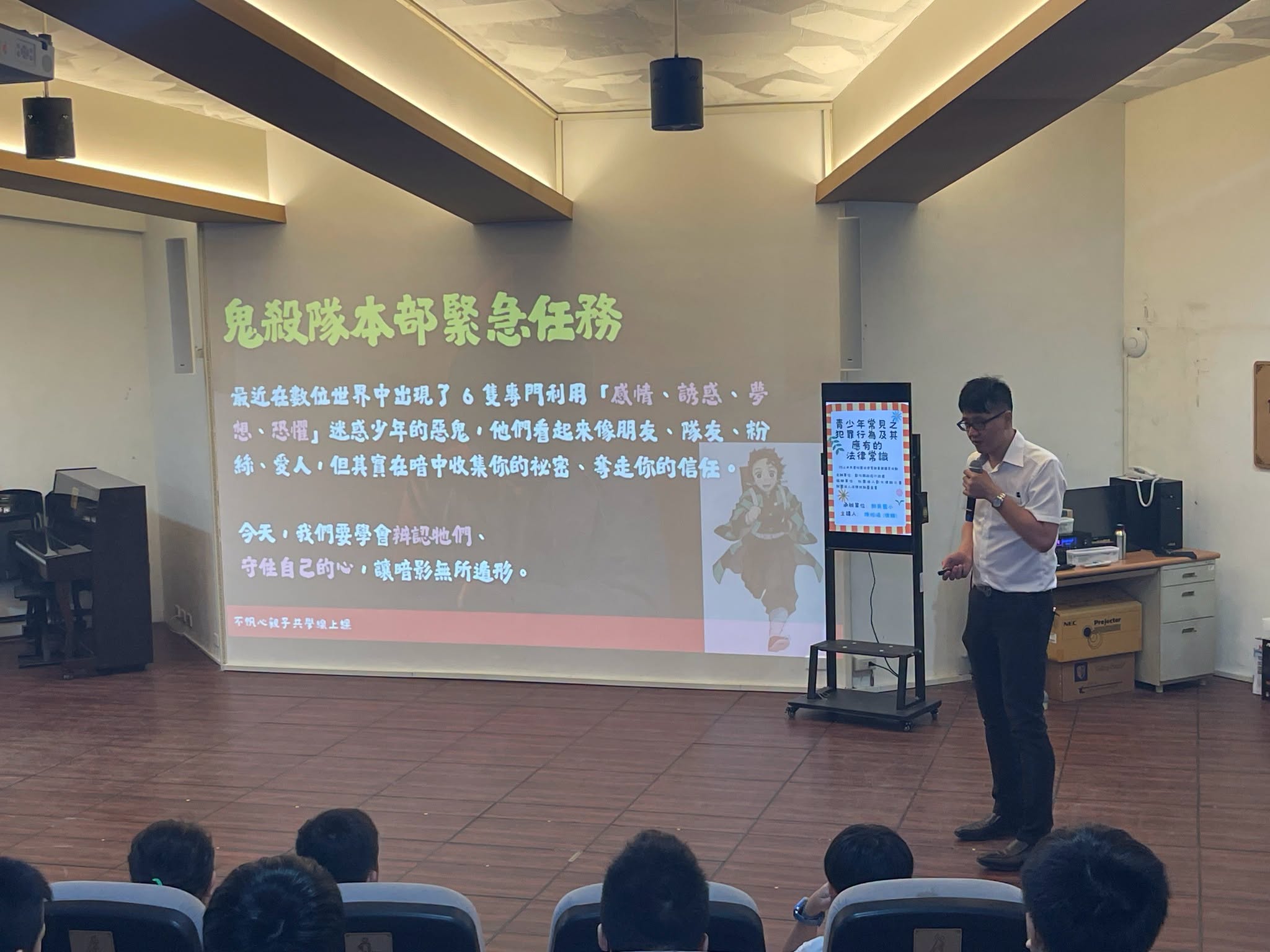
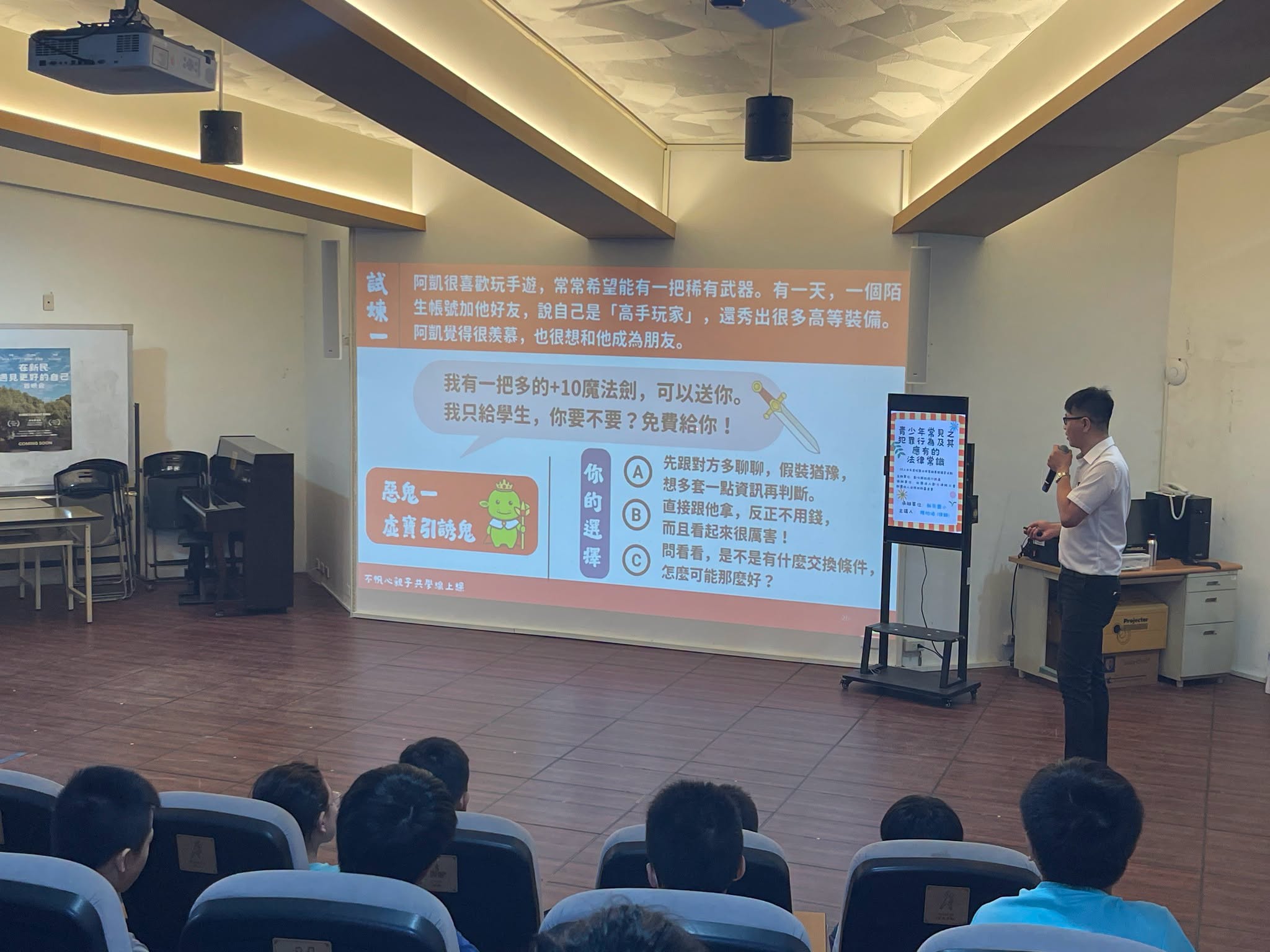
律師用學生熟悉的動漫與遊戲情境設計選擇題,讓法律變得好懂
「不知道法律」不能作為免責的理由!
Attorney Chen reminded students that young people aged 12 and above who break the law come under the Juvenile Justice Act: a juvenile court hearing, possibly probation or reform education, and a record that can affect future schooling and life.
- 📷Don't reply — screenshot first. Keep every message and link as evidence.不回應、先截圖:保留所有對話記錄與網址作為證據。
- 👪Ask an adult for help. Tell your parents or a teacher right away.尋求大人的協助:第一時間告知父母、學校老師。
- 📞Use the helplines. 165 anti-fraud · 110 police · 113 protection hotline.善用求助管道:165 反詐騙專線、110 報案、113 保護專線。
Let's build the right understanding of law online together — browse smart, and grow up safe. ⚖️
法律專題宣導 別讓網路成了你的犯罪現場 ⚖️
陳柏涵律師專題講座,整理了常見的網路法律風險與犯罪行為。隨著孩子開始頻繁使用智慧型手機與社群軟體,但也最容易因為「不懂法」或「一時好奇」而觸法!
1. 網路詐騙:天下沒有白吃的午餐
常見誘惑:「免費領取遊戲點數/虛寶」、「幫忙領包裹賺零用錢」、「提供帳戶借人用就給錢」。
法律常識:提供自己的銀行帳戶或遊戲帳號給他人使用,可能構成《刑法》幫助詐欺罪或洗錢防制法,會變成詐騙集團的「人頭帳戶」!天下沒有免費的虛寶,要你提供手機認證碼或個人資料的,99% 是詐騙。
2. 網路誘惑與性剝削:保護身體,絕不傳照
常見誘惑:「傳一張私密照就給遊戲點數」、「交朋友要互傳照片」、「假裝是明星/同齡朋友要裸照」。
法律常識:索取、散布或持有未成年人的私密照片,觸犯《兒童及少年性剝削防制條例》,這屬於重罪,不僅會留下刑事紀錄,警方更會全力追查!記住「三不原則」:不拍攝、不傳送、不持有私密照。
3. 網路霸凌:公然侮辱與誹謗不是「開玩笑」
常見行為:在臉書、Line 群組或 IG 創立黑粉帳號、留言罵人、改圖嘲笑同學、發文帶風向排擠。
法律常識:網路並非法外之地!在公開場合(如社群貼文、群組)罵人或惡意造謠,會構成《刑法》公然侮辱罪或誹謗罪。受害者還可以提起民事訴訟,要求精神賠償(侵害人格權)!
4. 網路性騷擾:言語冒犯也是違法
常見行為:在留言區傳送帶有性暗示的文字、梗圖,或是傳送猥褻圖片給同學。
法律常識:只要讓對方感到不舒服、被冒犯,就可能違反《性騷擾防制法》,會面臨行政罰鍰甚至刑事責任。
⚖️ 陳律師給學生們的重要提醒
「不知道法律」不能作為免責的理由!滿 12 歲以上的青少年若觸犯法律,將適用《少年事件處理法》,需接受少年法庭審理,可能被判處保護管束、感化教育,甚至留有紀錄,影響未來升學與人生。
遇到問題該怎麼辦?
不回應、先截圖:保留所有對話記錄與網址作為證據。
尋求大人的協助:第一時間告知父母、學校老師。
善用求助管道:撥打 165 反詐騙專線、撥打 110 報案、撥打 113 保護專線。
讓我們一起建立正確的網路法治觀念,聰明上網、安全長大!
Tap 🔊 to listen · 點喇叭聽發音
Being online is fun, but it still has rules.上網很有趣,但一樣有規則要遵守。
A free gift from a stranger is usually a scam.陌生人送的免費好禮通常是詐騙。
Never send private photos to anyone online.絕對不要把私密照片傳給網路上的任何人。
If something feels wrong, report it to an adult.覺得不對勁,就要向大人通報。
We respect classmates online just as we do at school.在網路上也要像在學校一樣尊重同學。
A responsible user thinks before posting.負責任的使用者會先想清楚再發文。
Match the word to its meaning
把英文和中文配對
Matched 配對成功:0 / 6