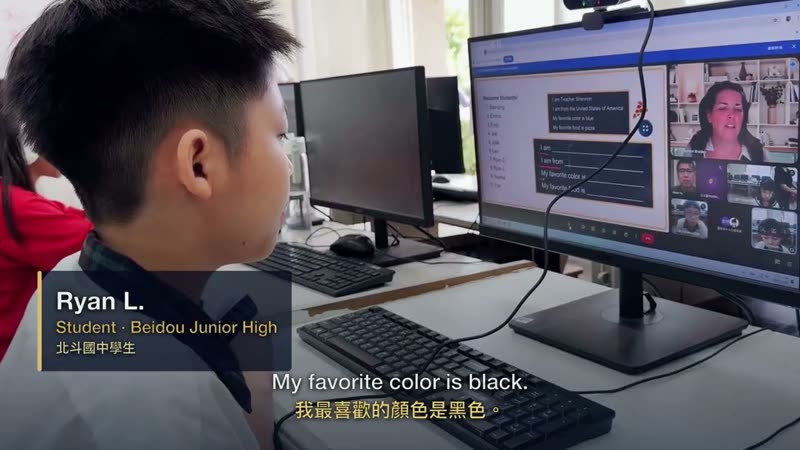
It was lunchtime in Beidou and already nighttime in Los Angeles when the Space Scouts met Teacher Shannon Braden online for their second lesson on Thursday, October 29. Shannon began by showing just how well she knows her class: she still remembered the space topic every scout had chosen the week before.
10 月 29 日(四)午休時間,太空小尖兵與 Shannon Braden 老師線上連線,上第二堂課——北斗正值中午,洛杉磯已是夜晚。Shannon 老師一開場就展現她對學員的用心:每位小尖兵上週選了哪個天體,她都還記得。
“And I even remember that Emma wants to learn about Saturn…”「我還記得,Emma 想了解土星……」— Teacher Shannon Braden · Shannon 老師
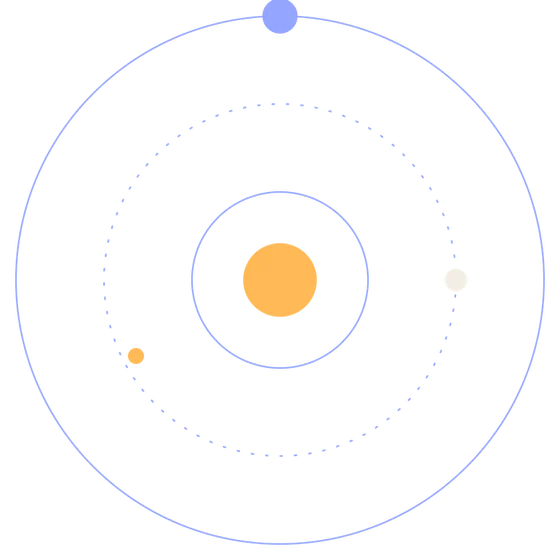
Today's mission: sort the sky into three kinds of space objects. Planets go around the Sun; moons go around a planet; and everything else — the Sun, dwarf planets, comets and asteroids — counts as a space object. With three simple sentences, “This is… It's a… It is…”, the scouts introduced one object after another.
今天的任務,是把天體分成三類:繞著太陽轉的「行星」、繞著行星轉的「衛星」,以及太陽、矮行星、彗星、小行星等「其他天體」。學員用「This is… It's a… It is…」三個句型,一個接一個介紹天體。
The lesson was full of surprises. How many moons does Jupiter have? “One hundred fifteen!” the scouts called out, reading the number from the class slides. They learned that Jupiter's moon Io has hundreds of volcanoes, and that many parts of the world call the Moon “Luna” — which made Shannon smile at one of her students: “Just like you, Luna. You have the perfect space name.” And when she asked what else is interesting about Pluto, the answer came straight back: “It has a heart!”
課堂上驚喜不斷。木星有幾顆衛星?學員看著投影片大聲回答:「115 顆!」大家也認識了木星的衛星埃歐(Io),上面有數百座火山;世界上很多地方把月亮叫做「Luna」——Shannon 老師笑著對學員 Luna 說:「就跟妳一樣,Luna,妳有一個完美的太空名字。」問到冥王星還有什麼有趣的地方,學員立刻回答:「它有一顆愛心!」
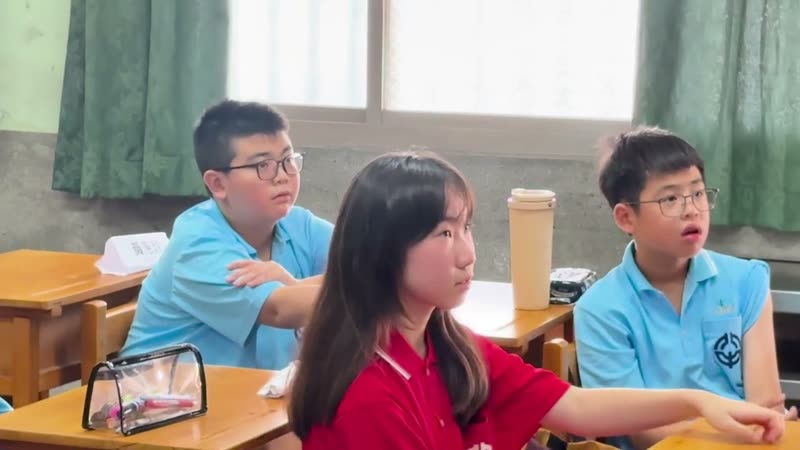
To finish, the scouts played a quick game — planet, moon, or space object? — and read together as a class: “Mars is a planet!” When Shannon asked, “Are we going to do this again next week?”, the answer was a loud “Yes!” and thumbs up all round.
最後的小遊戲考考大家:這是行星、衛星,還是其他天體?全班一起大聲念出「Mars is a planet!(火星是行星!)」。Shannon 老師問:「下週還要再來嗎?」學員齊聲回答「要!」,還比了滿滿的讚。
🪐 Learn with the Scouts · Day 2 lesson跟著小尖兵學:第 2 堂課程頁 →