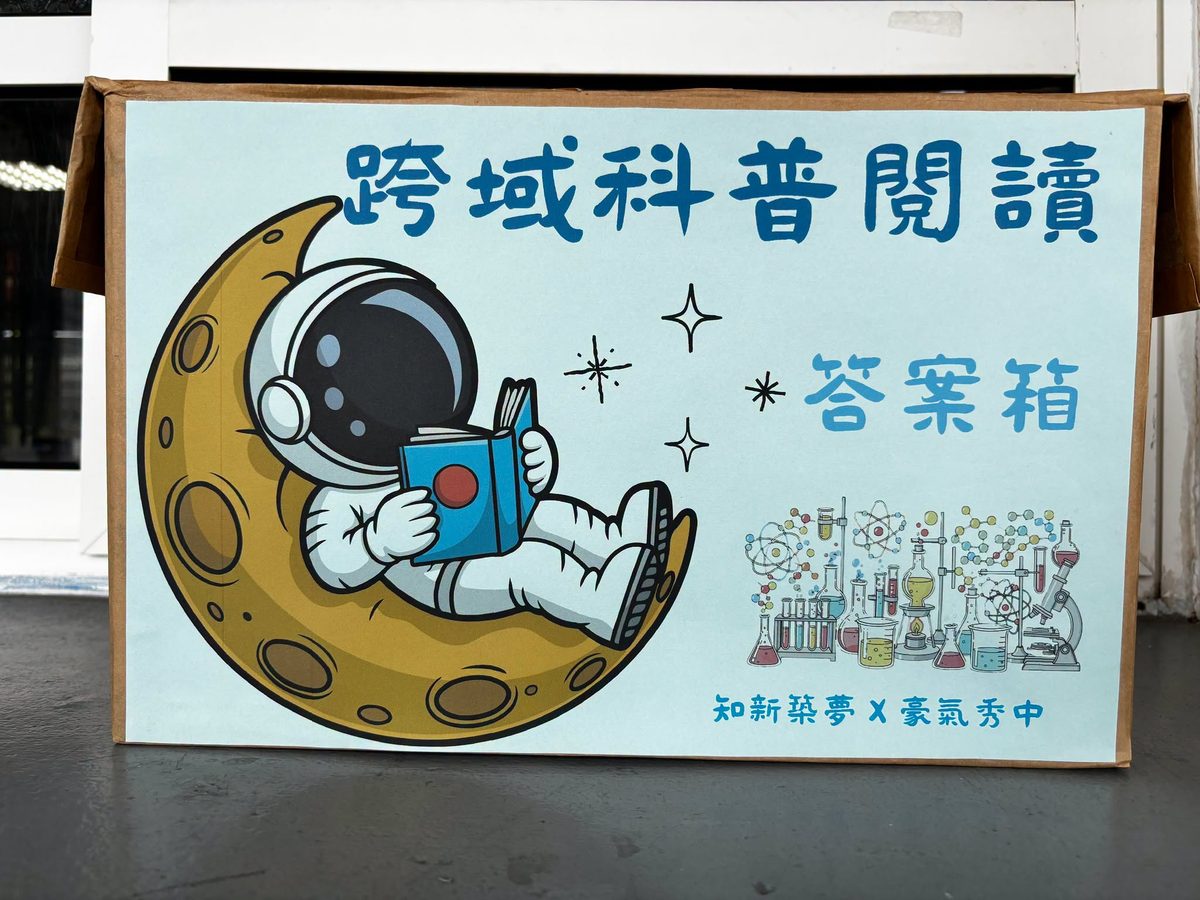
The results of the first issue of our Cross-Disciplinary Science Reading series are in! Ten lucky eighth- and ninth-graders were drawn as winners. Congratulations — and thank you to everyone who took part and read so carefully!
跨域科普閱讀第一期抽獎揭曉!恭喜 10 位幸運的八、九年級同學中獎,也謝謝大家熱情參與、認真閱讀!
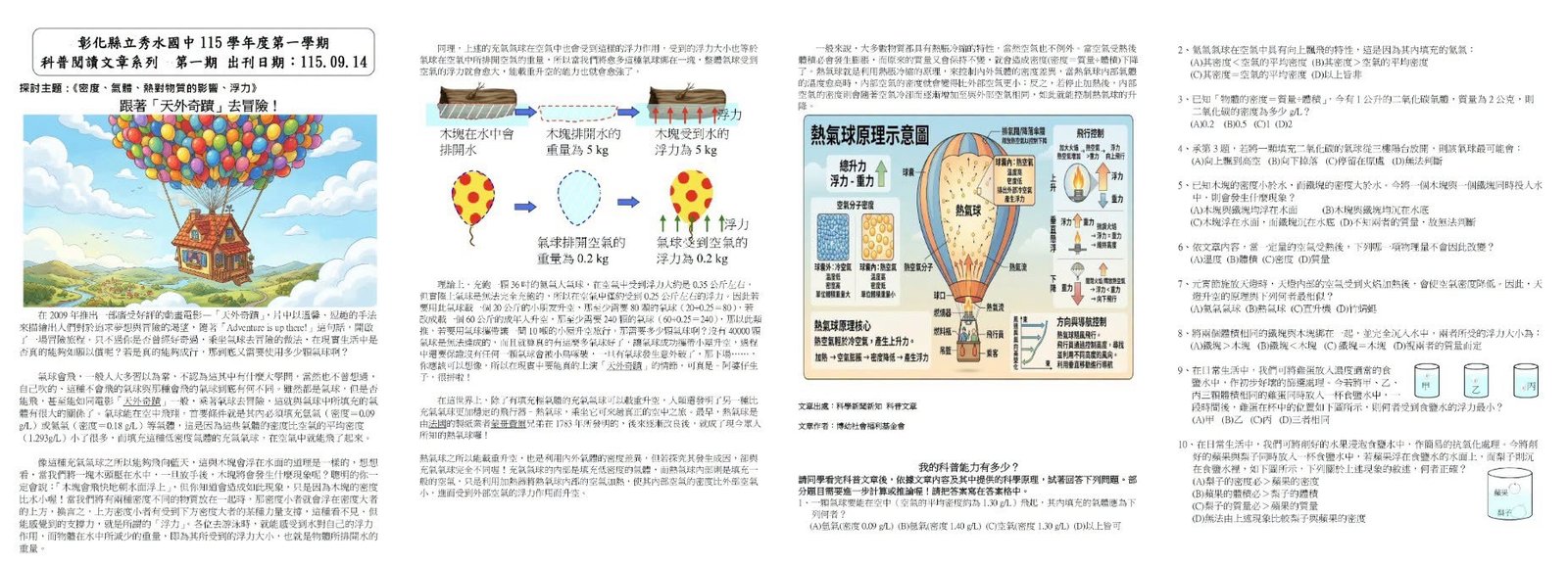
Issue 1 came out on September 14 with the title “An Adventure with Up” — the animated film in which a house floats away on thousands of balloons. Starting from the story, students explored density, gases, how heat changes matter, and buoyancy, the force that helps things float — all the way to how a hot-air balloon rises into the sky. Then they wrote their answers on answer cards and dropped them into the reading answer box.
第一期於 9 月 14 日出刊,主題是「跟著《天外奇蹟》去冒險!」——從電影裡被成千上萬顆氣球帶上天的房子出發,探討密度、氣體、熱對物質的影響與浮力,一路談到熱氣球升空的原理。同學們讀完文章,把答案寫在答案卡上,投進答案箱。
Special thanks to the Alumni Association, whose funding made the prizes possible — a little extra encouragement for every young reader, and one more reason to keep going.
特別感謝校友會提供經費支持,讓孩子們在閱讀中多一份鼓勵,也多一份前進的動力。

And Issue 2 is already out! Let’s keep reading, thinking and discussing together — and discover even more fascinating science along the way.
跨域科普閱讀第二期也已出刊!歡迎大家繼續一起讀、一起想、一起討論,在閱讀中發現更多有趣的知識。
Issue 2 of the science reading series is already out.科普閱讀第二期已經出刊了。
Ten lucky students won a prize.十位幸運的同學得到了獎品。
Hot air has a lower density than cold air.熱空氣的密度比冷空氣低。
Buoyancy pushes a balloon up into the sky.浮力把氣球推向天空。
A piece of wood can float on water.一塊木頭可以浮在水面上。
The alumni association paid for the prizes.校友會提供了獎品的經費。
Each winner got a small prize.每位得獎者都拿到一份小獎品。
Let’s read and discuss the article together.我們一起閱讀、一起討論這篇文章吧。
Matched 配對成功:0 / 8