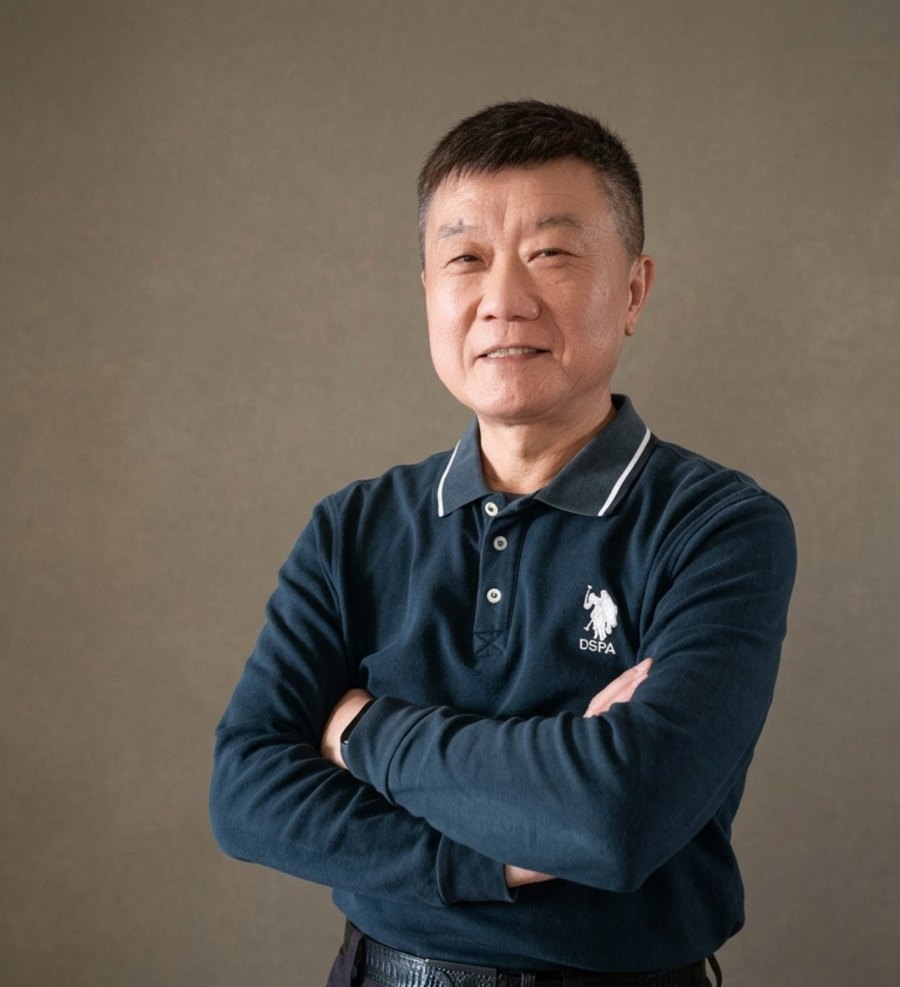
My belief about this work can be put in four characters: 教育即生活 — education is life itself. If that is true, then a rural child’s learning cannot be allowed to stop at the edge of the textbook. It has to include the clay in their hands, the field they walk into, the classic text they read aloud before class, and the drum they learn to keep time on. Those are not extras bolted onto the curriculum. They are what the curriculum is for.
我對這份工作的信念,可以用四個字說完:「教育即生活」。如果這句話是真的,那麼偏鄉孩子的學習,就不能停在課本的邊界上。它必須包括手裡的那塊陶土、走進去的那片田、上課前朗讀的那段經典,以及學著打拍子的那面鼓。這些不是課程之外多加的東西——它們就是課程的目的。
So the job I have given myself here is to build a school with many ways of learning in it. A small rural school has fewer children than a town school, which is exactly why every child in it can be given a turn at everything — and why nobody here should be able to say there was something they never got to try.
所以我在這裡給自己的工作,是營造一個多元的學習環境。偏鄉的小學校孩子比城裡少,而這正是為什麼這裡每一個孩子都輪得到每一件事——也是為什麼在萬合,不應該有人說得出「有件事我從來沒機會試」。
And the last piece is the one I care most about: 人間有愛,幸福常在 — where there is love among people, happiness stays. A village school has to go out and find the resources its children need, and then make sure they reach the children who need them most. That is the part of this job that never finishes, and I would not want it to.
最後一件,也是我最在意的一件:「人間有愛,幸福常在」。一所鄉下的學校必須走出去,替孩子找到他們需要的資源,然後確定這些資源真的送到最需要的孩子手上。這件事永遠做不完——而我也不希望它做得完。
Chen Chin-huang · Principal 陳金鍠 校長
A career spent in Changhua’s grassroots schools — and two of them led as principal.
一路都在彰化的基層教育裡——其中兩所,是以校長的身分帶起來的。
Principal Chen came to Wanhe from Xizhou Elementary in Xizhou Township, where he had been principal through the school’s centenary. That anniversary is worth mentioning because of what he did about it — and because he did the same thing again, differently, when Wanhe’s own sixtieth came round. The pattern is consistent across both schools: when a rural school needs money it cannot simply ask for, he goes and makes something.
陳校長是從溪州鄉溪州國小來到萬合的,在溪州國小校長任內辦過該校的百年校慶。這件事值得一提,是因為他當時的做法——以及後來萬合六十週年時,他又用同一種方式再做了一次。兩所學校的模式是一致的:當一所偏鄉學校需要一筆要不到的經費,他就親手去做一件東西出來。
The principal has been throwing pots for about ten years. When the school turned sixty, he threw sixty of them.
校長學製陶壺十餘年。學校滿六十歲那年,他做了六十把。
Principal Chen took up ceramics in 2014, and it did not stay a private hobby for long. When he arrived at Wanhe he brought the clay into the school with him and built it into a school-based course, so that every child here — not a selected club, the whole school — gets their hands into it. For a rural primary school that is an unusually generous piece of aesthetic education: not a talk about beauty, but a wet lump of clay and the discovery that you can make it do what you want.
陳校長從 2014 年開始接觸陶藝,而這件事沒有停留在私人興趣太久。他到萬合之後,把陶藝一起帶進校園,發展成校本課程——不是挑選出來的社團,而是全校的孩子都來捏陶。對一所偏鄉小學來說,這是相當慷慨的美感教育:不是講一場關於美的課,而是一塊濕的陶土,以及「原來我可以讓它變成我要的樣子」這個發現。
Then came 2024 and the school’s sixtieth anniversary — a full jiazi — and the bill that comes with one. Rather than fundraise in the usual way, he decided to make sixty teapots himself and sell them for the school: shaped by hand and fired by him personally, so that the quality and the sincerity were both his own. He named them 甲子壺, the jiazi teapots, and had them boxed with a line stamped on the lid: 萬合六十,有壺享福 — Wanhe at sixty; with a teapot, good fortune. They were fired in an eco-friendly quick-firing wood kiln donated the previous September by an entrepreneur friend, and by April 2024 nearly thirty of them had been spoken for.
接著是 2024 年,學校的六十週年校慶——整整一甲子——以及隨之而來的經費問題。他沒有用一般的方式募款,而是決定自己做六十把茶壺義賣:為了顧好品質、也為了展現誠意,親手捏塑、親自窯燒。茶壺取名「甲子壺」,以錦盒包裝,盒蓋印上一句「萬合六十 有壺享福」。這些壺用的是前一年九月企業家好友捐贈的環保快速柴窯燒製;到 2024 年 4 月,已經賣出近三十把。
He had done it once before. Preparing Xizhou Elementary’s centenary, he ordered a hundred teapots from the Tianzhong kiln — and the kiln’s work sold out before it could supply them, so the potter suggested he make them himself. He made about forty, and they were sold for the school. Xizhou’s centenary came off, and he has kept a vegetarian vow he made at the time ever since.
這件事他做過一次。籌辦溪州國小百年校慶時,他向田中窯訂製一百支茶壺,結果田中窯的成品被搶購一空、來不及供貨,窯主便建議他自己做。他當時自製了約四十把義賣。溪州國小百年校慶圓滿完成之後,他發願吃素,至今未斷。
Two things he wants a Wanhe child to be able to do: read an old text aloud, and grow something.
他希望萬合的孩子會兩件事:把一段經典念出聲,以及種出一樣東西。
These two threads are less far apart than they look. Wanhe is a farming village — rice, sweet potatoes, garlic-chive flowers, asparagus — and a good many of the children here have family working that land. Taking them into the fields with the Erlin Farmers’ Association 4-H club and with young farmers from the area is not an outing; it is an introduction to what their own place does for a living, and to why food is worth not wasting. The classics work the same way from the other end: a text learned by heart at eight is a thing a person still has at forty.
這兩條線,其實沒有看起來那麼遠。萬合是一個農村——水稻、甘薯、韭菜花、蘆筍——而這裡不少孩子的家裡就在種這些。跟著二林鎮農會四健會與在地青年農民走進農田,對他們來說不是一趟郊遊,而是認識自己這個地方靠什麼過日子,以及食物為什麼值得珍惜。讀經則是從另一頭做同一件事:八歲背下來的一段文字,四十歲的時候還在身上。
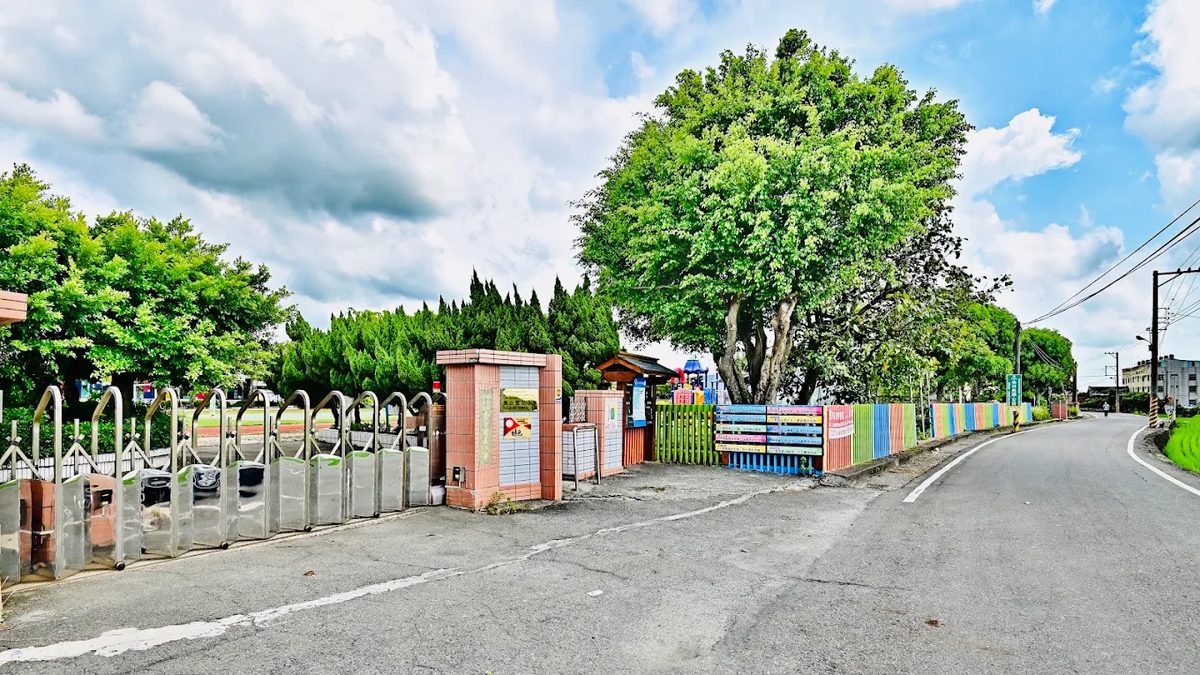
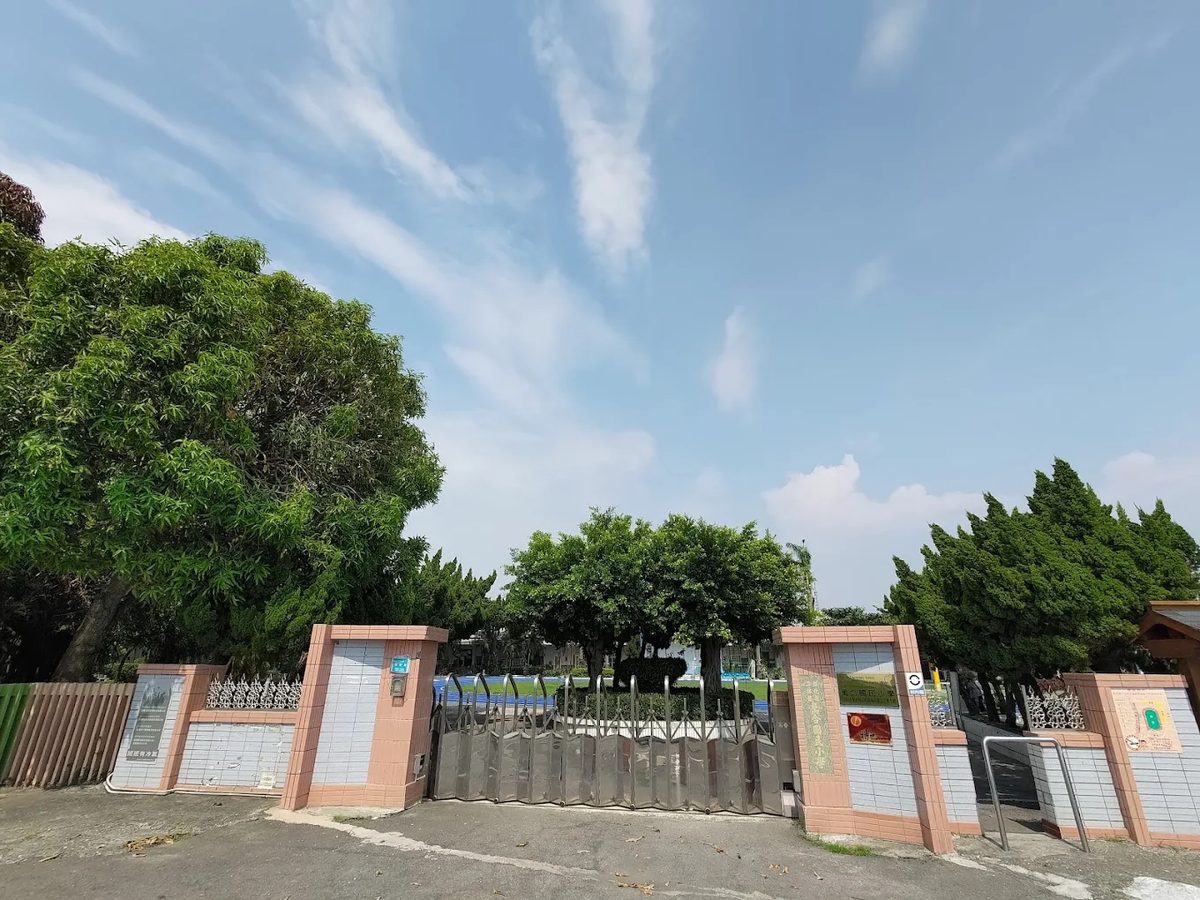
Wanhe’s gate opens straight onto a country road with farmland behind it. That is the practical reason a Wanhe principal talks about community walks and farm learning rather than field trips: the community is right there, and the people who work it are the children’s neighbours, their parents and their grandparents.
萬合的校門直接開在鄉道上,路的另一邊就是農田。這就是為什麼萬合的校長談的是社區走讀與食農教育,而不是校外教學——社區本來就在那裡,而在那裡工作的人,是孩子的鄰居、爸媽和阿公阿嬤。
Tea ceremony, taiko drums, ocarina — and the outside help that pays for a child to be in them.
茶道、太鼓、陶笛——以及讓孩子真的進得去的那筆外部資源。
Principal Chen’s phrase for this part of the work is 人間有愛,幸福常在 — where there is love among people, happiness stays — and in practice it means two jobs done together. The first is to run enough clubs that every child finds one thing they are good at: tea ceremony for the ones who need stillness, taiko for the ones who need to make a noise with other people, ocarina for the ones who want to hear a tune come out of their own hands. The second is to go and find the money, so that a club existing and a child being in it are the same thing. Support from foundations such as the Yuanta Foundation is what closes that gap.
陳校長形容這部分工作的話是「人間有愛,幸福常在」,而實際做起來是兩件同時進行的事。第一件,是開出足夠多的社團,讓每個孩子都能找到一件自己擅長的事:需要安靜的孩子有茶道,需要跟別人一起發出聲音的孩子有太鼓,想聽見一首曲子從自己手裡出來的孩子有陶笛。第二件,是去把錢找回來,好讓「有這個社團」跟「孩子真的參加得到」變成同一件事。元大文教基金會這類社會資源的挹注,補的就是中間那道差距。
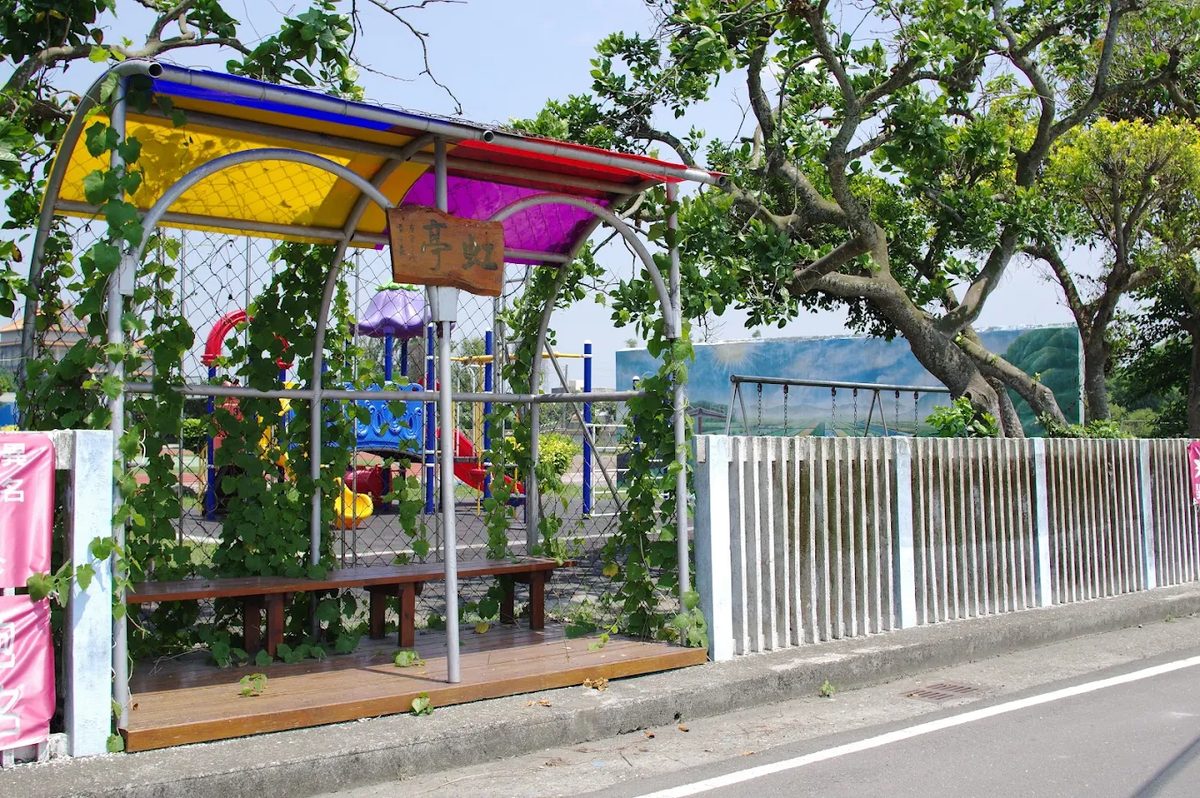
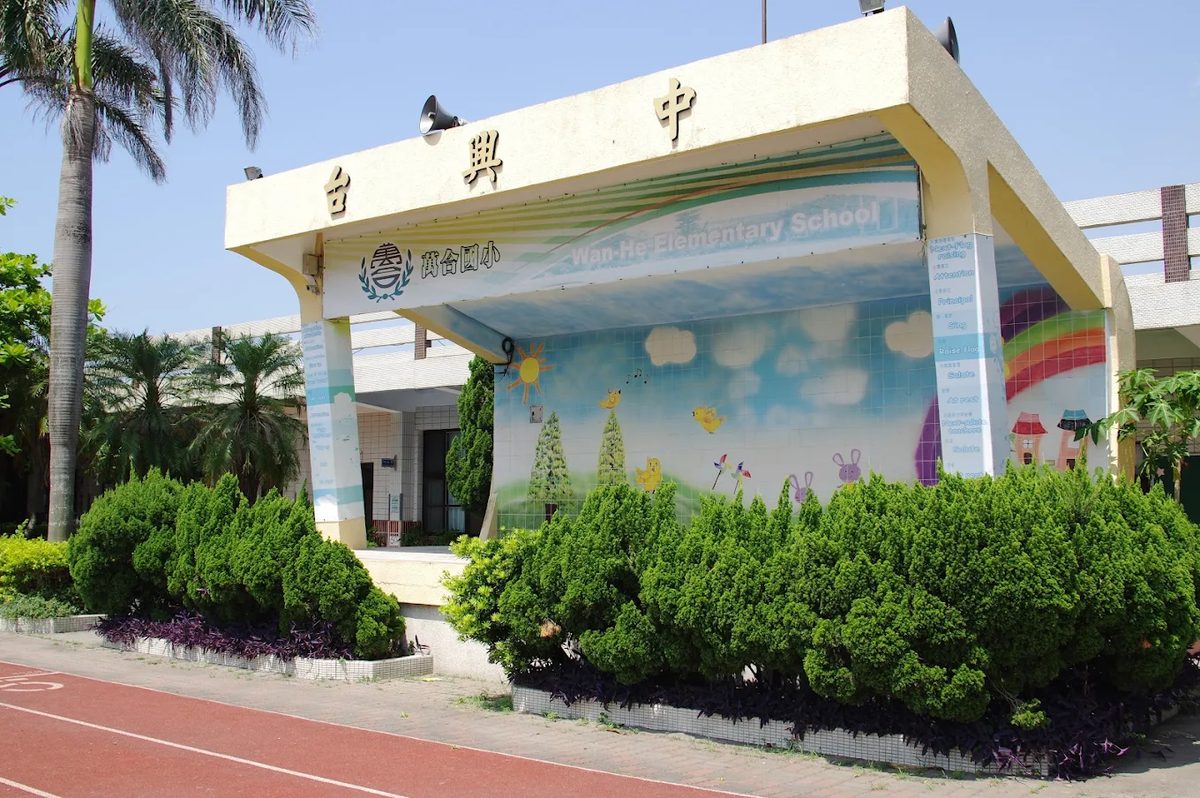
Two small pieces of the same idea. The 虹亭 by the wall is where children wait to be collected — roofed in four colours, wrapped in vine, with a bench long enough for whoever is still there. And the 中興台 is where they stand up in front of everyone: the drums, the choir, the ocarinas, and whatever else they have been practising all term.
同一件事的兩個小角落。圍牆邊的虹亭是孩子等家長來接的地方——四種顏色的頂棚、爬滿的藤蔓,還有一張夠長的木椅,留給最後那幾個。而中興台,是他們站到大家面前的地方:太鼓、合唱、陶笛,以及這學期練的任何一樣東西。