A small school out in the fields — standing on ground that used to be a sand dune.
一所在田中央的小學校——而它腳下的那片地,從前是一座沙丘。
Wanhe Village sits in the north-east corner of Erlin Township: Wansing to the north, Meifang to the east, Dayong to the south and Zhaojia to the west. The families here farm. They grow rice, sweet potatoes, garlic-chive flowers, asparagus and every kind of vegetable, and they work the way farming villages have always worked — out at sunrise, home at sunset. It is as plain and as hard-working a place as Changhua has.
萬合里隸屬於二林鎮東北角的一個村里:北依萬興,東接梅芳里,南鄰大永里,西與趙甲為界。這裡的居民以農為生,種植水稻、甘薯、韭菜花、蘆筍及各種蔬菜,日出而作,日入而息,可謂典型的純樸鄉村,居民刻苦耐勞。
For a long time there was no school in it. The children of this village walked six kilometers to Yuandou Public School and six kilometers home again, and the distance did what distance does: they missed days, then weeks, and many of them gave up part-way through and never finished the six years of basic education at all. That is what finally moved the people of Wanhe — not an argument about education policy, but the sight of their own children turning back. They set about getting a school of their own.
而這裡曾經很長一段時間沒有學校。本里子弟之求學,皆要步行六公里路程至原斗國民學校讀書;由於路途遙遠、長途跋涉辛勞,求學工作常缺席甚至半途而廢,很少能從頭到尾完成六年之基本教育。也因而激起了地方人士積極爭取設校的決心。
They got it. And in April 2024, sixty years on, the school they fought for celebrated its sixtieth anniversary — a full jiazi, one complete turn of the old sixty-year cycle.
他們爭取到了。而在 2024 年 4 月,當年爭來的這所學校迎來了六十週年校慶——整整一甲子。
Reeds, blown sand, and four or five graves nobody claimed. That was the school site.
蘆花、飛砂,還有四五處無主孤墳。那就是當年的校地。
The buildings of Wanhe Elementary stand between Upper Wanhe and Lower Wanhe, and before the school was built this was a sand dune — thick with reed flowers and weeds, unbroken by any plough, with four or five unclaimed graves scattered across it. At night the insects sang and fireflies drifted between them, which did nothing to make the place less eerie. In autumn and winter the north wind came down and lifted the sand into the air in sheets, so that anyone walking through hardly dared open their eyes. That is where the local joke came from: Wanhe is like Outer Mongolia.
現今萬合國民小學校舍,位於上、下萬合之間,在建校以前為一沙丘地,蘆花、雜草叢生,無人開墾之荒野,間或葬著四五處無主孤墳,每到夜晚蟲聲唧唧,螢火飛舞其間,更增加夜的神秘感;秋冬季節,北風南下,掀起了漫天飛砂,行人幾乎不敢睜眼——此即大家戲稱「萬合似外蒙古」之由來。
What turned it into a school was not a single project but a very long habit of not giving up. Principals came and went; so did teachers, and class after class of pupils, and the parents’ association, and the people of the village — and between them, planning carefully and working together, they took the story of the foolish old man who moved the mountain quite literally. Year after year the dune came down a little further. Classroom by classroom, with money and support from the county government and the township office, the buildings went up. Then came the flowering trees and the lawns, the greening of the grounds, the fitting-out of the rooms. Fifty years of that patient work turned a barren dune into what stands here now: a children’s paradise.
把沙丘變成學校的,不是某一個工程,而是一種很長的、不肯放棄的習慣。本校在歷任校長、全體老師、歷屆同學以及家長會、地方人士的通力合作悉心策劃,發揮愚公移山的精神,年復一年,山丘慢慢的被剷平;一間間的教室也在縣府、公所經費配合支援下,接連興建起來。緊接著種植花木、草坪,致力於環境的美化綠化、設備的充實——把一片荒蕪的山丘,經過五十年的刻苦經營,終於建設了今日的兒童樂園——萬合國民小學。
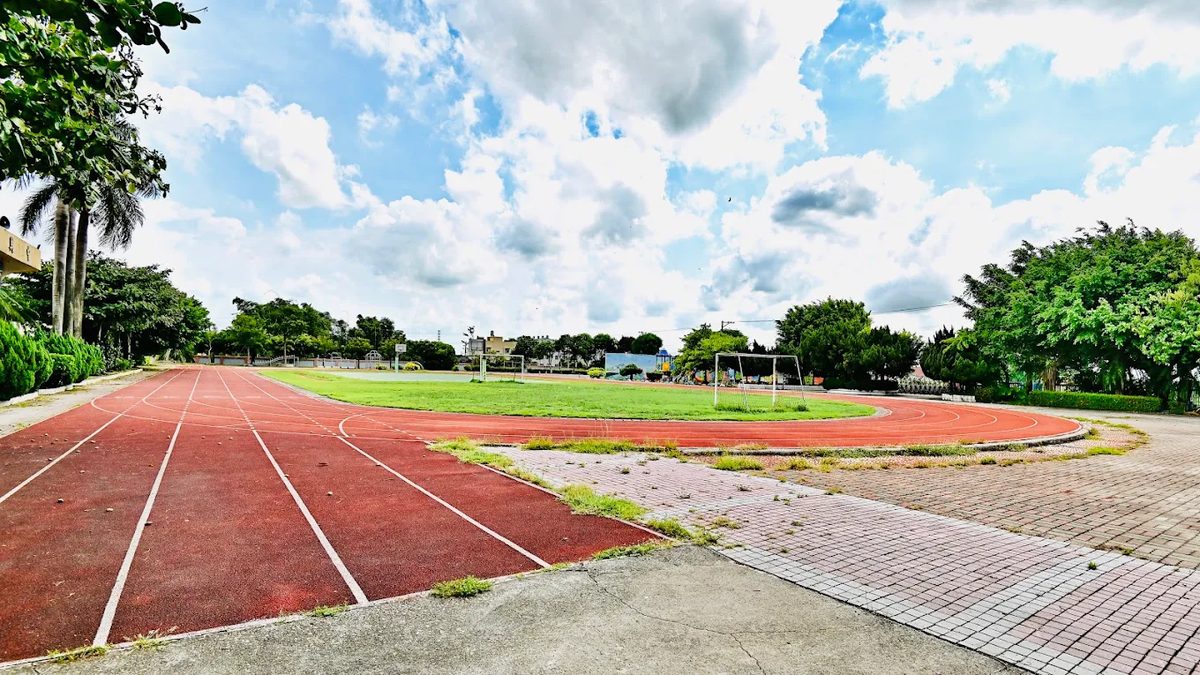
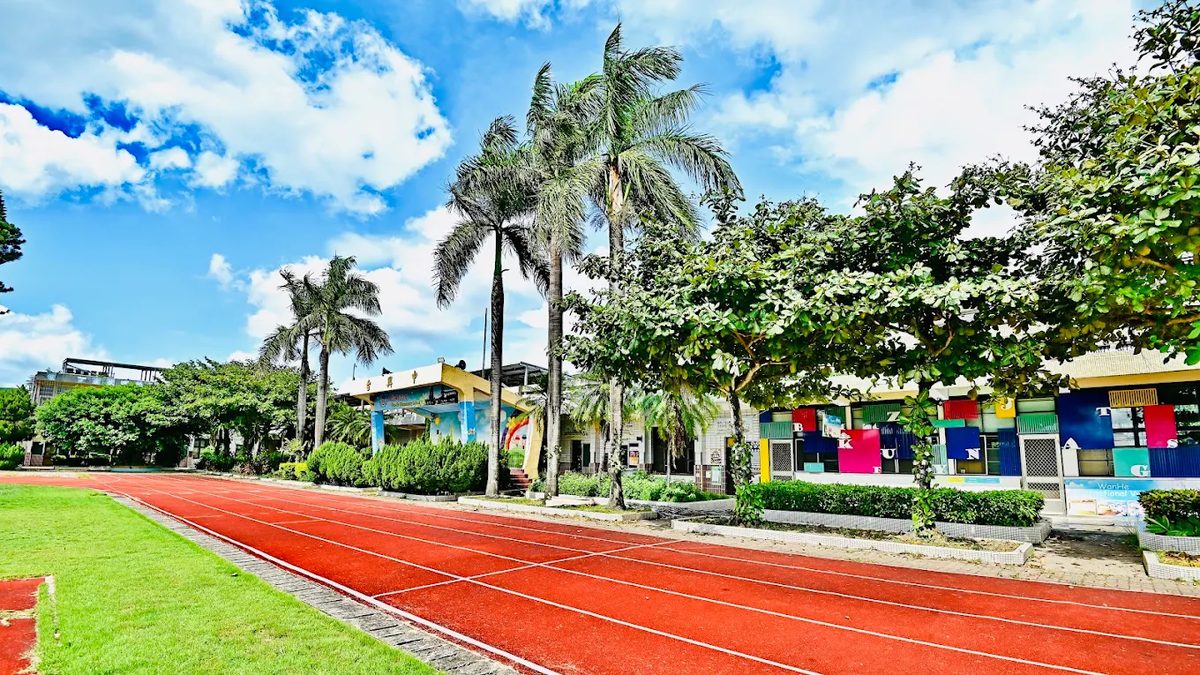
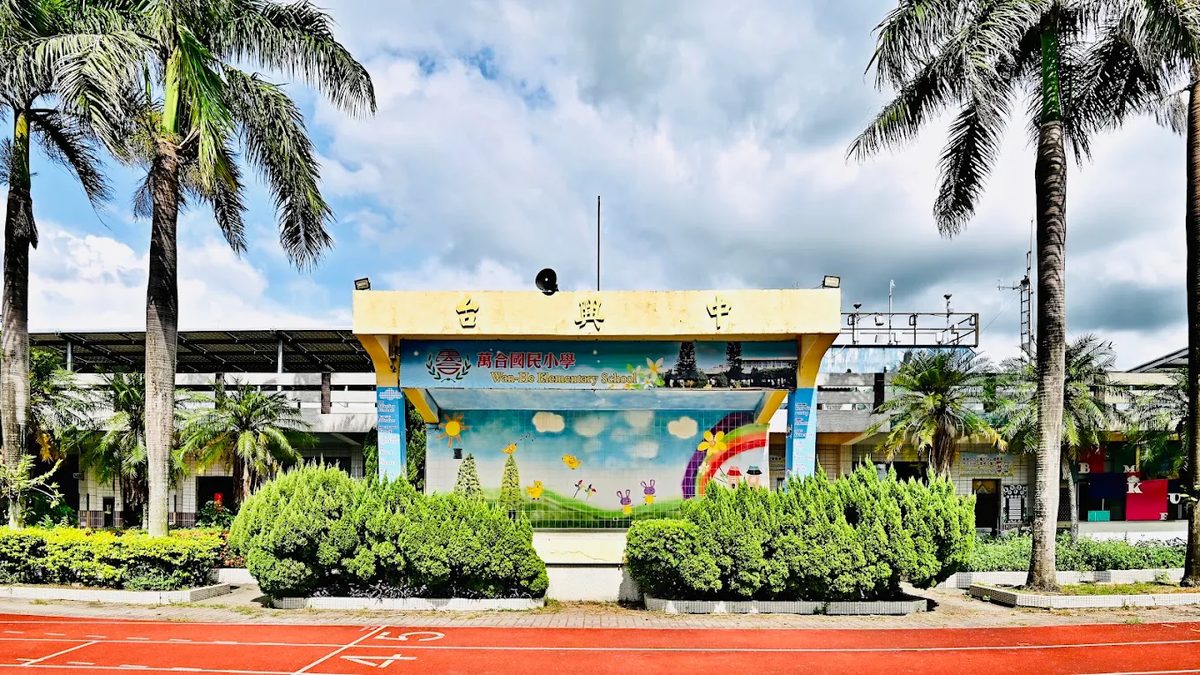
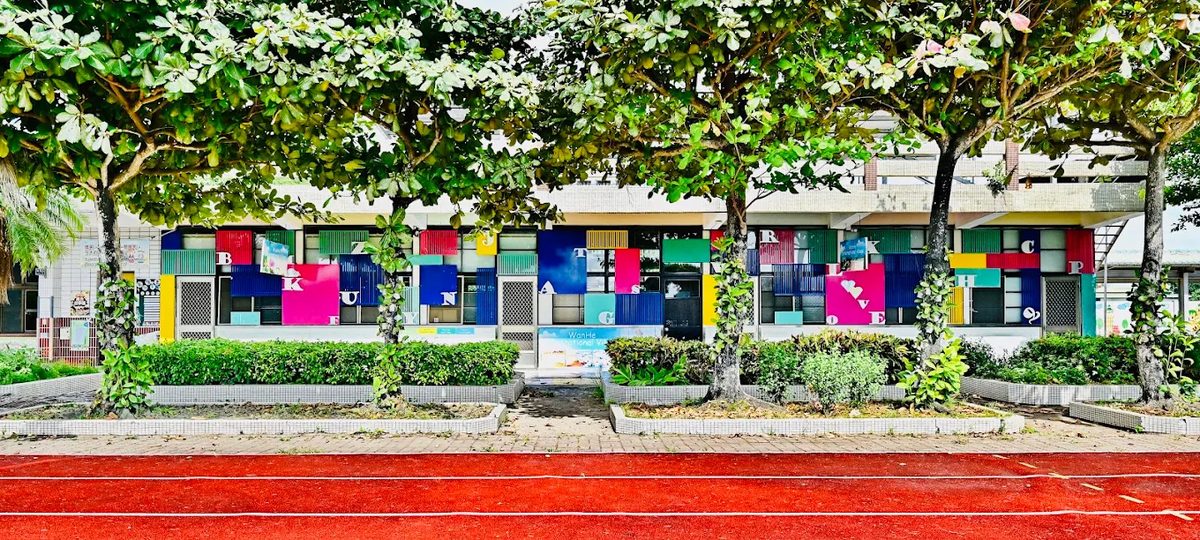
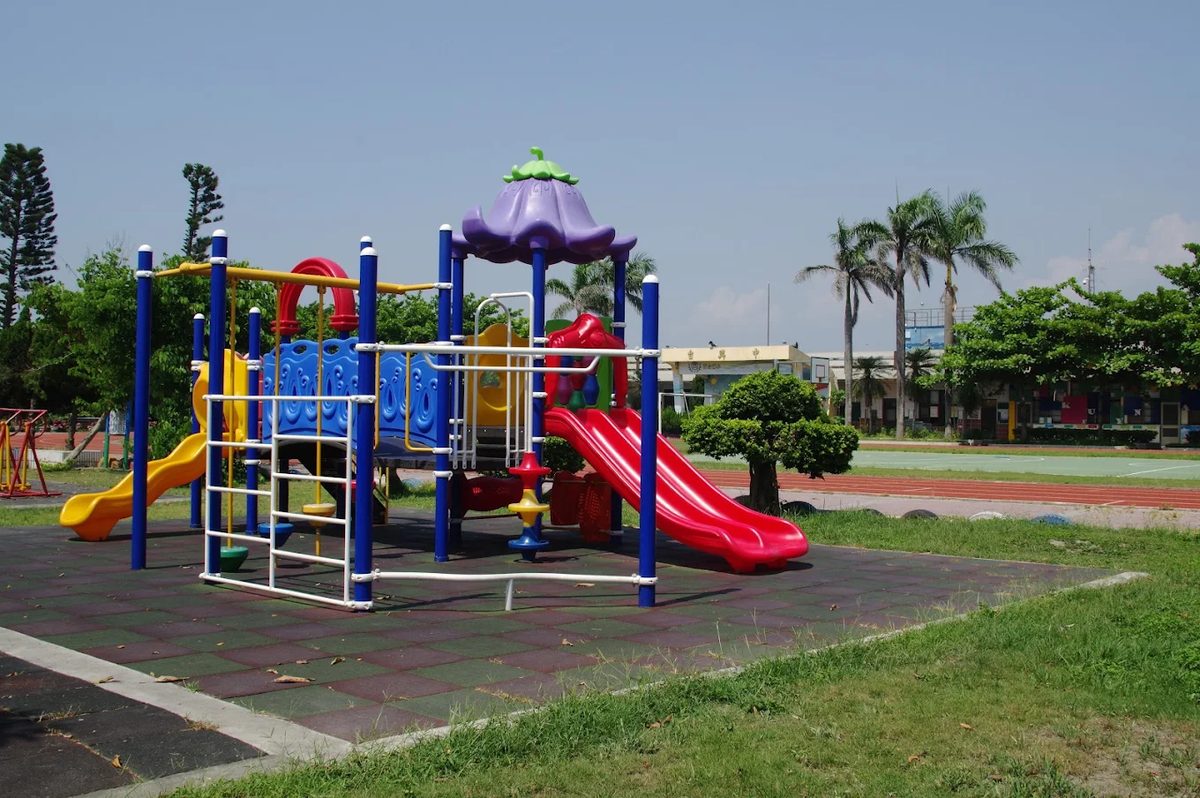
This is what the sand dune became. The red track runs the length of the campus with a green field inside it, the royal palms are tall enough now to throw real shade, and the hedges and lawns are the ones that were planted once the leveling was done. Every flat meter of it was made flat by hand.
那座沙丘後來變成了這個樣子。紅色跑道沿著校園拉開,中間圍著一片綠草地;大王椰子已經長到能遮出真正的樹蔭;樹籬與草坪,就是當年剷平之後種下的那一批。這裡每一平方公尺的平地,都是人一寸一寸整出來的。
A rural school, and a clear answer to it: develop something of your own in every learning area.
一所偏鄉的學校,給了一個很明確的回答——每一個領域,都發展出自己的特色課程。
Wanhe is a rural school, and rather than treat that as a shortage to apologise for, the school has taken it as a brief: develop a distinctive course in every learning area, so that a child growing up out here is not short of anything worth having. The courses below all grow out of the school’s own vision, and between them they are meant to produce a particular kind of Wanhe pupil — physically strong, at home in the natural world, and grounded in the humanities.
萬合是一所偏鄉學校,而學校沒有把這件事當成需要道歉的匱乏,而是當成一份任務:為偏鄉學子在各個領域發展特色課程,讓在這裡長大的孩子,不缺任何值得擁有的東西。下面這些課程都是從校本願景發展出來的,而它們合起來要涵養的,是一種特定樣子的萬合孩子——具有強健體魄,以及喜好大自然與人文的素養。
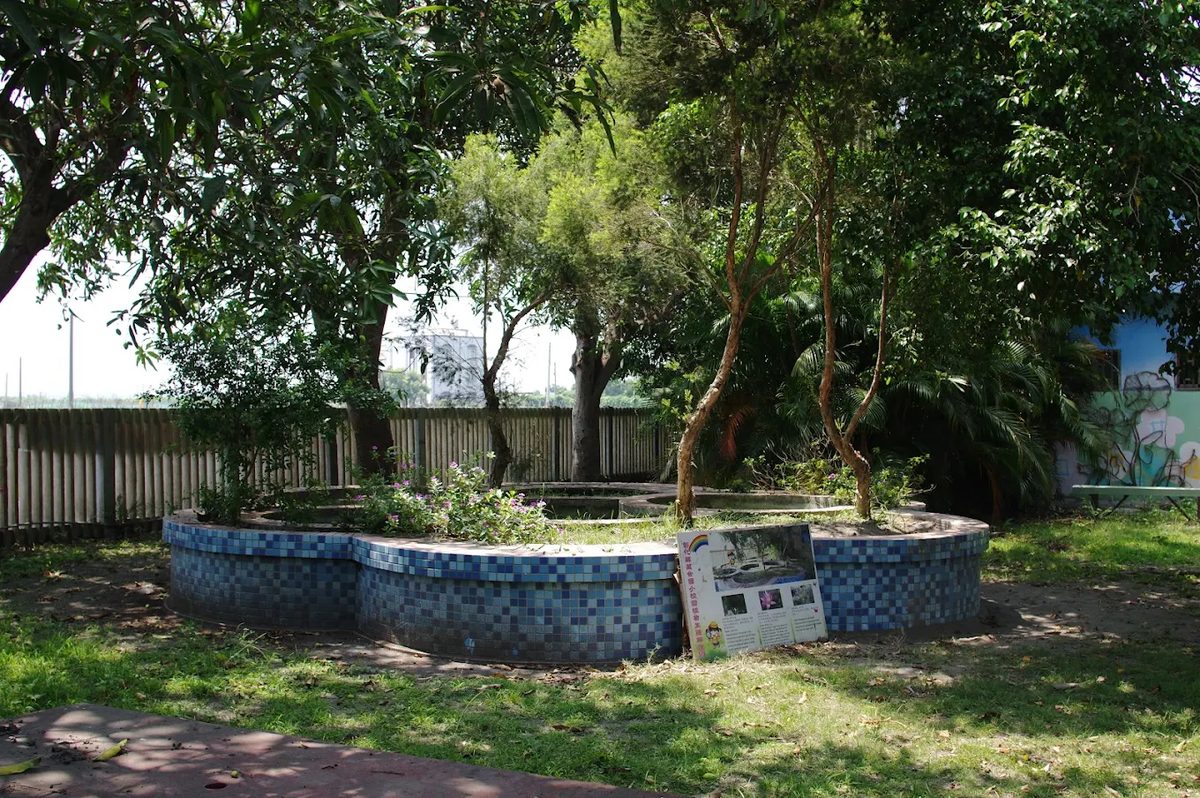
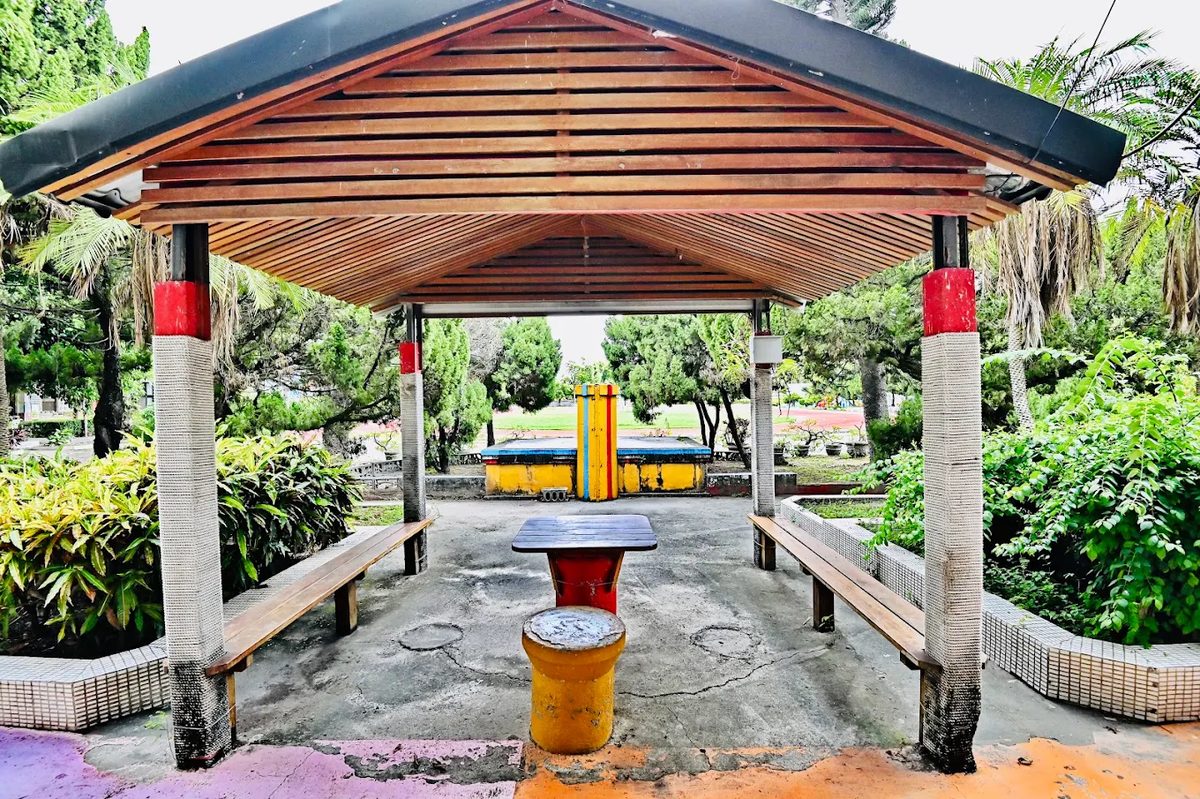
The science course here does not depend on a field trip. The ecology pond, the old trees, the hedges and the shaded pavilion are all inside the gate, which means a lesson can be moved outdoors on the day the weather is right rather than the day the coach is booked — and that a child can go back on their own at lunchtime to check whether anything has changed.
這裡的自然課不必等校外教學。生態池、老樹、樹籬與有遮蔭的涼亭都在校門裡面,也就是說,課可以在天氣剛好的那一天搬到戶外,而不是遊覽車訂到的那一天——而孩子中午也可以自己再回去看一次,看看有沒有什麼變了。
You cannot walk ten paces down a Wanhe corridor without reading something in English.
在萬合的走廊上走十步,一定會讀到一句英文。
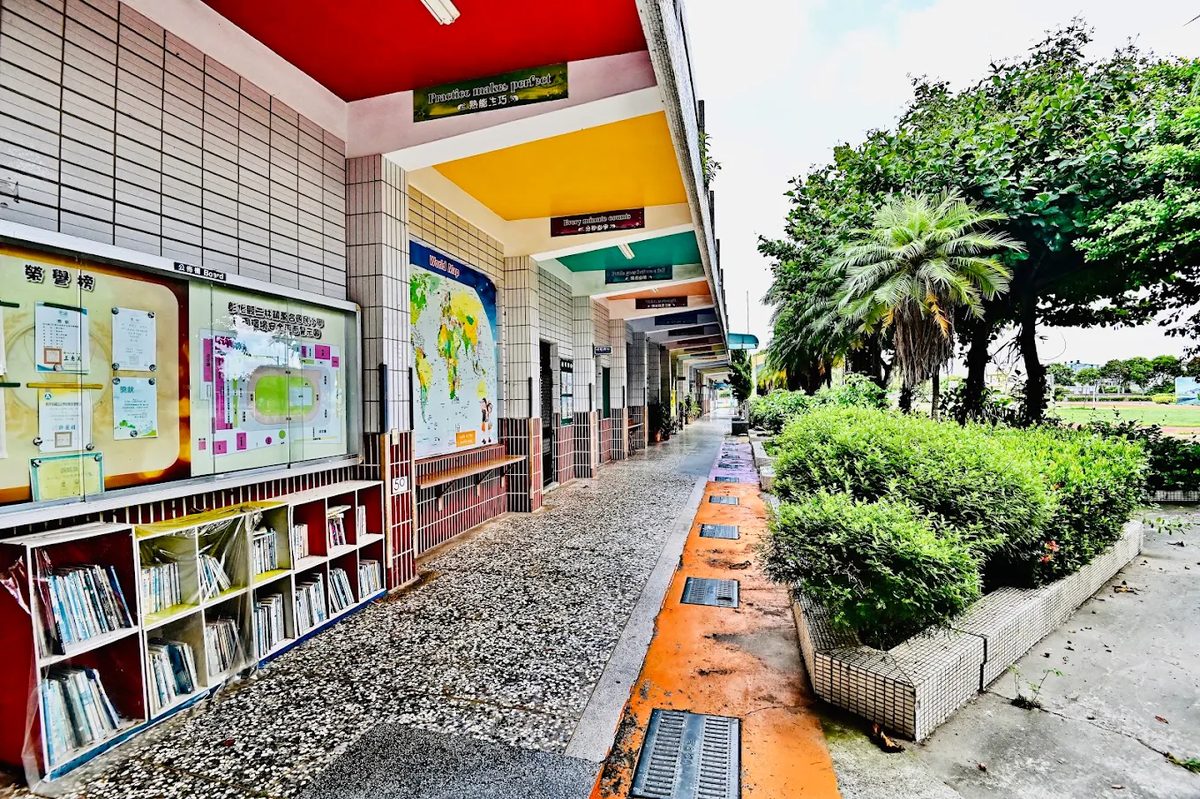
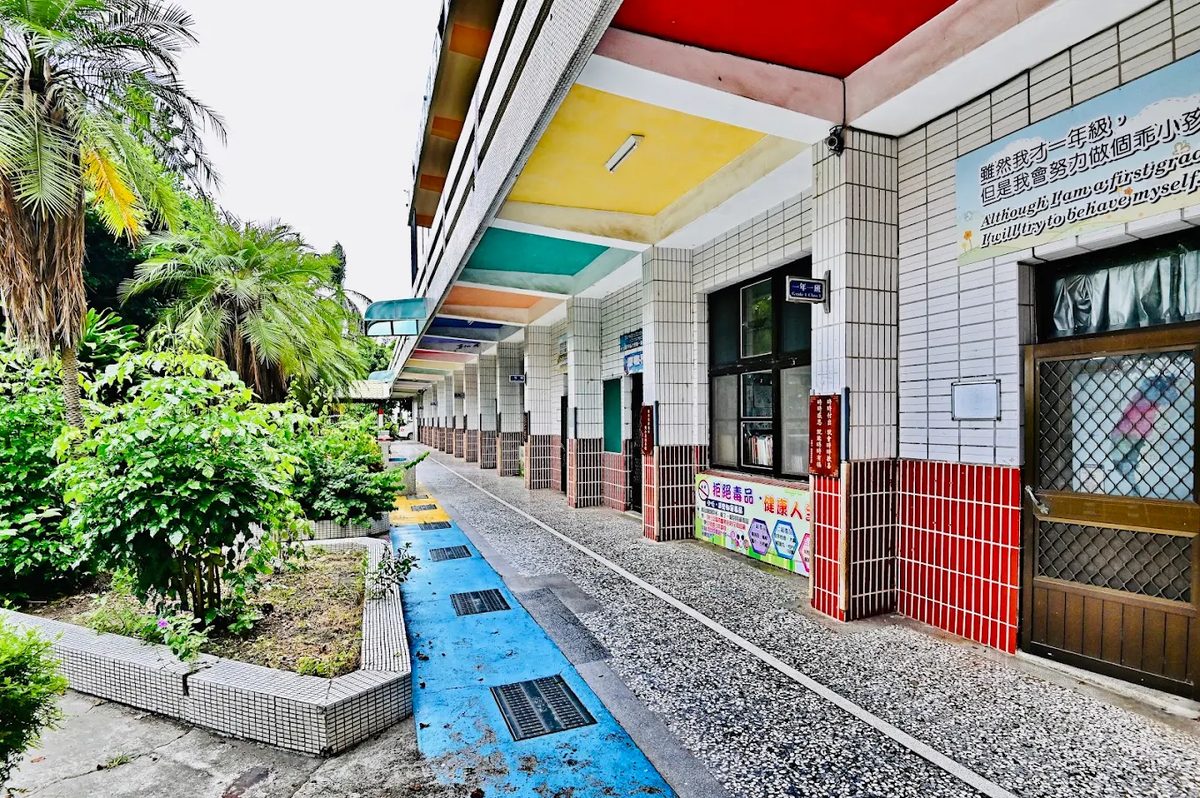
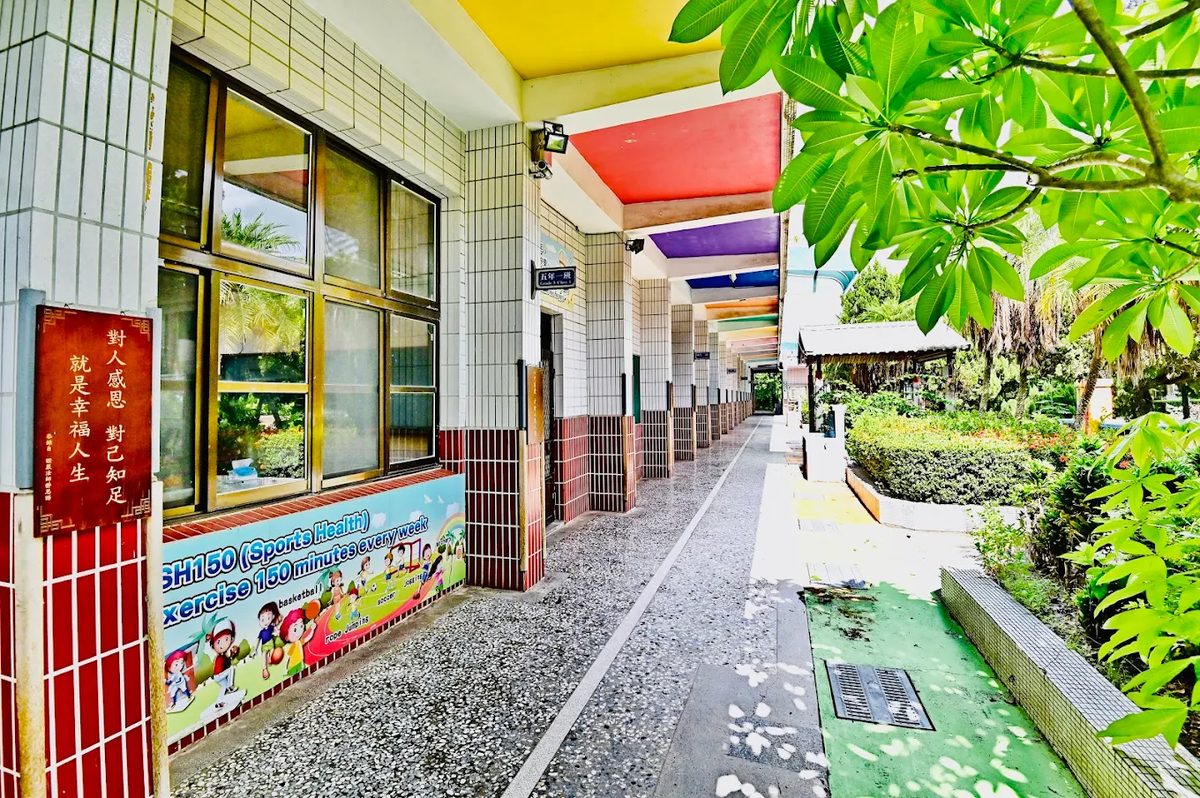
The English at Wanhe is not confined to the English room. It is painted on the beams — Practice makes perfect, Every attitude counts — printed on the sports banner as SH150 · exercise 150 minutes every week, and set into the wall outside the first-grade classrooms in a sentence written from a six-year-old’s point of view. None of it asks to be studied. It simply happens to be there, at eye level, every day of the week.
萬合的英文不關在英語教室裡。它漆在橫樑上——Practice makes perfect(熟能生巧)、Every attitude counts;印在體育海報上——SH150,每週運動 150 分鐘;也貼在一年級教室外的牆上,用一個六歲孩子的口氣寫著:「雖然我才一年級,但是我會努力做個乖小孩。」這些句子都沒有要求誰去背。它們只是剛好在那裡,在視線的高度,一週七天。
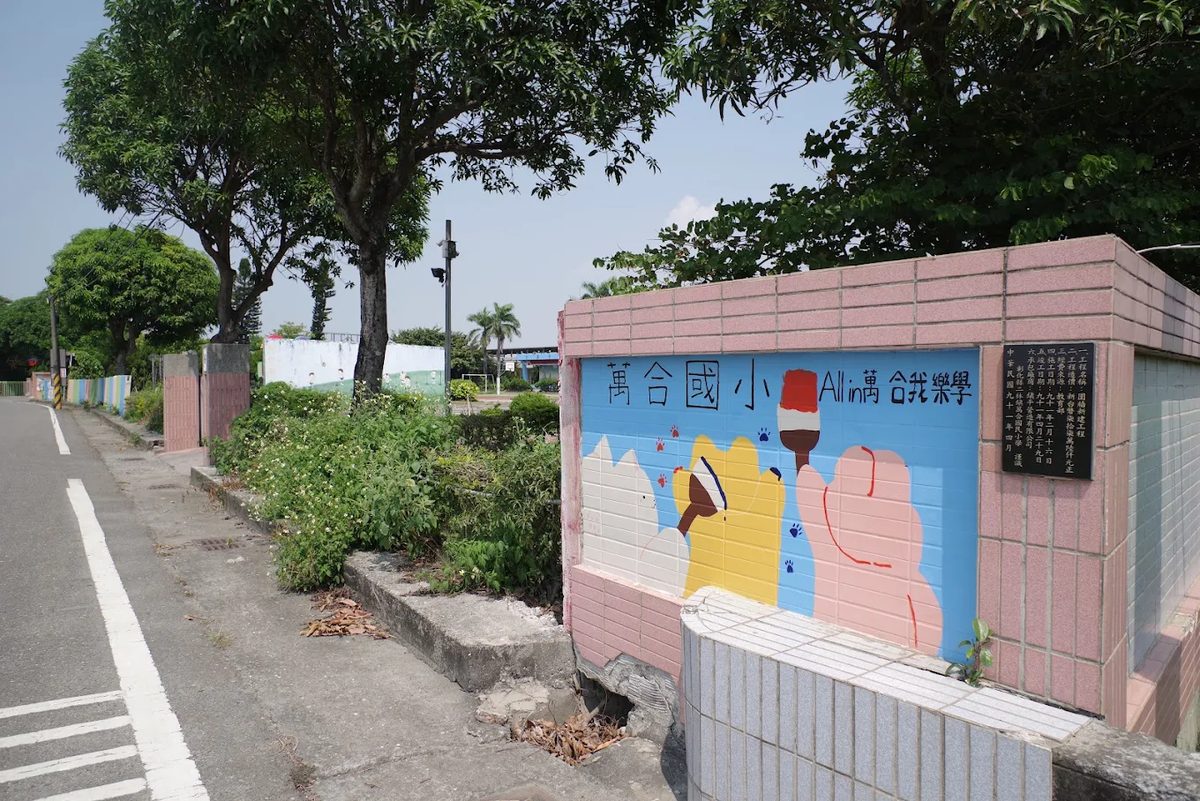
Come in off the country road and have a look round.
從鄉道轉進來,四處走走看看。
Education is life itself — so the learning here had better not stop at the textbook.
教育即生活——所以這裡的學習,不能只停在課本裡。