A Coastal Village School · Established 1961 · Xinsheng, Fangyuan
Jianxin Elementary
彰化縣芳苑鄉建新國民小學
Built on sand by fifty hands. Growing on the Sea Ox coast since 1961. 五十雙手在沙地上蓋起的學校,1961 年起在海牛海岸繼續長大。
I.
About Jianxin
關於建新 · 一所建在沙地上的海岸小校
A six-class coastal village school in Xinsheng — built on what was once the Zhuoshui River bed, where carrots now grow and sea oxen still walk.
坐落於新生村的六班海岸小校——這裡曾是濁水溪河床的沙地,如今長著紅蘿蔔,海牛仍在退潮的灘地上行走。
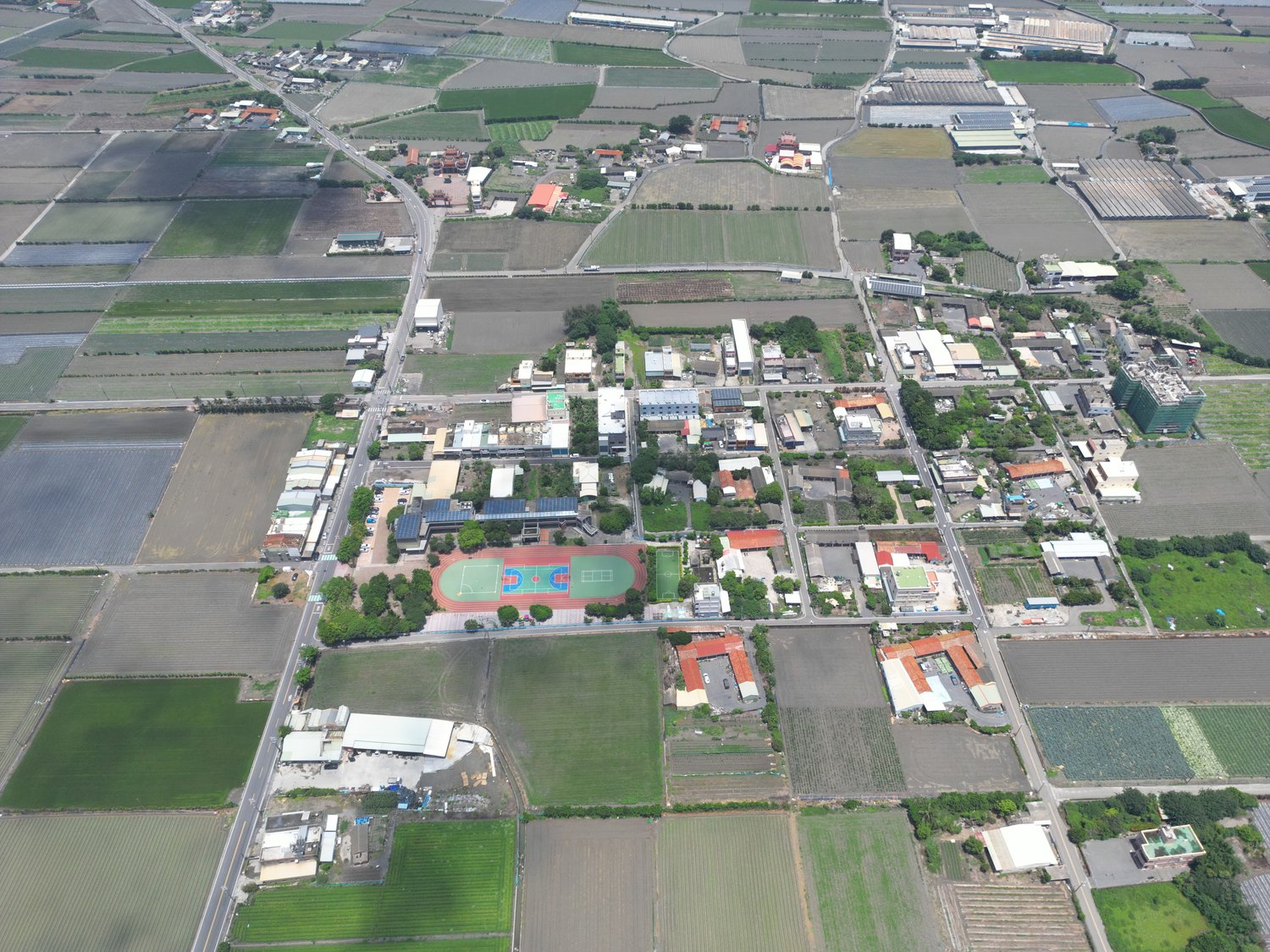
Jianxin Elementary School sits in Xinsheng Village (新生村), the eastern reach of Fangyuan Township on Changhua County's western coast. The land here was once the bed of the Zhuoshui River — all sand, swept by autumn and winter winds. In August 1952, more than fifty local people — Wu Yu-shui, Chen Jin-long, Chen Qing-xiu, Lin Chun-de and forty-six others — pooled donations and gave their own land to open Caohu Elementary's Xinsheng Branch. Nine years later, in August 1961, the branch became independent: Jianxin Elementary School was born.
Today, six classrooms hold around 68 children, with a teacher-to-student ratio of 1 : 5.2. The campus stretches across generous grounds — over 200 square meters per student — leaving room for STEAM benches, Tai Chi practice mats, and the carrot beds of our food-education program. Small school. Open sky. Deep coast.
"Built on sand by fifty hands. Standing for six decades and counting."
「五十雙手在沙地上蓋起的學校,至今六十餘年屹立海岸。」——建新國小的根與志。
Built to Face the Wind
迎著風蓋起來的學校 · 風土與校舍
Xinsheng began as a settlement of twenty-seven households opening farmland on what was once the bed of the old Zhuoshui River — all sand dunes, swept by the coastal wind. From the 1960s, families moved the sand to make fields and grew asparagus; many Jianxin children harvested the dawn crop before shouldering their schoolbags and walking to class. That memory — of wind, sand, and early-morning work — is still part of who this school is.
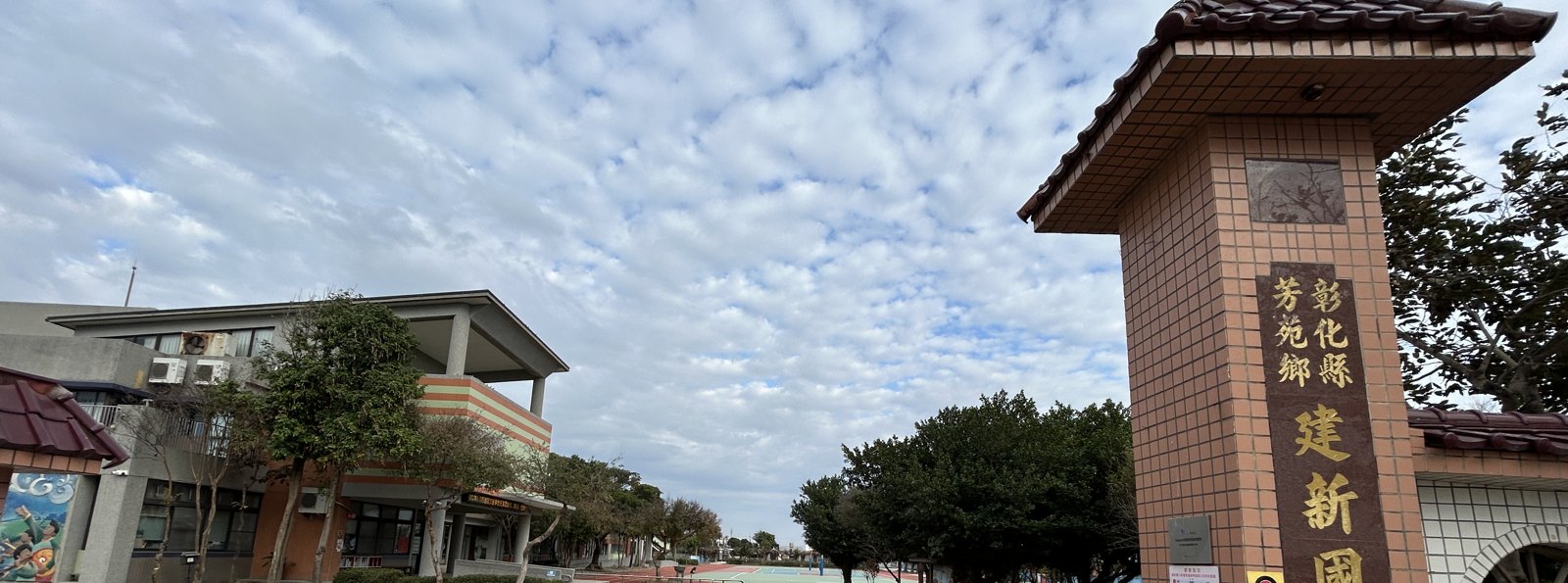
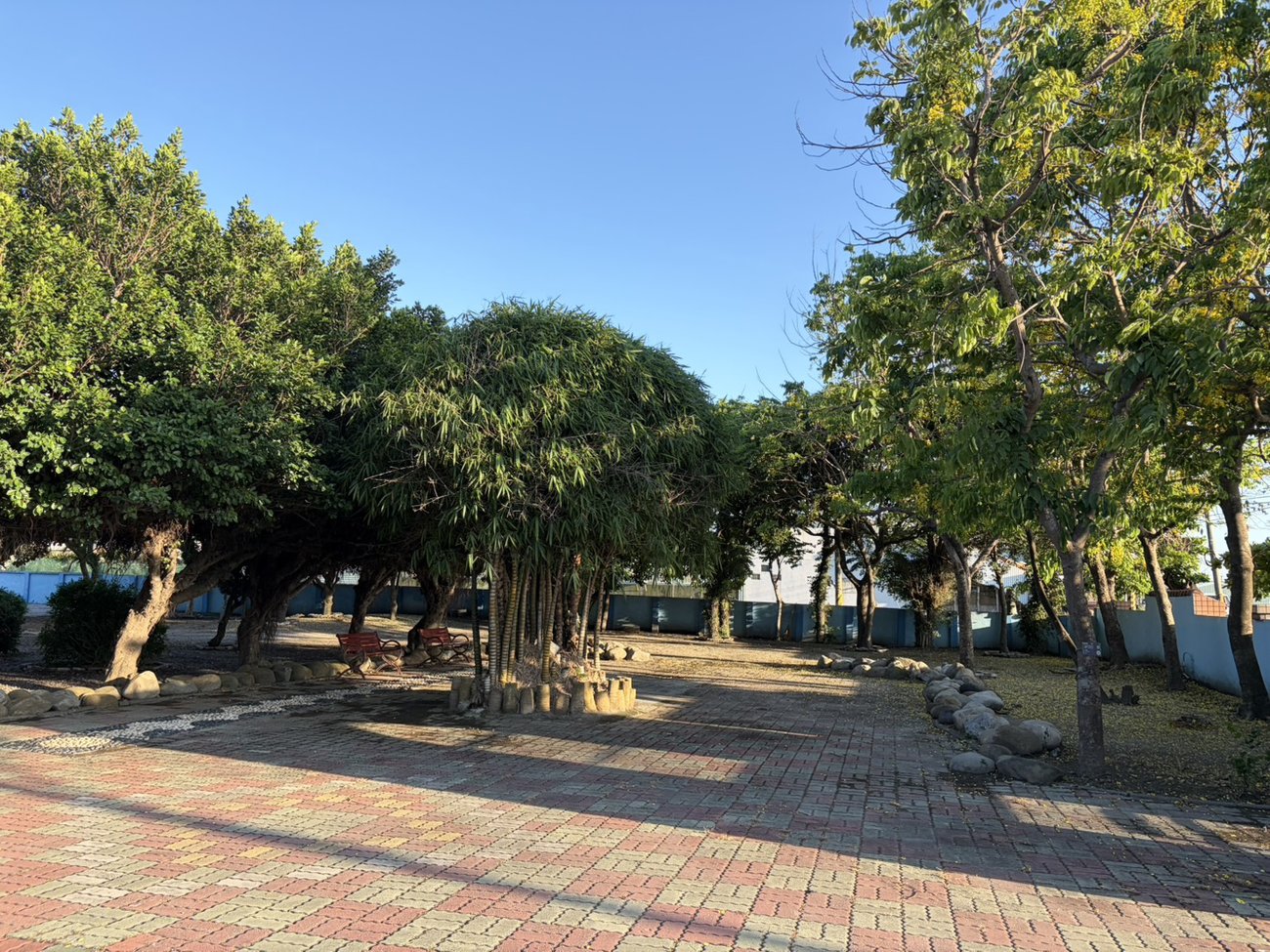
Today's campus answers the same coast. The new buildings use a "single-extending-arm" (單伸手) design — long eaves and open-air corridors that turn the strong northeast monsoon and bright sun into shade and breeze, letting learning spill naturally from the classroom into the open air. At its heart stand old trees and a brick courtyard — a wind garden where light, leaf-shadow and sea breeze meet, and where the village's history and the school's daily life still grow side by side.
A daily ritual of Chinese and English reading, weaving classroom texts with PaGamO online practice. Jianxin is a PaGamO Reading-Literacy Seed School and a Changhua County Reading-Rock Launch School.
🧪
STEAM × Inquiry
STEAM 與探究
From hands-on STEAM units to national-level science fairs — Jianxin students have placed in two consecutive editions of the National Elementary Science Fair, and eight passed the National STEAM Foundation Certification in 2025.
🥕
Carrot Country, Coastal Roots
紅蘿蔔之鄉 · 食農教育
Fangyuan's coastal sand has grown sweet potato, peanut, sugarcane, asparagus, and today — some of Taiwan's finest carrots. Our food-education program takes children from the field to the plate, from soil to story.
🥋
Tai Chi Champions
太極傳承 · 校隊強項
Tai Chi runs through Jianxin's PE program, and our students stand on county podiums year after year — including first and second place in the 13-Form Tai Chi competition at the 2025 Changhua Education Cup, plus medals in Push-Hands.
"Small school, full curriculum — page, lab, field, and body."
「小學校,完整課程——書頁、實驗桌、田地、身體,一個都不缺。」
III.
Small School, National Stage
小學校,大舞台 · 全國級殊榮
National-Level Honors · 全國級殊榮
68 students. National podium.
六十八個孩子,站上全國的舞台。
Few rural schools with only six classes reach the national science-fair podium. Jianxin has done it two editions in a row — placing in biology at the 64th National Science Fair and taking third place in chemistry at the 66th. Add a county-level sweep in Tai Chi — first and second place in the 13-Form, plus medals in Push-Hands — and Cool English Speaking Kings every year, and the pattern is clear: at Jianxin, the size of the school does not limit the size of the work.
很少有 6 班規模的偏鄉小校能站上全國科展的領獎台——建新做到了兩屆,第 64 屆生物科佳作、第 66 屆化學科第三名。再加上太極拳教育盃 13 式第一、二名、推手錦標賽佳績、Cool English 口說王 14 位獲獎——建新用行動證明:學校的「規模小」,並不限制孩子「表現的尺寸」。
🥉
3rd Place · National
66th National Elementary Science Fair — Chemistry
第 66 屆全國中小學科展 · 國小組化學科第三名
2025–26 school year
🏅
Honorable Mention · National
64th National Elementary Science Fair — Biology
第 64 屆全國中小學科展 · 國小組生物科佳作
Previous edition
🥇
Gold · Changhua County
13-Form Tai Chi — 2025 Education Cup
114 學年度教育盃 13 式太極拳 · 第一名(五忠 洪健皓)
2025
🥈
Silver · Changhua County
13-Form Tai Chi — 2025 Education Cup
114 學年度教育盃 13 式太極拳 · 第二名(五忠 洪啑茹)
2025
📜
8 Students Certified
National STEAM Foundation Certification
114 年 STEAM 檢定基礎組 · 8 位學生通過
2025
🎤
14 Speaking Kings
Cool English Speaking Champions
Cool English 口說王 · 14 位學生獲獎
2024–25
IV.
Programs & Moments
特色課程與校園時刻
📚
Jianxin Double Reading
建新雙閱讀 · 一天兩種語言的閱讀
A daily reading rhythm of Chinese and English — classroom storybooks in the morning, PaGamO and Cool English practice in the afternoon. The Ministry of Education has named Jianxin a Reading-Rock Launch School; PaGamO has named us a Reading-Literacy Seed School.
「建新雙閱讀」是孩子們每日的閱讀節奏:早上中文故事書、下午 PaGamO 與 Cool English 練習。教育部認證為「彰化縣閱讀磐石啟航學校」,PaGamO 認證為「閱讀素養種子學校」。
📖 Reading-Rock Launch School🌱 PaGamO Seed School
🐃
Sea Ox Coast
海牛文化 · 芳苑海線的活遺產
Fangyuan is the home of Taiwan's last working sea oxen — water buffalo that pull harvest carts into the intertidal zone to gather oysters. The practice is recognized as intangible cultural heritage (2020). Jianxin children join the International Sea Ox Festival art and writing competitions each summer, learning to see their home through the eyes of artists and storytellers.
Fangyuan's coastal sand grows some of Taiwan's finest carrots — the latest in a century-long rotation that has also given the village sweet potato, peanut, sugarcane, and asparagus. Our food-education program takes children into the fields to plant, harvest, wash, and cook — turning the local crop into a curriculum, and the curriculum back into the meal.
Tai Chi runs through the daily PE program — patience, balance, breath. In 2025, Jianxin students took first and second place in the 13-Form competition at the Changhua Education Cup, plus medals in Push-Hands. For a small school, this is more than sport — it is a way of carrying tradition forward.
"A coastal village school can stand tall. Our work is to make sure every Jianxin child stands tall with it."
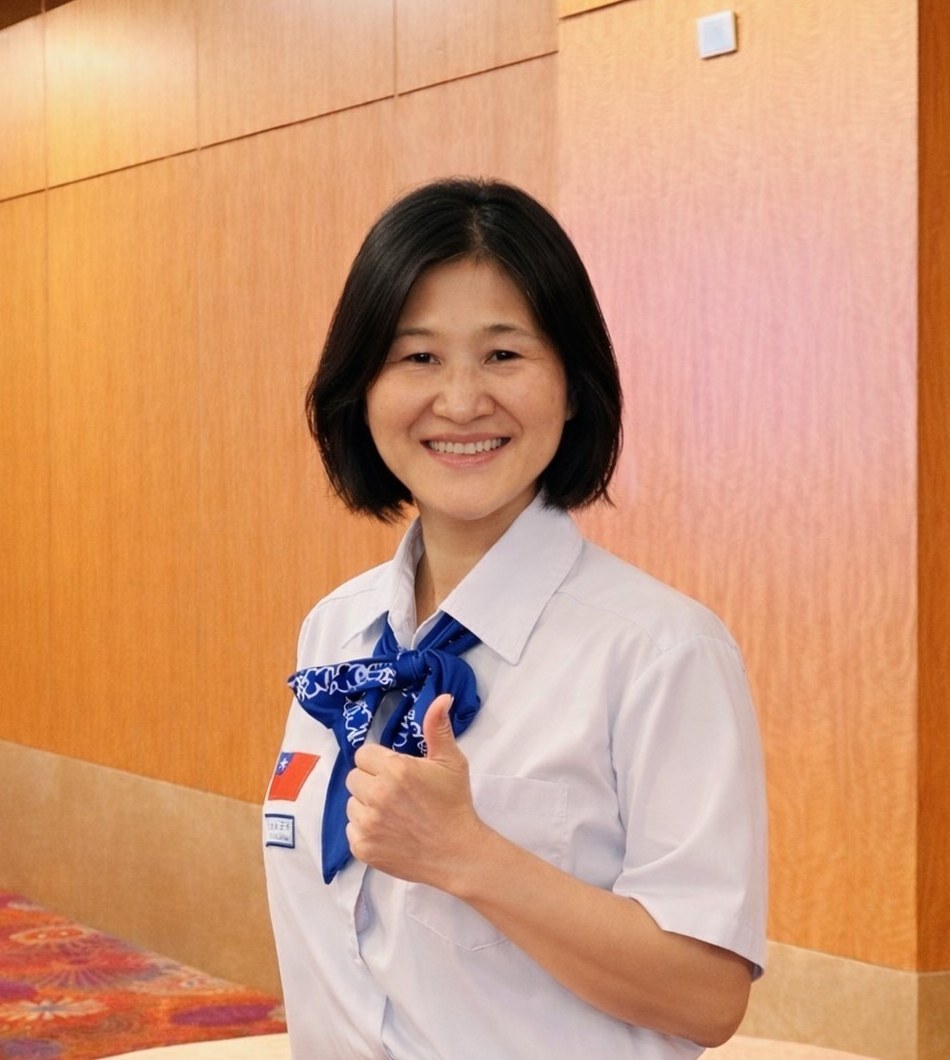
Principal Lin Chia-hui joined Jianxin in August 2025 — the first phase of Changhua County's 114th-year principal selection. She brings four years of principal experience from Chang'an Elementary School, where she led an internationally-minded campus committed to rural-school innovation.
As Jianxin enters its seventh decade, Principal Lin is shaping a campus that holds two compass points in balance: roots in Xinsheng — sand, sea, carrot, sea ox, Tai Chi — and reach into the wider world — STEAM, bilingual reading, Cool English, the global classroom. This bilingual website is part of that reach.