A hundred years and more of teaching, in a village at the foot of the hills.
一百多年的教學,在一個靠著山的村子裡。
Fuxing Elementary School was founded in 1914 — the third year of the Republic — under the name 二八水尋常小學. Erbashui, “two-eight water”, was what this place was called then; the township is called Ershui now, but the school’s first name still carries the older one. That makes this a school of more than a century, and in those hundred years it has educated more children than anyone here could count.
復興國小原稱「二八水尋常小學」,創立於民國 3 年(1914),至今已逾百年。「二八水」是這個地方從前的名字,如今鄉名寫作「二水」,而學校最早的名字,還留著那個更老的稱呼。在這百年歲月中,復興化育英才無數。
The name the school goes by today says the same thing twice over. 復興 — to revive, to flourish again — is also the name of the village it stands in. And the crest says it a third way, without words: a sun coming up in red brush-strokes over a blue river and a green bank.
學校今天的名字,把同一件事說了兩遍。「復興」既是學校的名字,也是校址所在的復興村。而校徽用第三種方式再說一次,沒有用到任何字:紅色筆觸畫成的旭日,升起在一道藍色的水與一片綠色的岸之上。
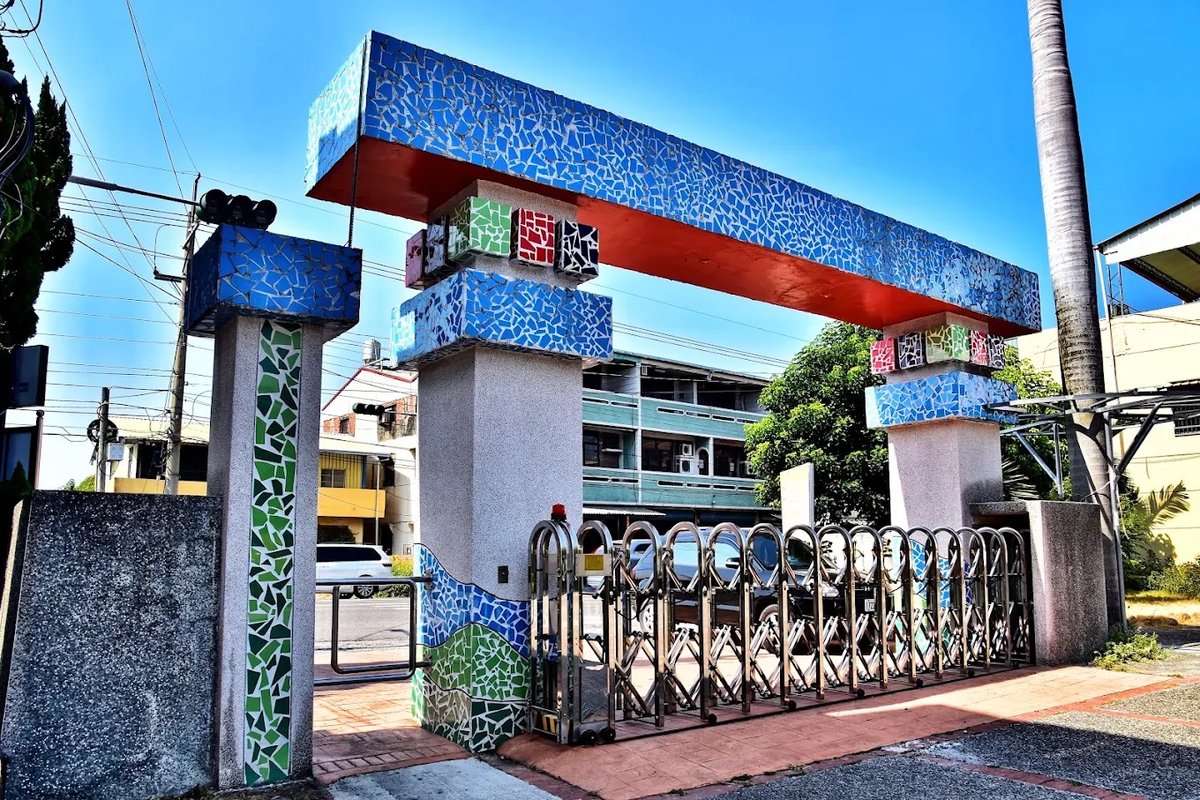
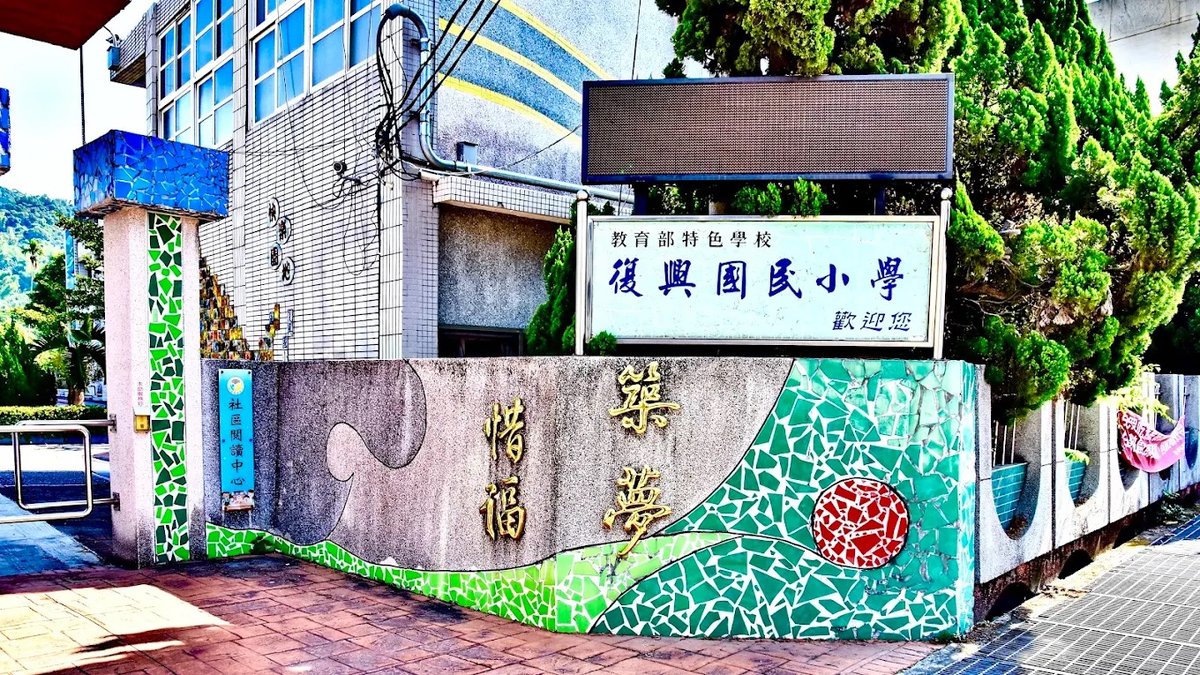
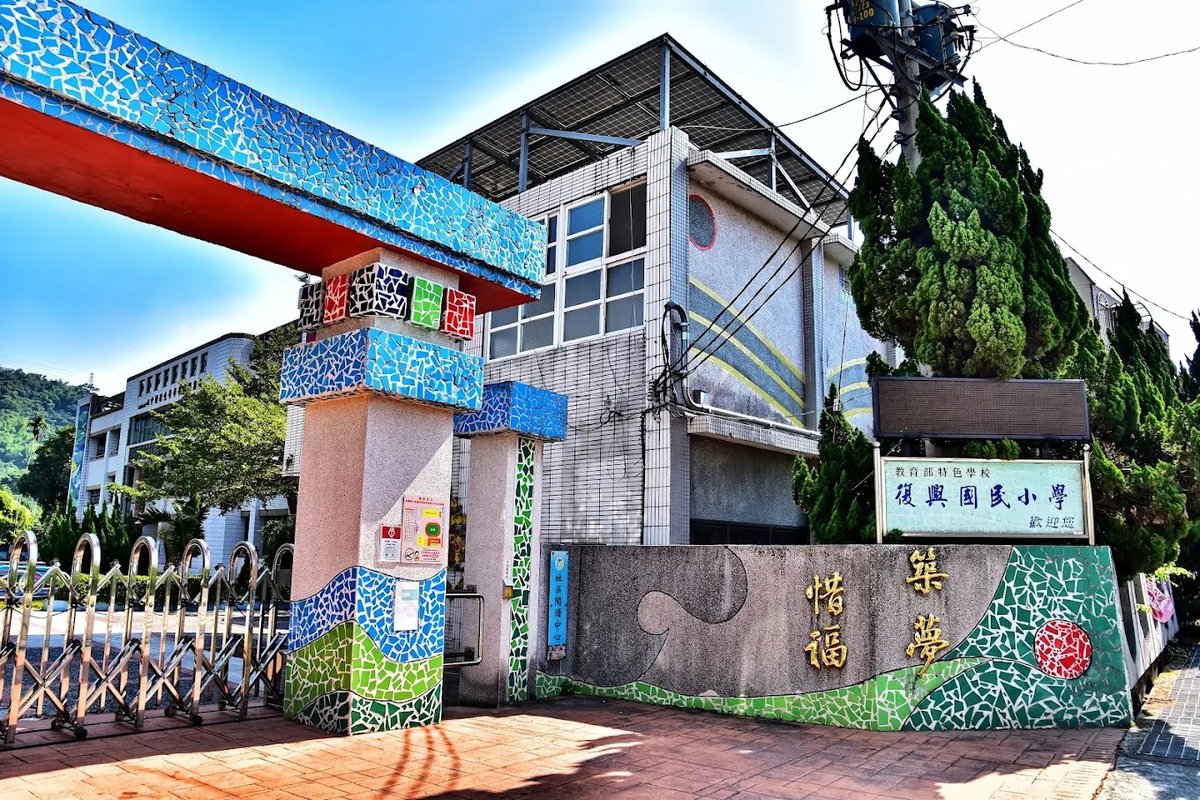
Four characters in gold, set into the wall you pass on your way in: 惜福築夢 — cherish your blessings, build your dreams. The board above it names the school and adds two things the school is: a Ministry of Education distinctive school, and a community reading center — which is to say the library here is not only for the children who attend.
四個金色的字,嵌在你走進來時會經過的那面牆上:惜福築夢。上方的校名牌還多寫了兩件事——這裡是教育部特色學校,也是一處社區閱讀中心;也就是說,這裡的書不只給在這裡上學的孩子看。
Healthy. Happy. Grateful. Inventive. They are painted where the children walk past them.
健康、快樂、感恩、創新。它們就寫在孩子每天經過的地方。
Fuxing carries forward a belief in gratitude and holds to a spirit of innovation, and what those two are for is the third and fourth words: to give the children here a healthy and happy way to learn and to grow. It is a short statement, and an unusually concrete one — it does not describe an outcome the school hopes for at the end of six years, but the condition it wants the six years themselves to have.
復興承襲「感恩」的信念,秉持「創新」的精神,而這兩者是為了後面兩個字:提供學生「健康、快樂」的學習成長。這是一句很短的話,也是一句異常具體的話——它說的不是六年之後希望看到的結果,而是希望這六年本身,是什麼樣子的。
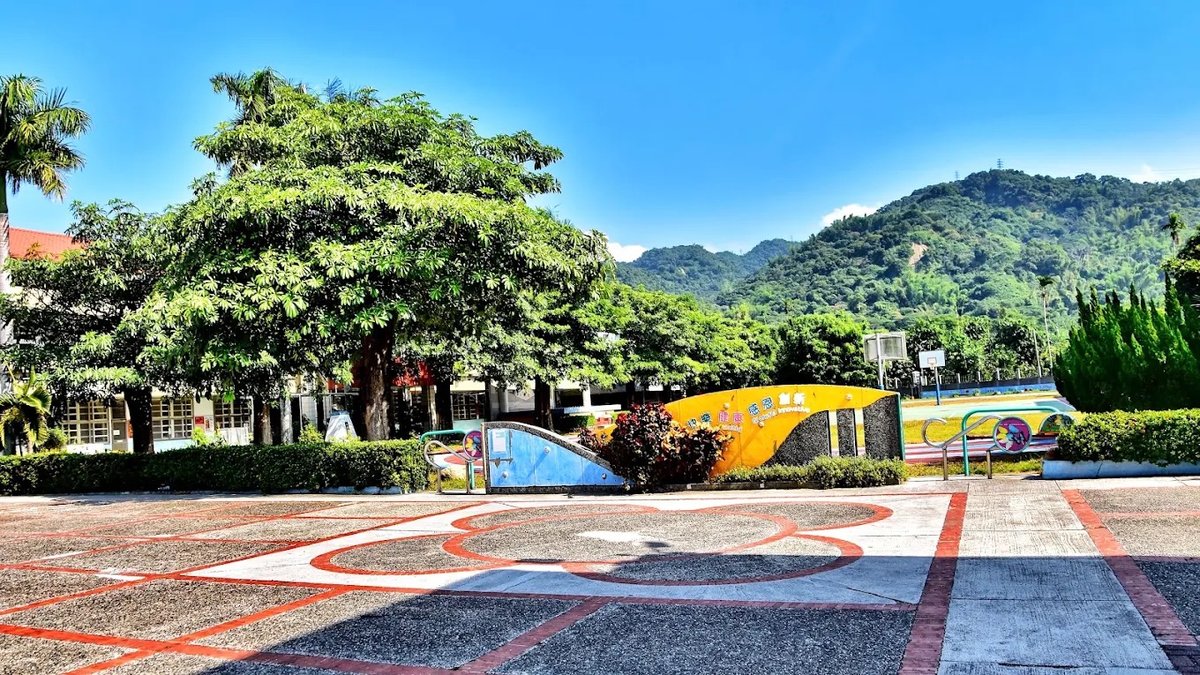
Whoever painted the courtyard wall clearly agreed. The four words run across a curved yellow panel — 快樂 健康 感恩 創新, with a line of English lettering under each pair of characters — facing the paved circle the children cross a dozen times a day, with the hills standing behind it.
把中庭那面牆漆出來的人,顯然同意這一點。四個詞排在一片弧形的黃色牆面上——快樂 健康 感恩 創新,而每一組字的下面,還各有一行英文——正對著孩子一天要走過十幾次的那片圓形鋪面;牆的後面,是山。
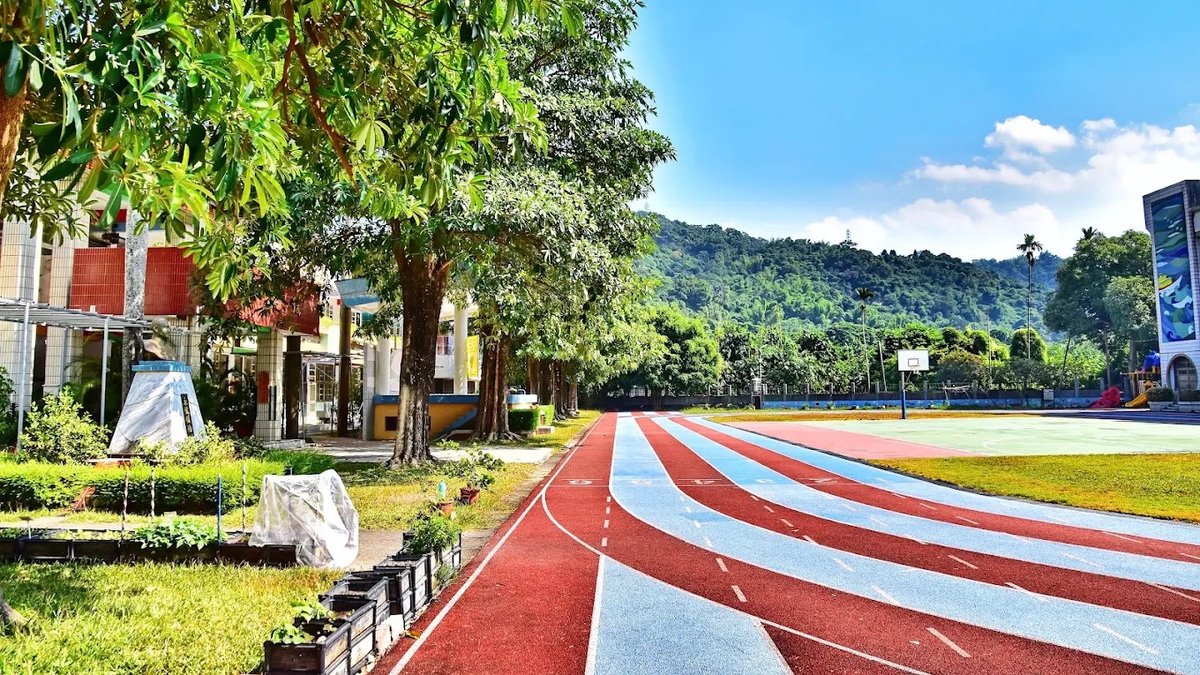
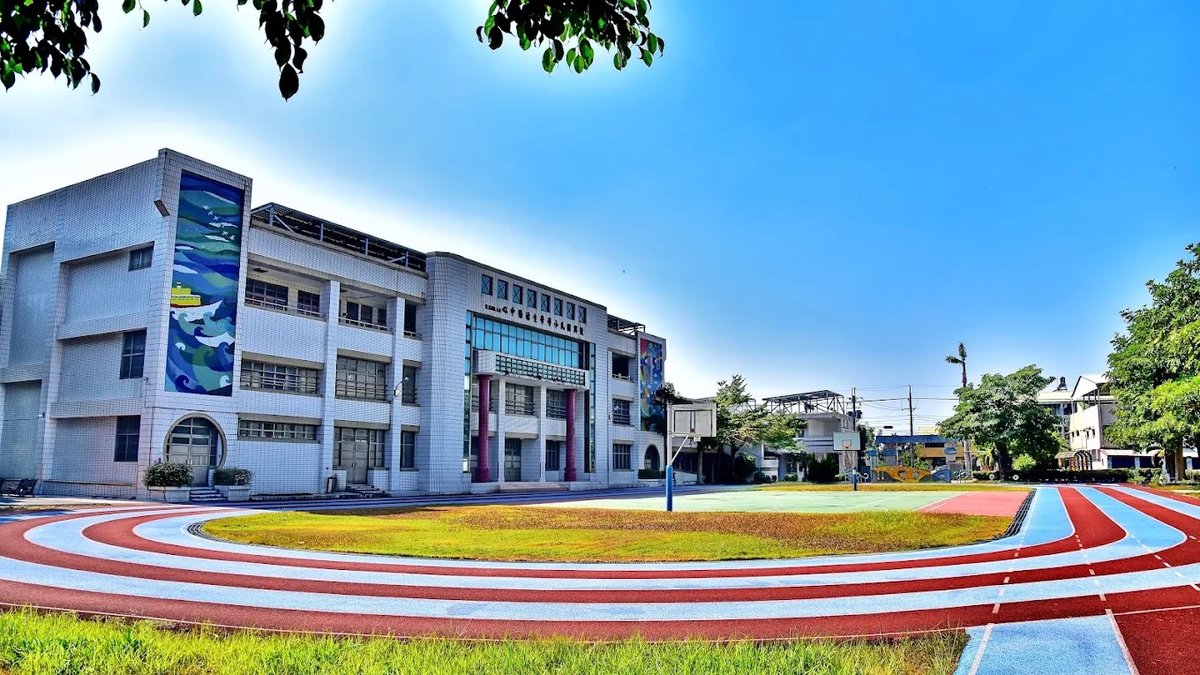
There is no need to draw scenery on a wall here. Stand anywhere on the Fuxing track and the hills are already at the end of it — close enough that the weather is visible on them, and that a child looking up from a race knows exactly where they are.
這裡不需要把風景畫在牆上。站在復興的跑道上任何一個位置,山就在跑道的盡頭——近到看得見山上的天氣,也近到讓一個跑完抬起頭的孩子,很清楚自己在哪裡。
Two foundations — food and farming, and reading — and everything else built on top of them.
兩塊地基——食農教育與閱讀——其餘的都蓋在上面。
Fuxing develops many kinds of learning, and its starting point is clear: food-and-farming education and reading. On those two it keeps building school-based courses that belong to Fuxing children specifically — not a syllabus that would work anywhere, but one that only quite makes sense here, in a farming village with hills behind it.
復興發展多元化學習,而且起點很清楚:以「食農教育」和「閱讀」為基礎,持續推動專屬於復興學子的校本課程——不是一套放到哪裡都能用的課,而是一套放在這裡、在一個背後有山的農村裡,才完全說得通的課。
Alongside those run the clubs, both the still kind and the moving kind. And because a village school cannot simply hire whatever it likes, Fuxing goes out and brings in resources and teachers from outside, so that the number of things a child here gets to try is not decided by the size of the village.
課程之外是社團,各類靜態和動態社團都有。而因為一所鄉下的學校不可能想聘什麼就聘什麼,復興引進資源和師資,讓孩子有更多的學習契機——讓一個孩子能試的東西有幾樣,不是由村子的大小決定的。
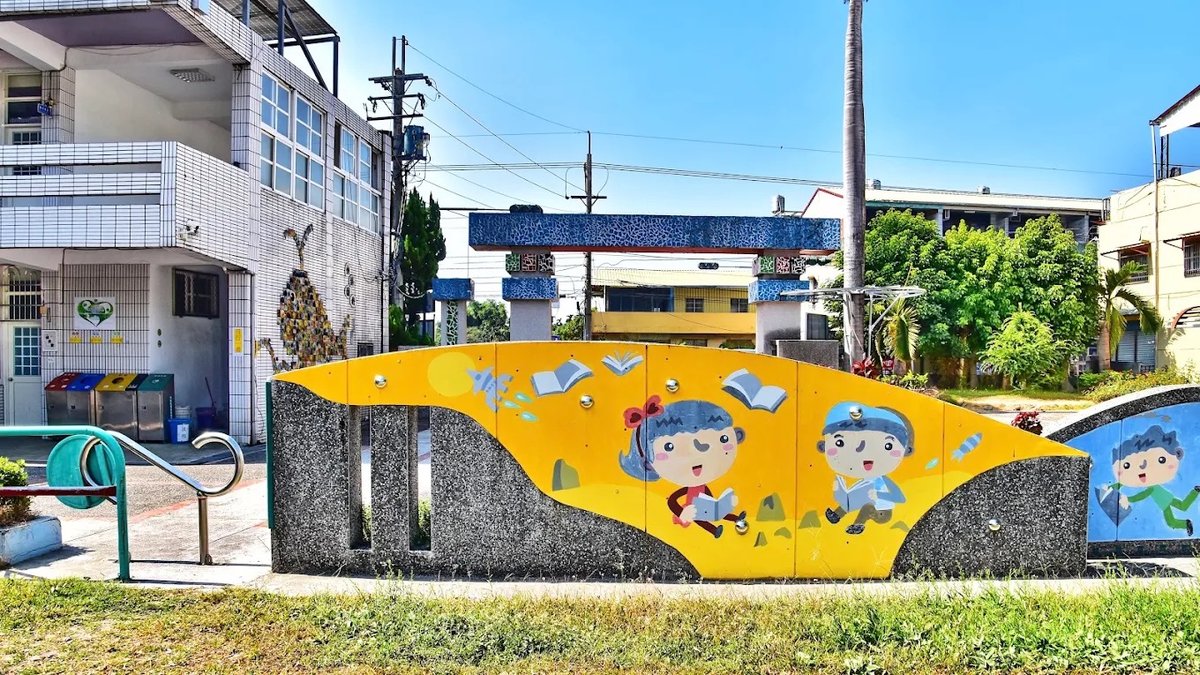
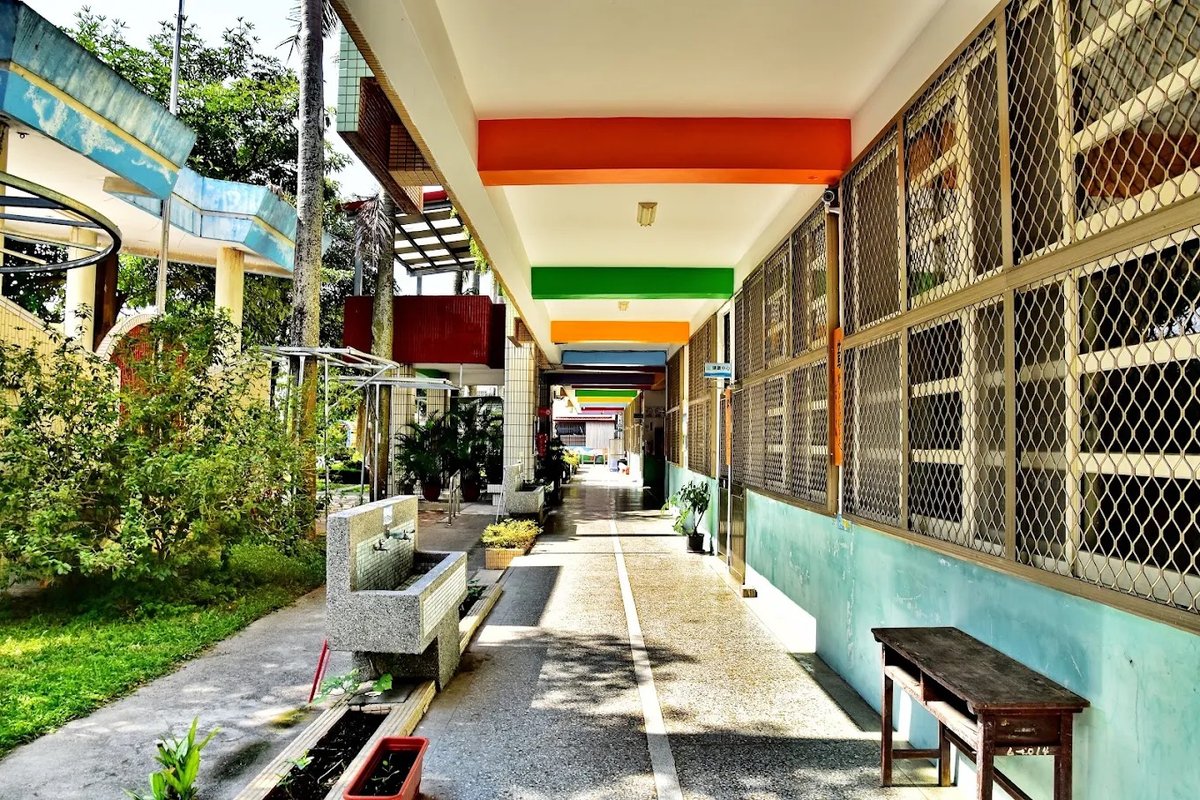
The reading wall stands at the edge of the field, and the planters and seedling boxes stand along the corridor and under the trees a short walk away. That is roughly how the two subjects sit in relation to each other here: not a reading period and a farming period, but a book you can take outside and a plant you can come back and check on.
閱讀彩繪牆立在操場邊,育苗的盆栽與菜箱就排在不遠處的走廊邊與樹下。這大概就是這兩件事在復興的相對位置——不是「閱讀課」跟「食農課」,而是一本可以帶到外面看的書,和一盆可以回頭再去看一次的植物。
Doorways, beams, noticeboards — at Fuxing they have all been given something to say.
門洞、橫樑、公佈欄——在復興,它們都被交代了一句話。
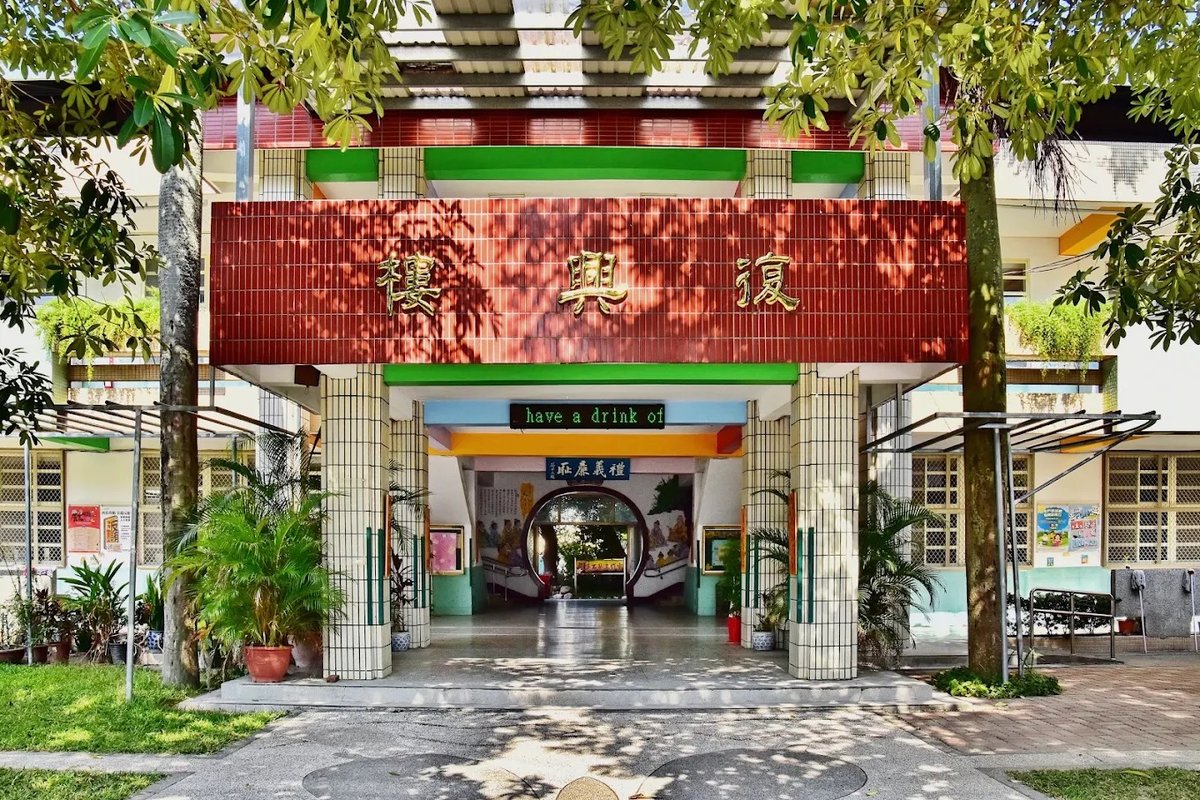
Walk in through 復興樓, the main hall, and you pass under an LED board that runs lines in English, then under a plaque of four characters — 禮義廉恥, courtesy, duty, integrity, shame — and then through a round moon gate named 勤學門, the Gate of Diligent Study. The walls on either side of it are painted with Confucius teaching his students, and beside the stairs there is a glazed noticeboard headed English Column. None of it is an exhibit. It is simply the way to the back of the school.
從復興樓走進來,你會先經過一塊跑著英文句子的 LED 字幕機,再經過一面寫著「禮義廉恥」的匾,然後穿過一道圓形的月洞門——「勤學門」。門的兩側牆上畫著孔子傳善、弟子環坐聽講,樓梯旁還掛著一塊標題寫著 English Column 的玻璃公佈欄。這些都不是展品,那只是走到學校後半部的路。
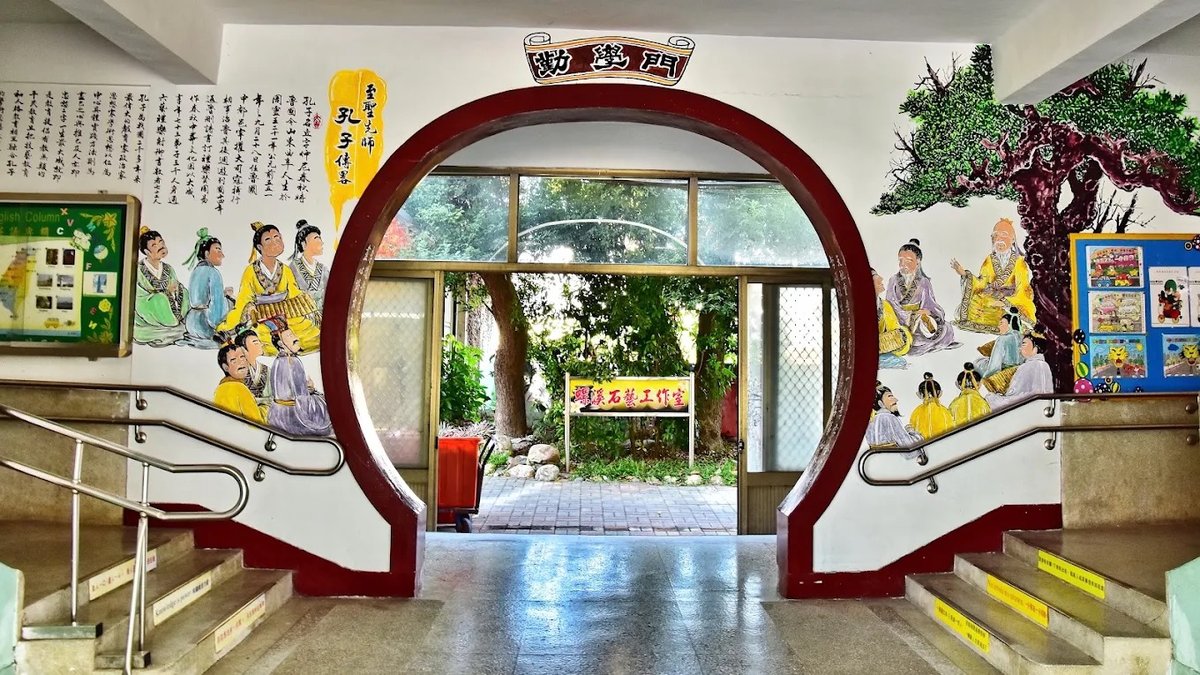
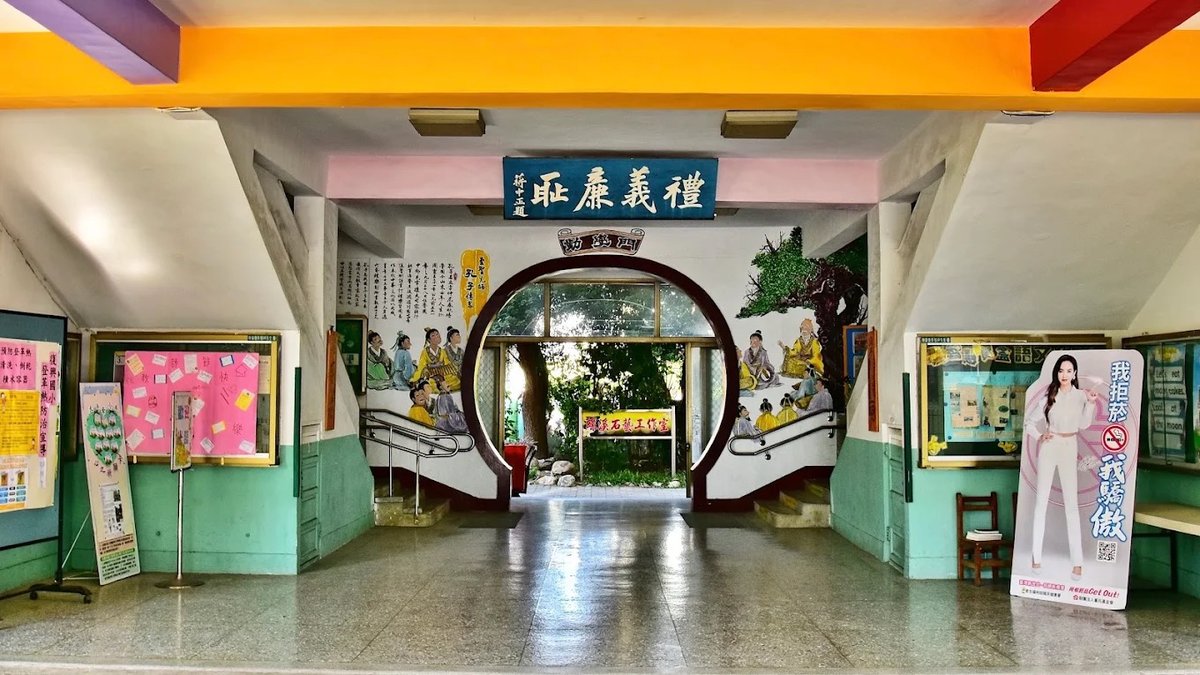
A moon gate is a door with nothing to keep out. What it does instead is frame — it turns the courtyard behind it into a picture, and it makes anybody who steps through it step through something. The children here do that on the way to lessons, several times a day, past a wall where Confucius is still teaching.
月洞門是一種不擋任何東西的門。它做的是「框」——把後面的庭院變成一幅畫,也讓每一個穿過去的人,都是「穿過」了什麼。這裡的孩子上課途中會這樣走過去,一天好幾次,經過一面孔子還在講學的牆。
Come in off Yuanji Road and have a look round.
從員集路轉進來,四處走走看看。
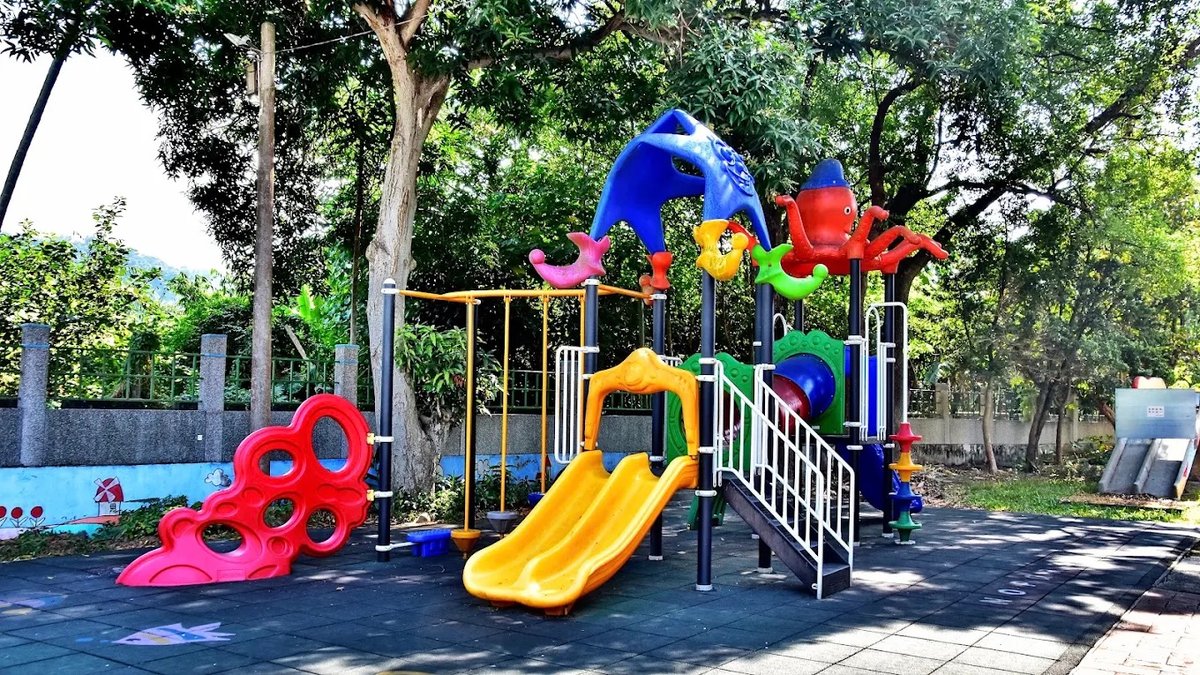
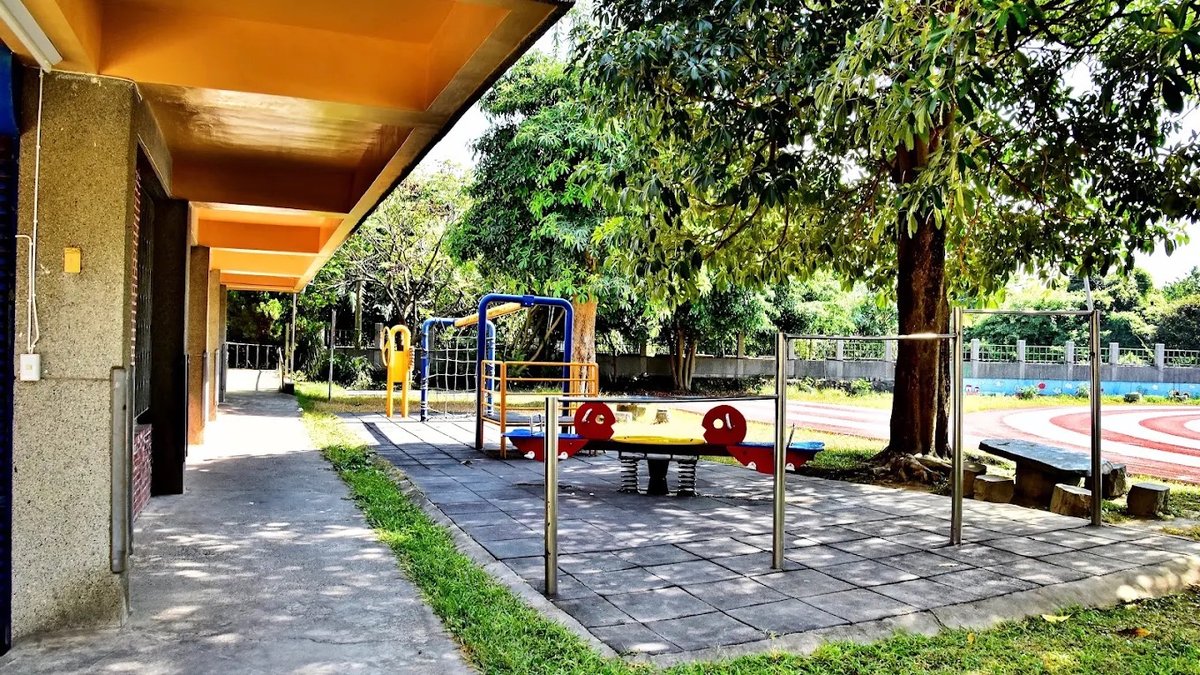
The children come first — and a small village school can still be given something new.
以學生為主體——而一所鄉下的小學,仍然可以被注入新的東西。