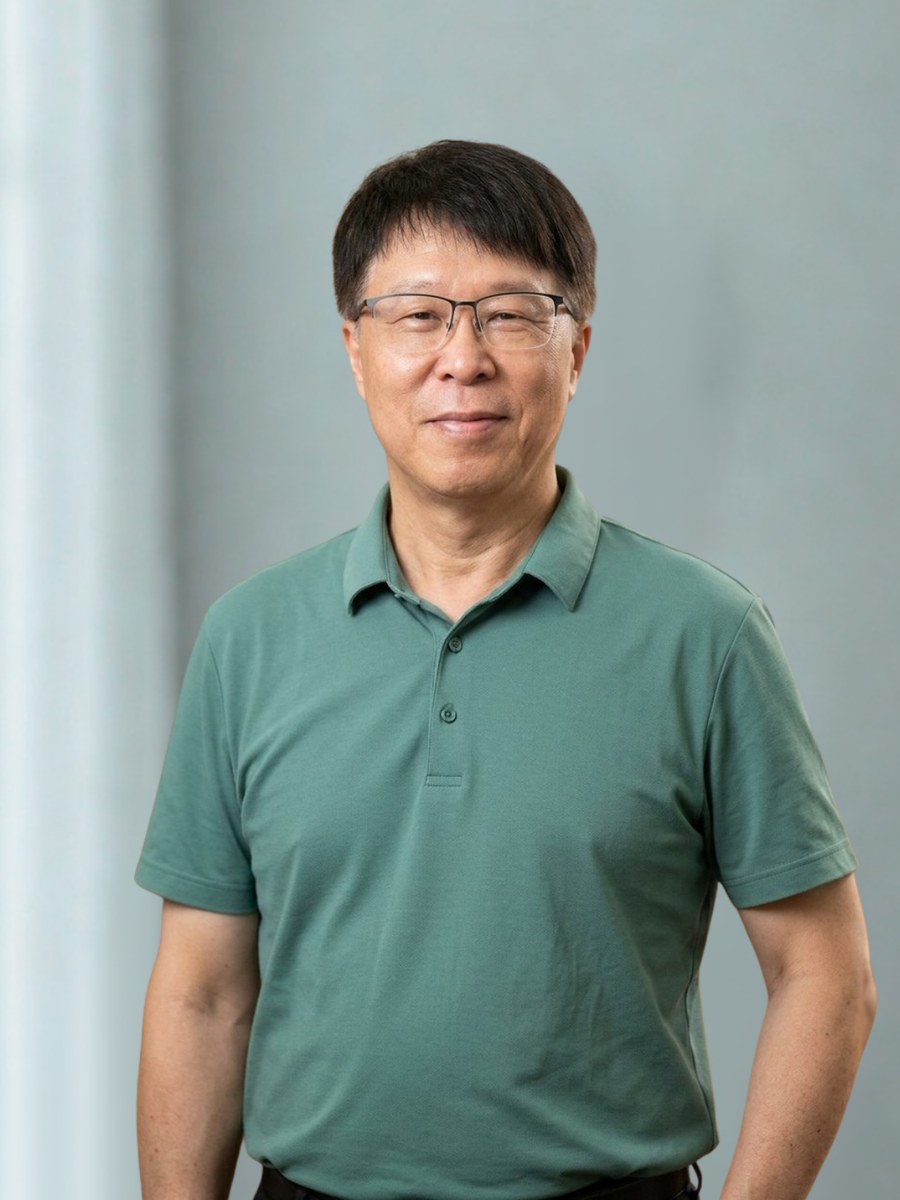
The school I want Minghu to be can be said in eight characters: 人文優質、祥和校園 — a campus of quality and humanity, and a peaceable place to be. Quality, because children deserve teaching that is genuinely good. Humanity, because how we treat one another here is itself part of the lesson. And peaceable, because a child who feels safe is a child willing to try.
我希望明湖成為什麼樣的學校,可以用八個字說完:「人文優質、祥和校園」。優質,是因為孩子值得真正好的教學;人文,是因為我們在這裡如何對待彼此,本身就是課程的一部分;祥和,是因為一個覺得安全的孩子,才願意嘗試。
How do we get there? First, by manufacturing success for children. Enthusiasm for learning is not something you can lecture a child into — it is what happens after they have succeeded at something. So we build in experiences where success is genuinely within reach, and let the appetite for learning follow. Alongside that we work to develop the many kinds of intelligence a child may have, and to grow in them an attitude of steady effort.
要怎麼走到那裡?第一,是製造孩子成功的經驗。學習的熱情沒辦法靠訓話得來——它是孩子真正成功過一次之後才出現的東西。所以我們替孩子安排成功真的伸手可及的經驗,讓學習的熱情跟著長出來。同時,我們也努力發展學生多元的智能,並培養他們努力向上的態度。
None of it happens without teachers. I respect teachers’ professional growth and take it as my job to protect the conditions for it — because what we are really trying to kindle in a staffroom is not compliance but 教育大愛, a teacher’s large-hearted love for the work. And I lead the team by one plain order of priorities: administration exists to serve. Students and teachers come first.
這些事沒有老師都不會發生。我尊重教師專業發展,並把守住這件事的條件當成我的工作——因為我們真正想在辦公室裡點燃的,不是服從,而是教育大愛。而我帶團隊的方式只有一個很樸素的優先順序:領導組織團隊運作,行政服務師生優先。
Chang Tung-hsin · Principal 張通信 校長
Classroom, section office, director’s desk, principal’s office — a career spent in Changhua schools.
教學現場、組長室、主任辦公室,再到校長室——一路都在彰化的學校裡。
Principal Chang trained at Provincial Taichung Teachers College and went on to read language and literature education at National Taichung University of Education and then special education at the graduate institute of National Chiayi University — a combination that shows in how he talks about children: a language teacher’s ear, and a special educator’s insistence that every child is a particular child. He began as a homeroom teacher and section chief at Nanya and Yuanlin Elementary, qualified through Changhua County’s fifth cohort of director training, and then held all three directorships — academic affairs, general affairs and counseling — at Guanyu Elementary. He served as principal of Sihu Elementary and Chaohsing Elementary before coming to Minghu.
張校長畢業於省立臺中師專,其後取得國立臺中教育大學語文教育學系學士與國立嘉義大學特殊教育學系研究所碩士——這樣的組合在他談孩子的方式裡看得出來:語文老師的耳朵,加上特教工作者「每個孩子都是一個個別的孩子」的堅持。他從湳雅國小與員林國小的級任教師、訓導組長與輔導組長做起,通過彰化縣第五期主任班儲訓,並在管嶼國小歷任教務、總務、輔導三個主任職務。來到明湖之前,他曾任溪湖國小與朝興國小校長。
His listed specialities read like a small inventory of what a rural primary school actually needs: whole-school planning, coordination and delivery; special education and the knowledge that goes with it; the science and technology learning area; and the practical business of running after-school care and enrichment classes. He is also a certified accessibility-facilities inspector, a referee and coach in a range of school sports, and professionally trained in public procurement — the unglamorous skills that decide whether a small school’s plans actually get built.
他列出的專長,幾乎就是一所鄉間小學真正需要的清單:校務規劃、協調與執行;特殊教育及特教相關知能;自然與生活科技領域;以及辦理課後照顧及各項才藝班這種很實務的事。此外他是無障礙設備勘檢人員,也擔任各項體育競賽的裁判與教練,並受過採購人員專業訓練——這些不起眼的本事,往往決定一所小學校的計畫最後有沒有真的做成。
One vision, held up by four things the school actually does.
一個願景,靠四件真正在做的事撐著。
Character, curriculum, kindness, and the climb from good to better.
品格、課程、溫暖,以及從 A 到 A+ 的那段路。
How the vision is meant to actually reach a classroom.
願景要怎麼真的走進教室,靠的是這五件事。
Two of these are worth pausing on. The fourth — the campus itself teaches — is a live proposition at a school built into a hillside beside a temple: the environment here is not a backdrop to the curriculum but a large part of it, and the aim is that children should be able to step out of a classroom and go on learning. The fifth ends in a promise with a very practical shape: bring in outside resources so that free after-school care can be offered to everyone, and parents need not worry about what happens at four o’clock.
其中兩項值得停下來看。第四項——活化境教功能——在一所蓋在山坡上、緊鄰寺廟的學校裡,是很實際的主張:這裡的環境不是課程的背景,而是課程的一大部分,目標是讓孩子走出教室以後還在學習。第五項的結尾則是一個形狀很具體的承諾:爭取外部資源,全面開辦免費課後照顧,讓家長不必擔心四點以後的事。
An extra English lesson, a foreign teacher, free care until half past five — and a bicycle when you graduate.
多一節英語課、一位外師、免費照顧到五點四十——還有畢業時的一部腳踏車。
Read that list again and a pattern shows up: almost all of it is free. Free after-school care for the whole school, fully funded by the Haydn Foundation and the Fubon Foundation 海頓基金會與富邦基金會. Free tai chi and tai chi fan for every pupil and every member of staff, paid for by the Parents’ Association. A free dance club, supported from outside the school. Weekend English camps taught at no charge by English-major students from Da-Yeh University, with lunch provided. For families in a hill village, “free” is not a detail — it is the difference between a program existing and a child being in it.
把那份清單再讀一次,會看到一個共通點:幾乎每一項都是免費的。全校免費課後照顧,由海頓基金會與富邦基金會全額贊助;全校師生免費打太極拳太極扇,由家長會支付;免費舞蹈社團,來自校外資源;學期中的假日英語營隊,由大葉大學英語系學生免費教學並提供中餐。對山村的家庭來說,「免費」不是一個細節——它是「有這個活動」與「孩子真的參加得到」之間的差別。
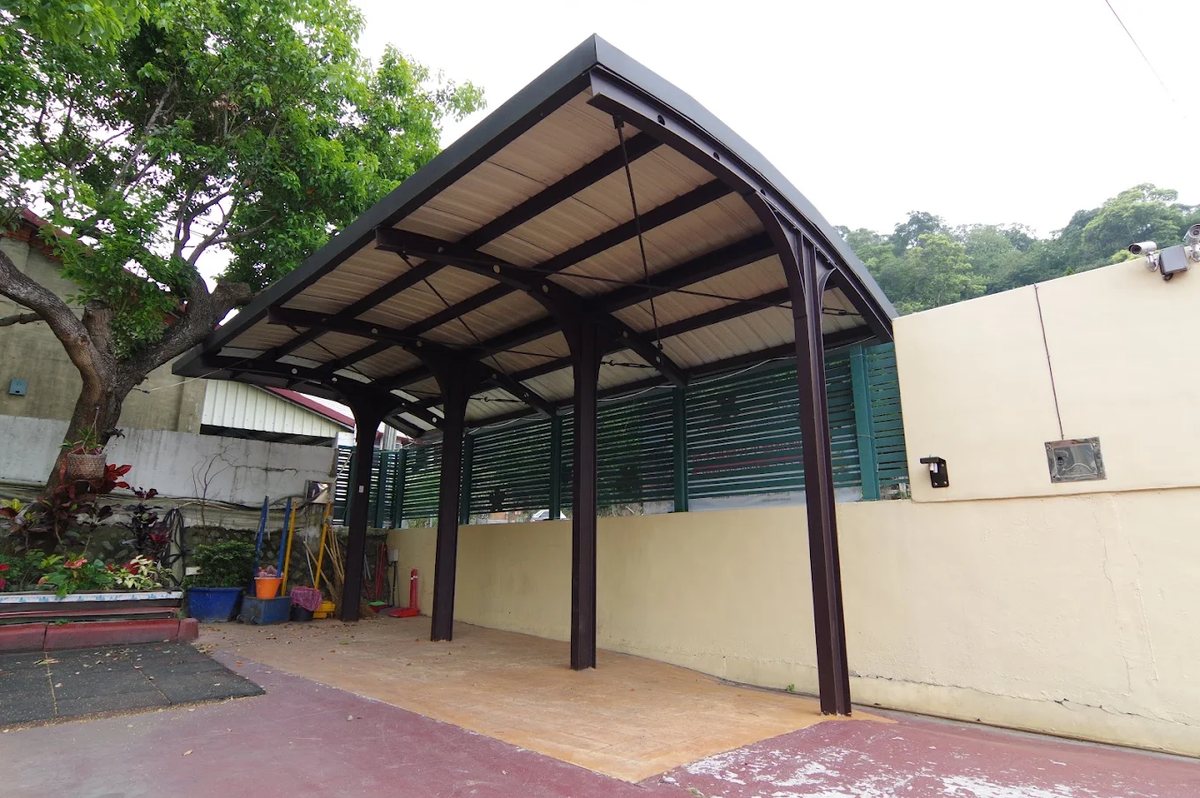
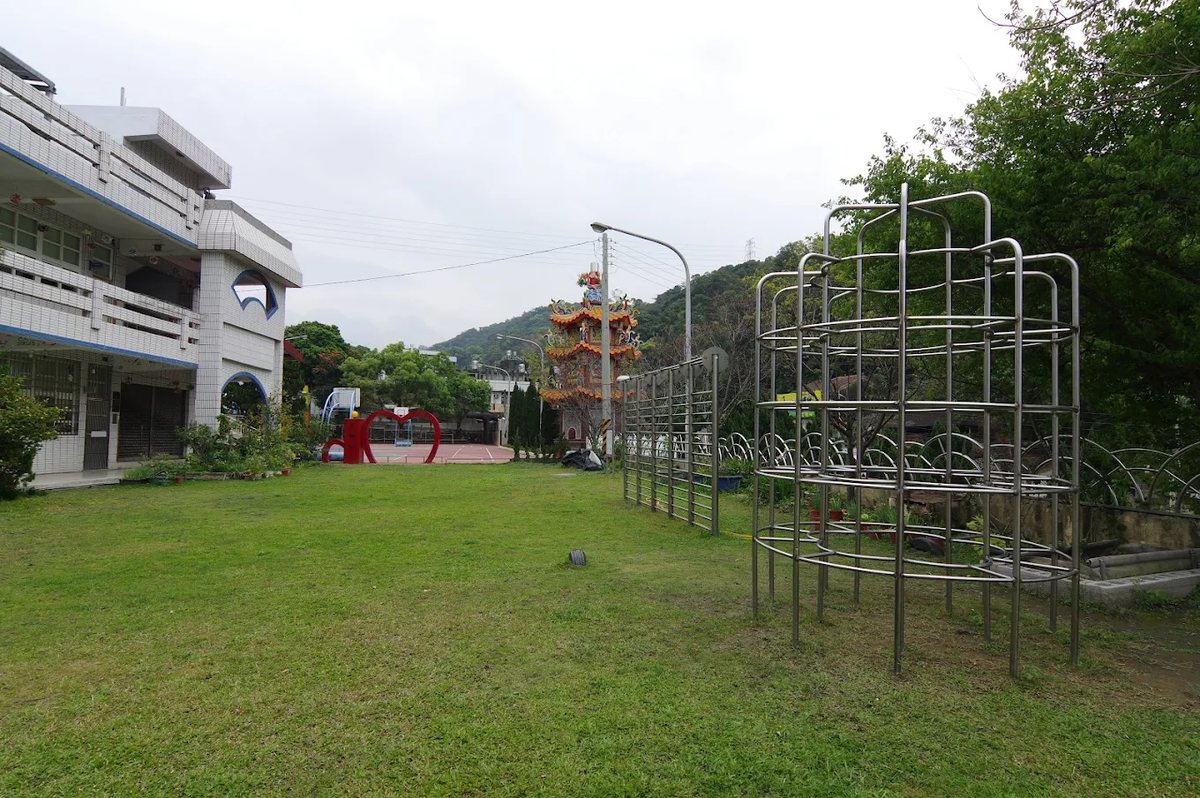
A hill school needs roofs over its outdoor spaces — it rains here, and the rain used to be the reason children could not get to school at all. Covered decks, a shaded lawn and the climbing frames are where the afternoons happen: care until 17:40, clubs before the morning bell and after the last one, camps through the holidays.
山上的學校需要在戶外空間加屋頂——這裡會下雨,而雨曾經是孩子完全無法上學的原因。有頂棚的活動空間、有遮蔭的草地與攀爬架,就是下午發生的地方:照顧到 17:40、早自習與放學後的社團、假期裡的營隊。