What each group shared, in their own words — practical ideas you can adapt for your own classroom.
EG 1
September Thematic Lessons: Festivals, Assemblies & Good Habits
九月主題課程:節慶、晨會與好習慣
Three September themes — a Bo Bing dice game for Mid-Autumn, a thank-you lesson for Teacher's Day, and six good-student behaviors for the back-to-school assembly — each adapted by grade.九月三大主題——中秋博餅、教師節感謝活動,以及開學晨會的六項好行為——並依年級調整難度。
Read the full summary · 閱讀完整重點
Mid-Autumn Festival · Teacher's Day · Welcome Back to School
中秋節 · 教師節 · 開學歡迎
- Bo Bing (博餅) for Mid-Autumn. Karla shared this traditional dice game as a Mid-Autumn Festival activity: students play in groups, rolling six dice in a bowl and aiming for a winning combination. Teachers first introduce or review numbers and the language of the game.中秋博餅。Karla 分享以傳統博餅骰子遊戲作為中秋節活動:學生分組,在碗中擲六顆骰子,目標是擲出得獎組合。玩之前,老師先介紹或複習數字與遊戲用語。
- One game, adapted by grade. Lower grades focus on numbers and counting; middle grades on the rules and simple instructions; upper grades on the cultural background, winning combinations, and more English during play. One example: Grade 4's four classes, each split into about three groups with a bowl and six dice.同一個遊戲,依年級調整。低年級著重數字與數數;中年級學習規則與簡單指令;高年級了解文化背景、得獎組合,並在遊戲中使用更多英語。例如四年級的四個班,每班分成約三組,每組一個碗和六顆骰子。
- A different Moon Festival task for every grade. Sellinah shared a schoolwide, 10–15-minute break-time plan: Grades 1–2 read four Moon Festival words and receive a small gift; Grades 3–4 answer "What do you do on Moon Festival?" ("I have barbecue."); Grades 5–6 use iPads for Wordwall activities, since older students may be less keen on speaking tasks.每個年級不同的中秋任務。Sellinah 分享全校性、利用下課時間、約 10–15 分鐘的活動:一、二年級朗讀四個中秋單字並獲得小禮物;三、四年級回答「中秋節你做什麼?」(例如 "I have barbecue.");五、六年級用 iPad 玩 Wordwall 活動,因為高年級學生可能比較不喜歡口說任務。
- Teacher's Day: "Thank you, Teacher!" Amelia suggested a short morning-assembly lesson on why we celebrate Teacher's Day, with a few key phrases. Grades 1–2 make and color class thank-you cards, signed by the class and given to teachers. The language grows by grade, from "Thank you, Teacher!" to "We appreciate everything you do."教師節:「謝謝老師!」Amelia 建議在晨會進行簡短課程,說明為什麼慶祝教師節並教幾個關鍵用語。一、二年級製作並著色班級感謝卡,全班簽名後送給老師。用語依年級加深,從 "Thank you, Teacher!" 到 "We appreciate everything you do."。
- Welcome Back to School: six behaviors. At the 7:50 a.m. morning assembly, Cynthia introduces six expectations: listen and pay attention, be kind to everyone, be ready to learn, always do your best, be responsible for your work, and help others and be a good example. She deliberately picks shy or quieter students to speak, then reviews the behaviors in class. The challenge: about 635 students, classes of 24–29, and one assembly theme a month to run on her own.開學歡迎:六項好行為。Cynthia 在早上 7:50 的晨會介紹六項期待:專心聆聽、善待每個人、準備好學習、盡力而為、對自己的作業負責、幫助他人並做好榜樣。她刻意挑選害羞或安靜的學生上台說話,之後再回到班上複習。挑戰是:全校約 635 名學生、每班 24–29 人,且每月要獨自負責一個晨會主題。
EG 2
Storytelling Through Picture Books
以繪本進行說故事教學
Storytelling lessons built on beloved picture books, with a rhyme, a matching task, and hands-on paper and felt props.以經典繪本設計說故事課,搭配韻文、配對任務與紙工、毛氈道具。
Read the full summary · 閱讀完整重點
Songs, crafts and hands-on props
歌謠、手作與動手道具
- Framed the session around one question — "What's your story?" — and built storytelling lessons from well-loved picture-book series: There Was an Old Lady Who Swallowed…, Froggy, and Elephant & Piggie.以一個問題開場——「你的故事是什麼?」——並以大家熟悉的繪本系列設計說故事課程:There Was an Old Lady Who Swallowed…、Froggy 與 Elephant & Piggie。
- Used the cumulative rhyme of There Was an Old Lady Who Swallowed a Fly, with a picture-to-word matching task (fly, bird, spider).運用《There Was an Old Lady Who Swallowed a Fly》的累積式韻文,搭配圖片與單字配對任務(fly、bird、spider)。
- Showed a paper-craft "old lady" with a big open mouth, and a felt-board Froggy with swappable clothes, as hands-on storytelling props.展示張大嘴巴的紙工「老太太」,以及可更換衣服的毛氈板 Froggy,作為動手操作的說故事道具。
EG 3
Board Games That Teach Vocabulary
能學單字的桌遊
Three vocabulary board games — Cross the Line, Snake and Ladder, and Roll, Read, and Count — plus a simple checklist for assessing learning during play.三款單字桌遊——過線、蛇梯棋與擲骰讀數——以及遊戲中簡單的學習檢核方式。
Read the full summary · 閱讀完整重點
Three ready-to-play games, plus how to check learning
三款現成桌遊,以及如何檢核學習成效
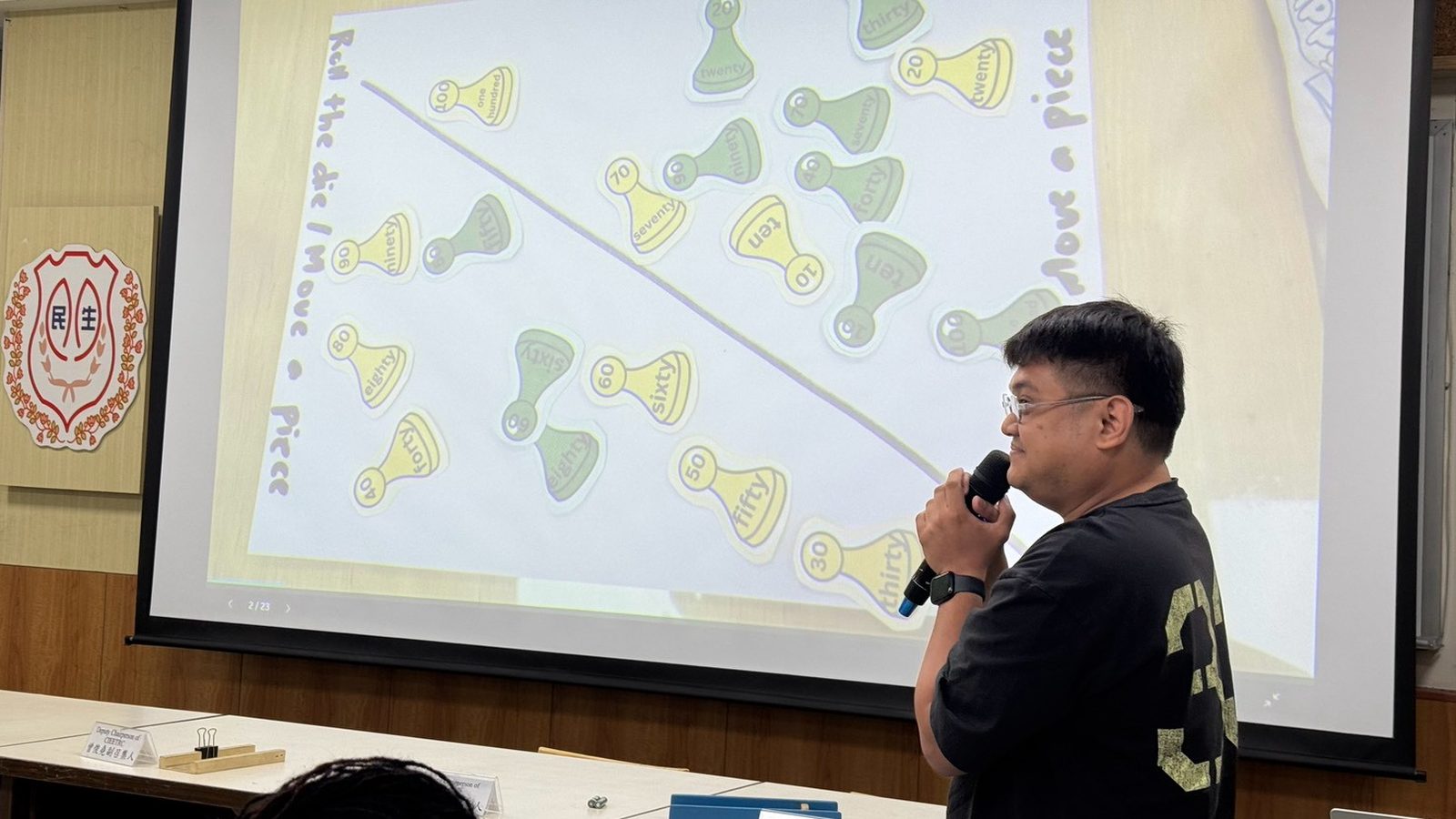
- Roll, Read, and Cross the Line (number words): two students share a board with a center line and 20 word pieces, 10 per color. Roll a die, take that many of your pieces, read each word aloud, and move the correctly read pieces across the line. First to move all 10 wins.Roll, Read, and Cross the Line(數字單字):兩位學生共用一張有中線的遊戲板與 20 個單字棋,每色 10 個。擲骰子,取出相同數量的己方棋子,大聲讀出每個單字,讀對的就移過中線。先把 10 顆全部移過去的人獲勝。
- Snake and Ladder (places and transportation: hospital, bank, bookstore, bus, bicycle): two to four students on a customized board. Name the picture where you land — correct, stay; incorrect, go back. Ladders take you up, snakes slide you down.蛇梯棋 Snake and Ladder(地點與交通:hospital、bank、bookstore、bus、bicycle):二至四位學生在自製棋盤上進行。說出停留格子上的圖片名稱——答對留在原地,答錯退回前一格;遇到梯子上升、遇到蛇下滑。
- Roll, Read, and Count: a grid with a column for each die number, filled with number words, numerals, and pictures to count. Roll, find the matching column, then read the word, say the number, or count the items. One point per correct answer; most points wins.Roll, Read, and Count:表格中每個骰子點數對應一欄,欄內有數字單字、阿拉伯數字與要數的圖片。擲骰子,找到對應欄,然後讀單字、說數字或數圖片。每答對一題得一分,分數最高者獲勝。
- Differentiate by level: beginners name or match pictures and words; intermediate learners read or spell; advanced learners use the words in sentences or answer a related question.依程度分層:初級學生說出或配對圖片與單字;中級學生朗讀或拼寫;高級學生用單字造句或回答相關問題。
- Check learning while they play: carry a class checklist on a clipboard and mark ✓ (correct independently), P (correct with prompting) or X (needs more practice). Assign a reader and a checker, then switch roles; pause to review a common mistake; end with a short individual exit task, and note frequently missed words for the next lesson.邊玩邊檢核學習:拿著班級檢核表,標記 ✓(獨立答對)、P(提示後答對)或 X(需要多練習)。指定一位讀題者與一位檢查者,之後互換;發現常見錯誤時暫停複習;最後做簡短的個人出場任務,並記下常錯的單字留待下堂課。
EG 4
Game Design for Educators
教師的遊戲設計
Why games work, how to choose between offline HTML games and live Gimkit, and how teachers can edit a game without writing code.遊戲為什麼有效、如何在離線 HTML 遊戲與 Gimkit 之間選擇,以及不寫程式也能編輯遊戲。
Read the full summary · 閱讀完整重點
Offline HTML games and live Gimkit
離線 HTML 遊戲與 Gimkit 即時遊戲
- Why games work: motivation, challenge, participation, and social play — "Games review content without feeling like review."為什麼遊戲有效:動機、挑戰、參與和社交互動——「遊戲讓複習不像複習」。
- Match the tool to the room. HTML games are offline, portable, and teacher-editable; Gimkit is online, live, collaborative, and strategy-based. Digital suits tech-savvy rooms (instant feedback, sound, pacing control); paper stays the reliable, no-device backup. Keep the content central.讓工具配合教室。HTML 遊戲可離線、方便攜帶、教師可自行編輯;Gimkit 為線上即時、協作且講求策略。數位工具適合熟悉科技的班級(即時回饋、聲光效果、掌控節奏);紙本則是可靠、不需裝置的備案。內容始終是重點。
- Ice Cream Tower Race: two teams answer at the same time. A correct answer adds a scoop; an incorrect one removes a scoop. The sample item — "I ____ my teeth every morning at 7:00 AM" — practices daily routines and time grammar.冰淇淋塔競賽:兩隊同時作答。答對加一球冰淇淋,答錯則減一球。範例題「I ____ my teeth every morning at 7:00 AM」練習日常作息與時間文法。
- No coding needed. In a visual editor, the teacher edits four-option questions, picks the correct answer, and reorders, adds, or deletes items and images, then downloads one self-contained file for offline use or a USB stick — the teacher never edits code directly.不需要寫程式。老師在視覺化編輯器中編輯四選一題目、指定正確答案,並調整順序、新增或刪除題目與圖片,最後下載單一獨立檔案,離線或用隨身碟都能使用——老師完全不必直接改程式碼。
- Gimkit quick-start: create a kit with questions and answers, choose Play Live, pick a game mode, share the code or link, then use the live results as the bridge back to instruction.Gimkit 快速上手:建立題組(問題與答案),選擇 Play Live、遊戲模式,分享代碼或連結,再用即時結果作為回到教學的橋樑。
EG 5
Outside-the-Classroom English Activities
教室外的英語活動
The pros and cons of taking English outside the classroom, and one guiding question: a game they played, or a real use of English?把英語帶到教室外的優缺點,以及一個引導問題:只是玩過的遊戲,還是真實使用英語的經驗?
Read the full summary · 閱讀完整重點
Learning vs. playing
學習與遊戲之間
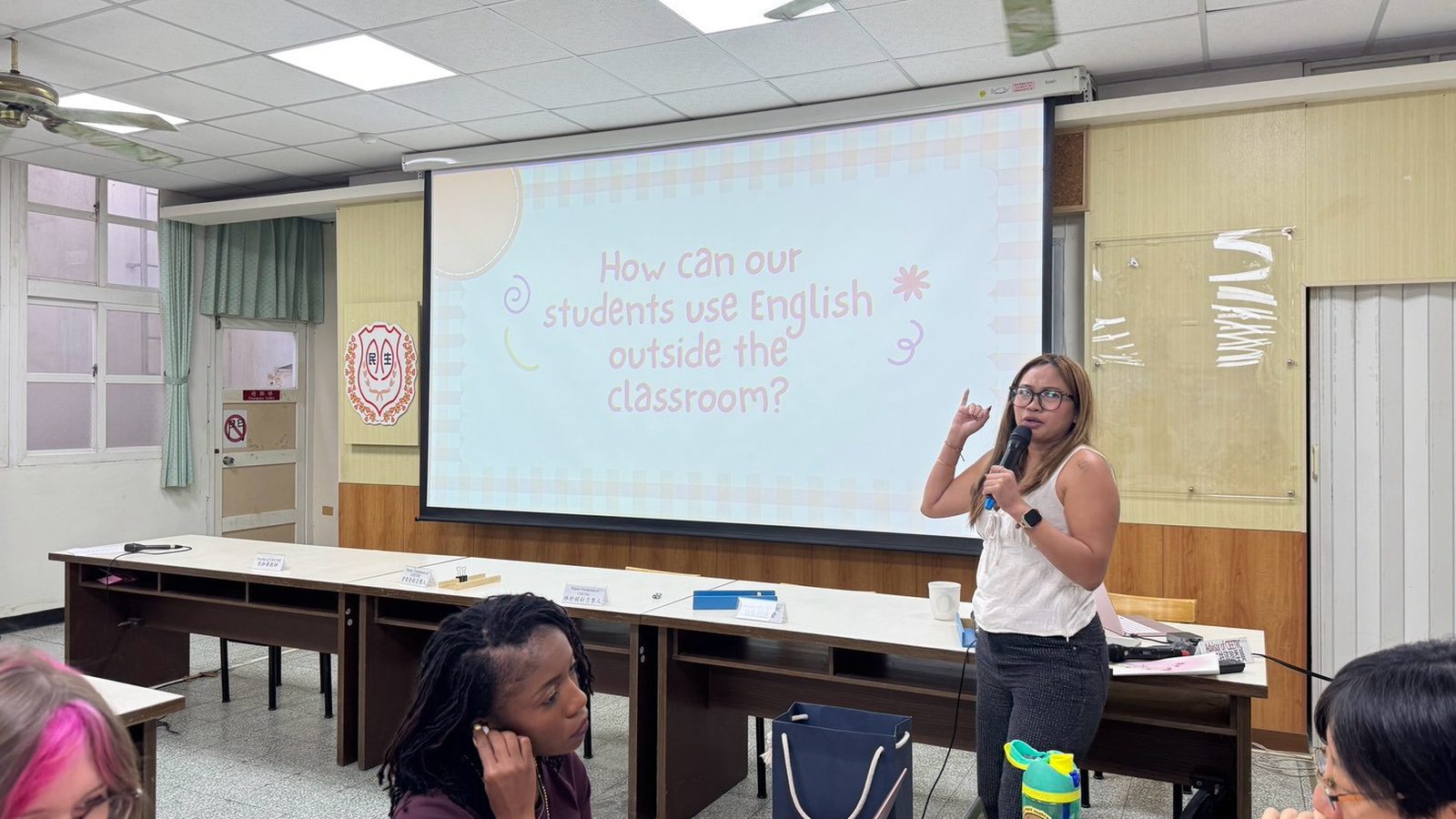
- Started with a question: how can our students use English outside the classroom? Teaching and learning are not limited to the four walls of the room.從一個問題開始:學生如何在教室外使用英語?教與學不應被限制在四面牆之內。
- Pros: more engaging, real-life English practice, better memory retention, less classroom pressure, and teamwork.優點:更吸引人、真實情境的英語練習、記憶更持久、課堂壓力較小,以及團隊合作。
- Cons: weather problems, harder classroom management, safety concerns, more preparation, noise, and time.缺點:天氣問題、班級經營較困難、安全顧慮、需要更多準備、噪音與時間。
- The closing challenge: "How do we want them to remember these outdoor activities — as games they played, or as experiences where they discovered that they could actually use English?"結尾的提問:「我們希望學生怎麼記得這些戶外活動——只是玩過的遊戲,還是發現自己真的能使用英語的經驗?」
EG 6
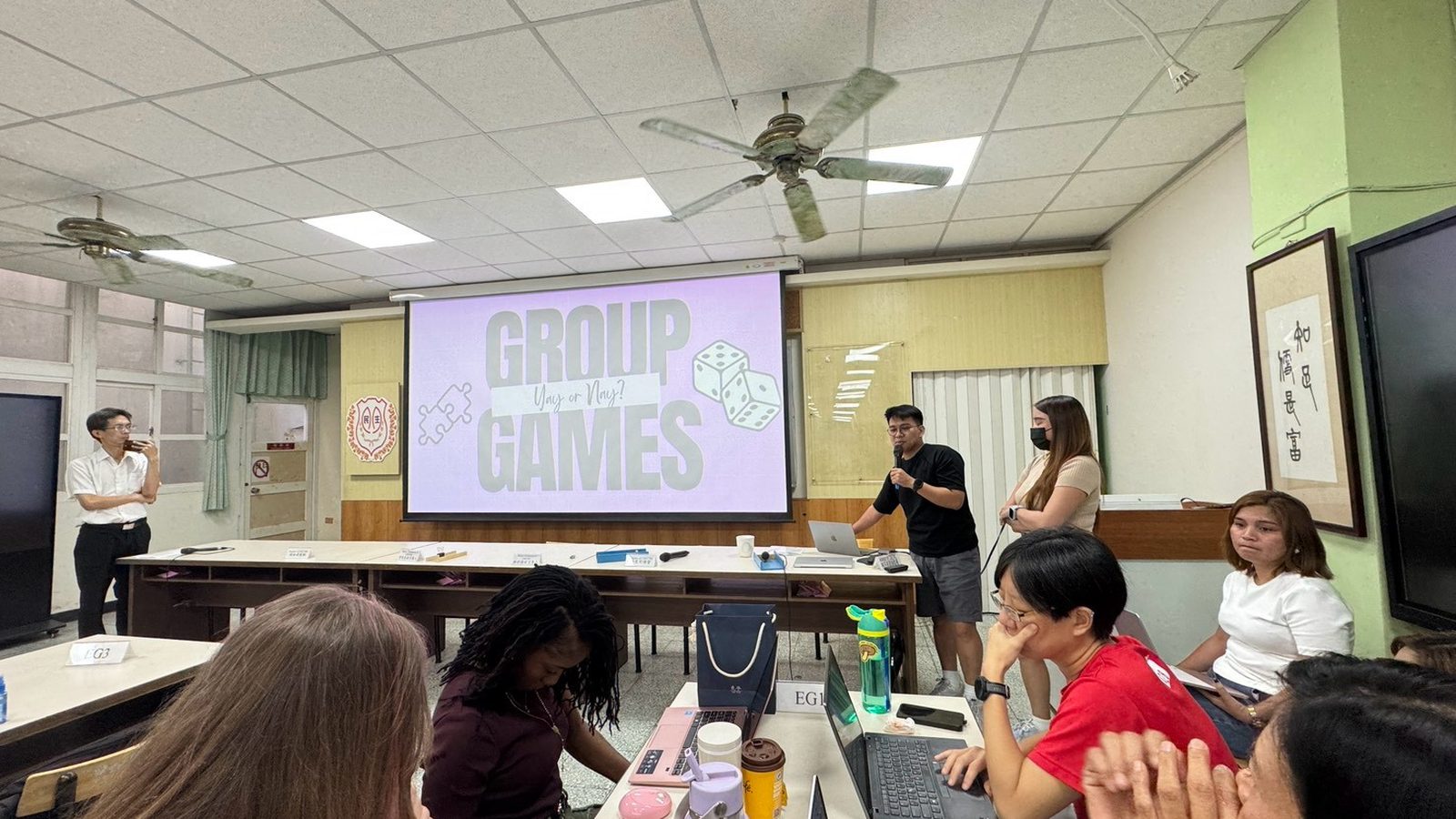
Group Games: Yay or Nay?
小組遊戲:好還是不好?
Four situations when a student is blamed for losing a team game, with what teachers tried and what they recommend.學生因輸掉團體遊戲而被責怪的四種情境,以及老師們的嘗試與建議。
Read the full summary · 閱讀完整重點
When a student gets blamed for losing
輸了被同學責怪的學生怎麼辦
- Unfair groups based on skill. Tried: placing one high-level learner in each group. Recommended: always distribute students fairly by level.依能力分組不公平。嘗試過:每組放一位高程度學生。建議:永遠依程度公平分配學生。
- A blamed or losing group loses heart. Tried: cheering them up with a quick talk, then playing on. Recommended: give everyone a reward and the winners a bigger one, and keep practicing taking turns when answering.被責怪或輸掉的組別灰心喪志。嘗試過:簡短鼓勵後繼續遊戲。建議:人人有獎勵、獲勝組獲得更大的獎勵,並持續練習輪流作答。
- Students disappointed with their teammates. Tried: staying firm with the assigned groups. Recommended: use fewer team games, try teacher-versus-students games, and experiment with different group sizes.學生對組員失望。嘗試過:堅持原本分好的組別。建議:減少小組競賽、試試老師對學生的遊戲,並嘗試不同的分組人數。
- Students choosing their own teams. Tried: sticking with it, then discussing afterward how to do it better. Recommended: balance the groups, one high-level learner in each.學生自己選隊友。嘗試過:照做,事後再討論如何改進。建議:平衡分組,每組一位高程度學生。
- For every game: set clear expectations, rules, and objectives first, and ask your co-teacher for help when needed.每一場遊戲都適用:先訂好清楚的期待、規則與目標,需要時請協同教師協助。
JG 1
LIVE: Looking After Yourself and Avoiding Burnout
LIVE:照顧自己、遠離倦怠
A well-being framework against burnout: Lead a purposeful life, Invest in yourself, Validate your feelings, Engage in physical activities.對抗倦怠的身心健康架構 LIVE:過有目標的生活、投資自己、肯定感受、投入身體活動。
Read the full summary · 閱讀完整重點
Teacher well-being
教師身心健康
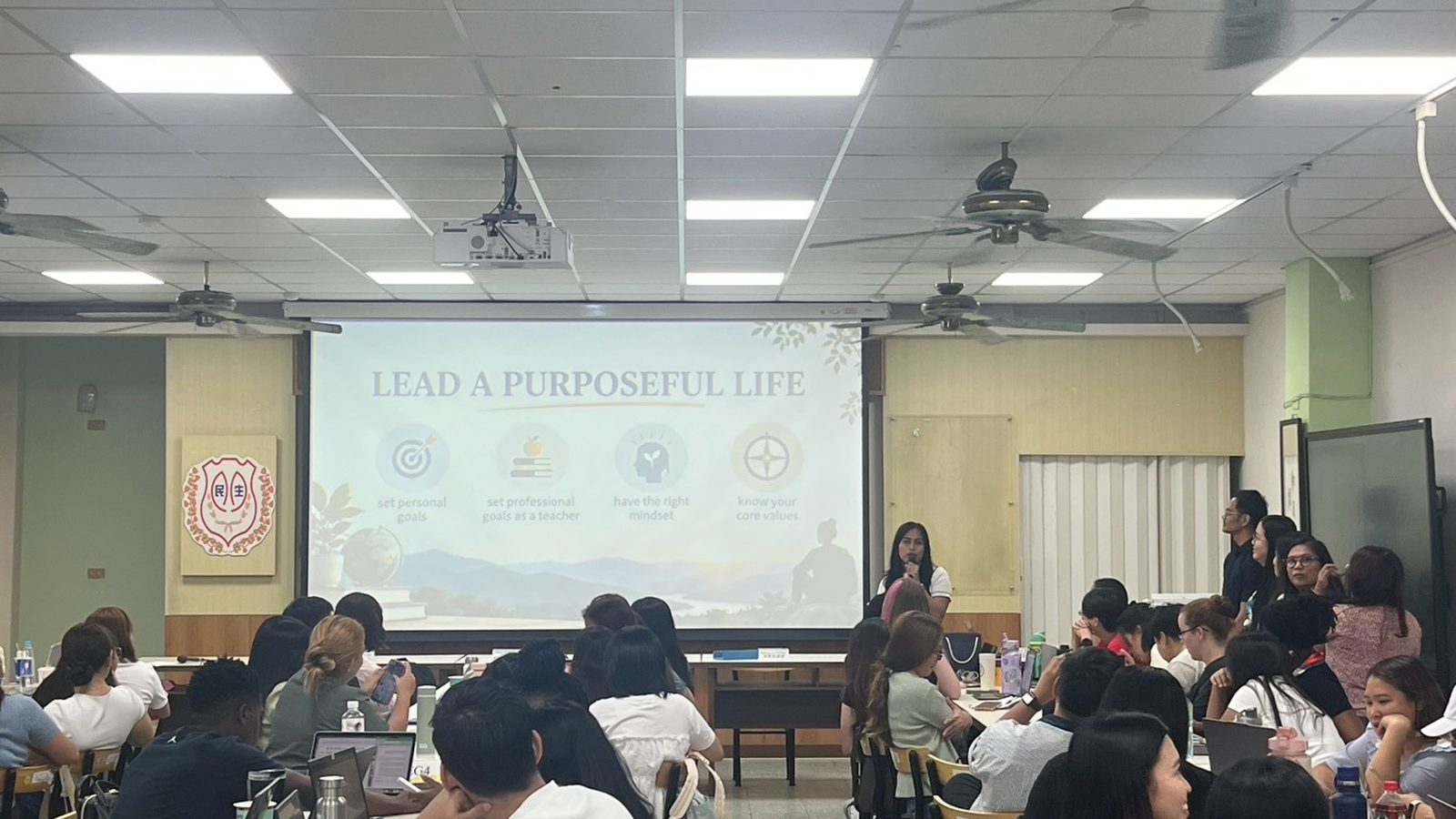
- Opened with burnout — feeling mentally drained, physically tired, and emotionally exhausted under deadlines, meetings, lessons, and expectations — and offered an answer in four letters: L-I-V-E.從倦怠談起——在截止日、會議、課程與各種期待下,心力交瘁、身體疲累、情緒耗竭——並以四個字母提出解方:L-I-V-E。
- L — Lead a purposeful life: set personal goals and professional goals as a teacher, keep the right mindset, and know your core values.L — 過有目標的生活:設定個人目標與教師專業目標、保持正確心態,並認清自己的核心價值。
- I — Invest in yourself: keep learning, growing, and improving — the same person, with higher goals.I — 投資自己:持續學習、成長與精進——同一個人,更高的目標。
- V — Validate your feelings: acknowledge the feeling, validate the reason, accept without judging, pause and breathe, and show yourself compassion.V — 肯定自己的感受:承認感受、理解原因、接納而不批判、暫停並深呼吸,以及對自己溫柔。
- E — Engage in physical activities: walking, jogging, cycling, home workouts, dancing, yoga, hiking, sports, swimming, stretching, taking the stairs, or joining group activities. Small steps make a big difference.E — 投入身體活動:走路、慢跑、騎車、居家運動、跳舞、瑜伽、健行、球類運動、游泳、伸展、走樓梯,或參加團體活動。小步前進也能帶來大改變。
- The takeaway: Live well. Teach well. Be well.結語:好好生活、好好教學、好好照顧自己。
JG 2
An Activity That Worked in One Class and Died in Another
同一個活動,為何一班成功、一班冷場
Why the same activity can work in one class and flop in another — schedule, English level, and class dynamics.同一個活動為何在一班成功、另一班冷場——課表、英語程度與班級氣氛。
Read the full summary · 閱讀完整重點
Why the same lesson lands differently
同樣的課為何效果不同
- Situation 1. Two classes in the same grade did a five-station rotation with a worksheet. Class A finished enthusiastically on their own; Class B was so reluctant that the answers ended up being spoon-fed.情境一。同年級兩個班進行五站輪替與學習單。A 班熱烈投入、自己完成;B 班非常不情願,最後答案幾乎是餵給他們的。
- Situation 2. On the first day, students wrote one line about their summer and passed the paper on for a classmate to add a question. Grade 8 responded with visible interest; Grade 9 did the opposite.情境二。開學第一天,學生寫下一句關於暑假的話,傳給下一位同學補上一個問題。八年級反應熱烈、明顯有興趣;九年級則相反。
- The schedule matters. Motivation dipped in first period, after nap time, and after PE — and the same class responded differently when moved to another time slot.課表很重要。第一節、午睡後與體育課後動機偏低——同一班調到不同時段,反應就不一樣。
- English level matters. It plays a big role in how students respond, which is where differentiated instruction should be considered.英語程度很重要。它大大影響學生的反應,這正是需要考慮差異化教學之處。
- Class dynamics matter. Group activities need everyone to take part; students who are unfamiliar with, or uninterested in, their groupmates participate less.班級氣氛很重要。小組活動需要每位成員參與;與組員不熟或沒興趣的學生,參與意願會降低。